The Ultimate Back-to-School Checklist: 30 Things Parents Should Do
The first day of school always seems to arrive faster than expected. One minute, the kids are enjoying lazy mornings, and the next, everyone is looking for missing shoes, unfinished shopping, and that one school item nobody remembered to buy. That is exactly why The Ultimate back-to-school checklist: 30 things parents should do can make the whole transition feel much easier. Instead of trying to remember everything at once, you can work through a simple list, one task at a time, and enjoy the last days of summer without that constant feeling that something has been forgotten.
Back-to-school preparation is about much more than buying notebooks and new clothes. It is also about getting children emotionally ready, organizing their spaces, checking school information, planning meals, and creating routines that will make busy mornings less stressful. Fortunately, you do not have to tackle everything in one afternoon.
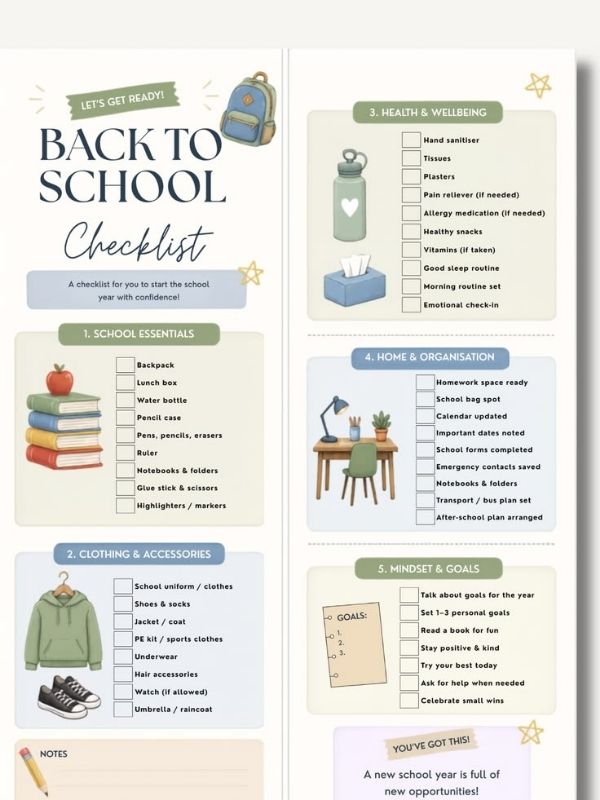
This guide breaks everything down into 30 manageable steps. Some tasks take only a few minutes, while others may need a little planning. However, by working through them gradually, you can walk into the new school year feeling prepared instead of overwhelmed.
Check out our
17 Smart and Spooky Halloween Costume Ideas for Teachers at School
20 Valentine;s Day Crafts for Kids to Make at Home or School
30 Back-to-School Supplies Every Student Needs in 2026
20 Back to School Lunch Ideas for Picky Eaters
The Ultimate back-to-school checklist: 30 things parents should do
1. Check the school calendar
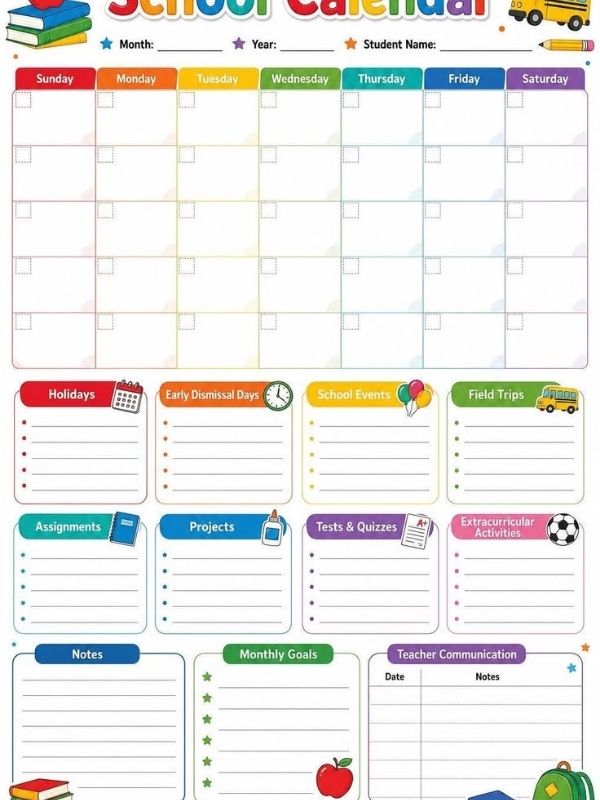
Before buying anything or making plans, take a good look at the school calendar. This is one of the easiest ways to start your back-to-school preparation because it gives you a clear picture of what is coming.
Write down the first day of school, holidays, teacher workdays, examination periods, special events, and important deadlines. If the school has already shared a calendar online or through a parent portal, save it somewhere easy to access.
Also, check whether there are early dismissal days or special orientation events. These dates can easily slip your mind when you are focused on shopping and organizing.
If you use a family calendar, add the important school dates now. Then, everyone can see what is happening. This is especially useful when parents have work commitments or children have activities outside school.
A few minutes spent checking dates now can prevent a surprising amount of confusion later. So, as part of The Ultimate back-to-school checklist: 30 things parents should do, make the school calendar one of your first stops.
2. Read every school notice carefully
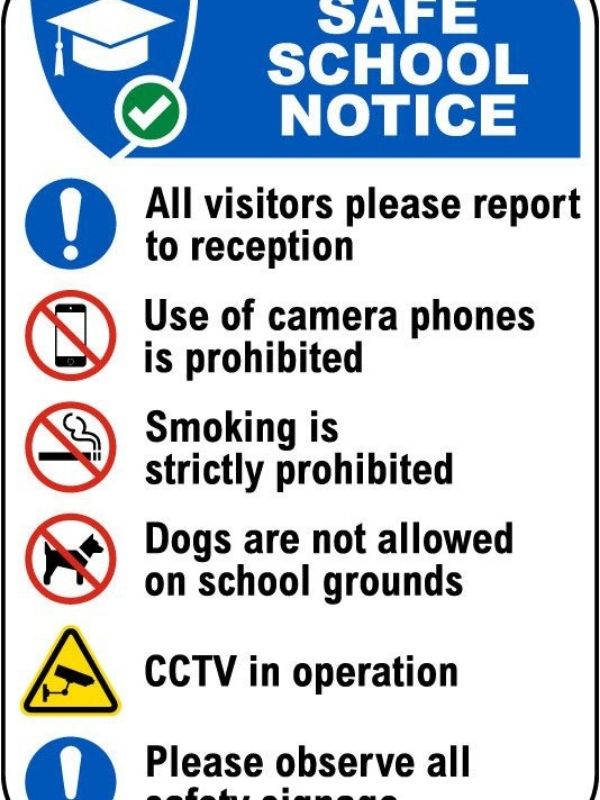
School notices often contain information that parents need before the first day. Therefore, do not skim through them and assume they are unimportant.
Look for details about uniforms, supplies, transportation, arrival times, dismissal procedures, lunch arrangements, classroom expectations, and after-school activities. There may also be forms that need to be completed before classes begin.
If several notices have arrived, create a small folder for them. You can keep printed documents there, while digital notices can be saved in a dedicated folder on your phone or computer.
It also helps to make a quick list of anything that requires action. For example, you might need to return a permission form, submit a document, or register your child for an activity.
This simple habit keeps important information from getting buried under everyday messages. More importantly, it means you are less likely to discover a deadline after it has passed.
When following The Ultimate back-to-school checklist: 30 things parents should do, school communication should always receive attention early.
Check out our
20 Cute Graduation Money Gift Ideas for High School Seniors
15 Back to School Routines for a Stress-Free Morning
20 Cute Back to School Outfits for Teens in 2026
25 Cute Back to School Nail Designs Teens Will Adore
30 Back to School Hairstyles That Are Quick and Cute
18 High School Graduation Party Ideas That Feel Meaningful, Fun, and Worth Celebrating
3. Make a school supply inventory
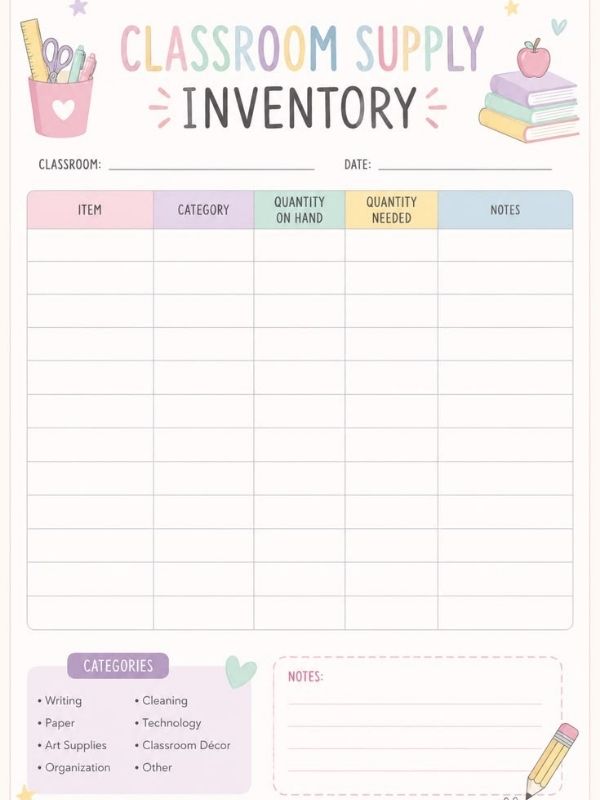
Before rushing to the store, check what you already have at home. Children often finish the school year with perfectly usable pencils, rulers, notebooks, folders, crayons, calculators, and other supplies.
Gather everything in one place. Then, compare those items with the school’s supply list.
Separate the supplies into three groups: things you already have, things that can be reused, and things you need to buy. This approach can save money while also preventing unnecessary purchases.
It is also a good opportunity to remove broken or worn-out items. A pencil case filled with dried-out pens is not very useful, even if it technically counts as a school supply.
If your child is old enough, let them help with the inventory. They can check their own belongings and decide what still works. As a result, they become more involved in preparing for school.
This step fits naturally into The Ultimate back-to-school checklist: 30 things parents should do because organization should come before shopping, not after it.
Please keep Reading….. Don’t stop here 
4. Sort through last year’s school items
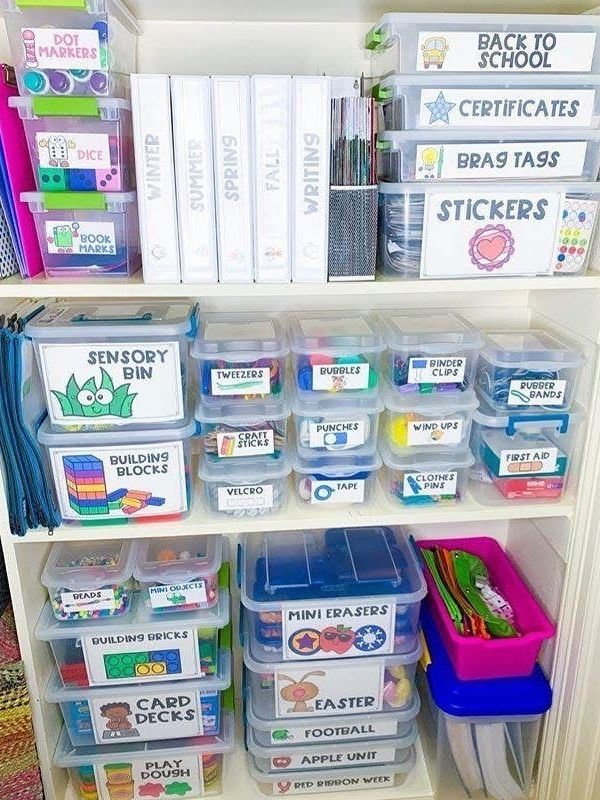
Do not automatically throw away everything from the previous school year. Instead, sort through it carefully.
Some notebooks may contain useful notes. A sturdy backpack may still have plenty of life left. Art supplies, storage folders, pencil cases, and lunch containers can often be reused.
Create separate piles for keep, donate, recycle, and discard. However, be realistic. Keeping every old worksheet and broken marker will only create more clutter.
Ask your child to help decide which personal items they want to keep. They may have drawings, projects, or small memories that matter to them.
At the same time, avoid turning the sorting process into a major project. Put on some music, set a reasonable time limit, and work through one drawer or shelf at a time.
Once everything is sorted, you will have a much clearer idea of what needs replacing. That makes the rest of The Ultimate back-to-school checklist: 30 things parents should do easier to manage.
5. Check school uniforms and everyday clothes

School clothes deserve attention before the first morning arrives. Start by checking uniforms, shoes, socks, jackets, sportswear, and other clothing your child regularly needs.
Try everything on. Children can grow surprisingly quickly, so something that fit perfectly a few months ago may now feel uncomfortable.
Look for loose buttons, damaged zippers, worn-out shoes, missing socks, and other small problems. Simple repairs can sometimes save you from buying replacements.
For everyday clothing, choose practical pieces that are easy for your child to wear independently. If mornings are usually rushed, comfortable clothes that require little fuss can make a noticeable difference.
You do not need to replace an entire wardrobe just because a new school year is starting. Focus on what is genuinely needed.
A careful clothing check is another useful part of The Ultimate back-to-school checklist: 30 things parents should do, especially because it prevents last-minute wardrobe surprises.
6. Label your child’s belongings
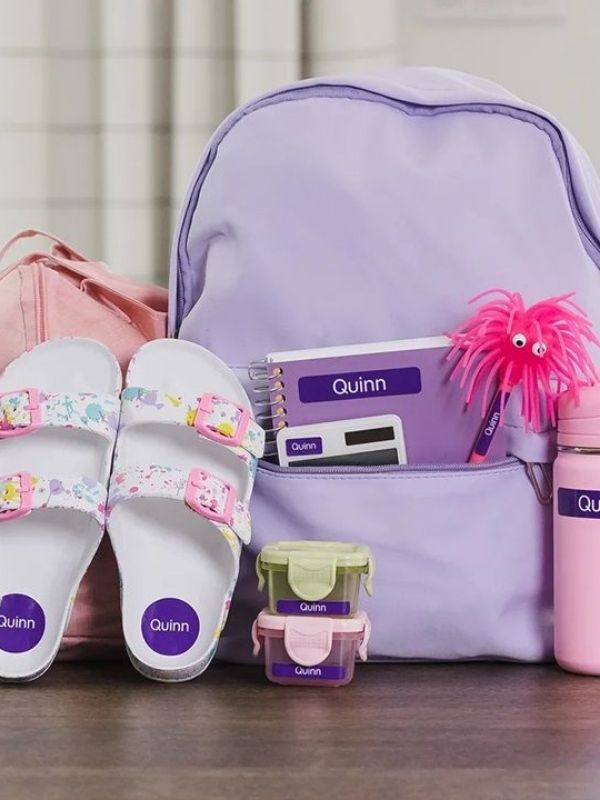
Labels may seem like a tiny detail, but they can be incredibly helpful at school.
Children carry many similar-looking items. Water bottles, lunch containers, sweaters, jackets, notebooks, and stationery can easily get mixed up.
Use your child’s name on items that are likely to be misplaced. Depending on the item, you can use permanent markers, adhesive labels, or fabric labels.
For younger children, make the label easy to recognize. A simple name label can help them identify their belongings without needing an adult.
You should also label items that your child is likely to remove during the day, such as jackets and sweaters.
This small task can be done while watching television or listening to music. Consequently, it does not have to feel like another major chore.
When working through The Ultimate back-to-school checklist: 30 things parents should do, labeling is one of those quick jobs that can prevent bigger headaches later.
Check out our
10 Graduation Loc Styles That Fit Under a Cap
20 Unique Graduation Gifts for Female Best Friend
18 Trendy Graduation Dresses for Curvy Girls
20 DIY Graduation Card Ideas for Best Friend
20 Elegant Black and Gold Graduation Cake Ideas
15 Stylish Graduation Hairstyles for Long Locs
7. Clean and organize the backpack
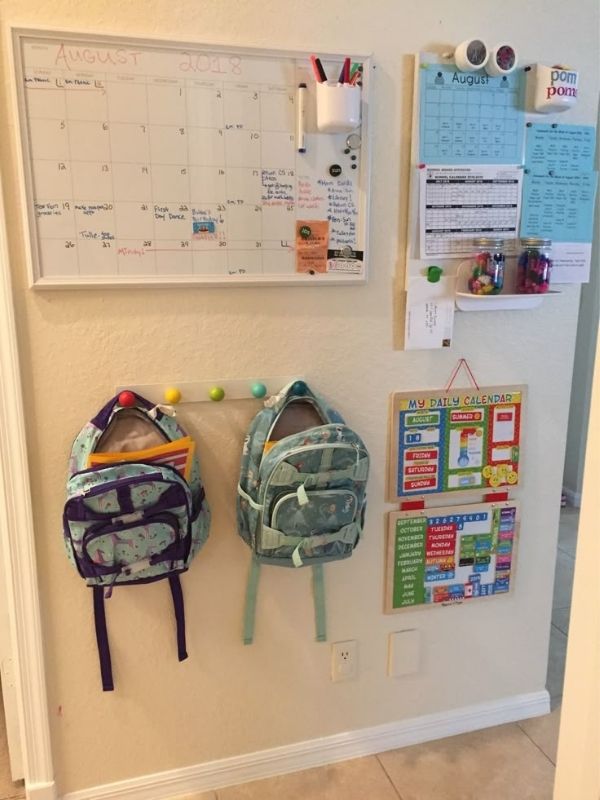
A backpack should not begin the school year carrying months of old crumbs, broken pencils, and forgotten papers.
Empty every pocket completely. Shake out dirt and debris, then check the bag for tears, broken zippers, loose straps, or other damage.
If the backpack can be washed according to its care instructions, clean it before using it again. Otherwise, wipe it down and let it dry properly.
Next, organize the inside. Put school supplies where your child can find them easily. Avoid overfilling the bag because unnecessary weight can make carrying it uncomfortable.
Also, teach your child to check the backpack every afternoon. A simple routine of removing lunch containers, taking out completed papers, and packing needed materials can keep the bag under control.
A clean backpack creates a fresh start, which makes it a practical step in The Ultimate back-to-school checklist: 30 things parents should do.
8. Create a homework space
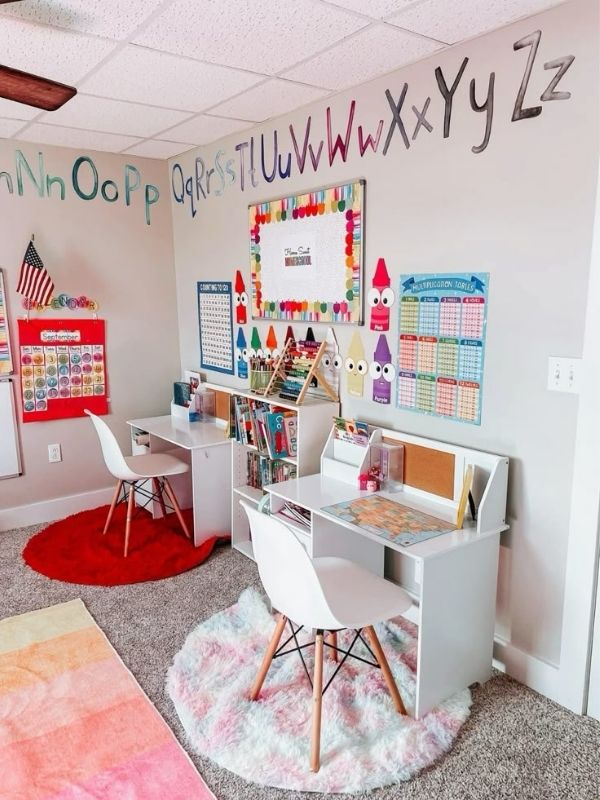
Children do not necessarily need a fancy study room. A quiet, comfortable corner can be enough.
Choose a spot with good lighting and enough space for books, notebooks, and basic supplies. If possible, keep distractions such as televisions and gaming devices away from the immediate workspace.
You can use a small basket or container to hold pencils, rulers, sticky notes, and other frequently used items.
The goal is to make homework easier to begin. When children already know where their schoolwork belongs, there are fewer excuses to spend twenty minutes searching for a pencil.
However, remember that every child is different. Some children work better at a desk, while others prefer a kitchen table or another supervised area.
The best study space is one that fits your family’s routine. That is why it belongs in The Ultimate back-to-school checklist: 30 things parents should do.
9. Set a realistic bedtime
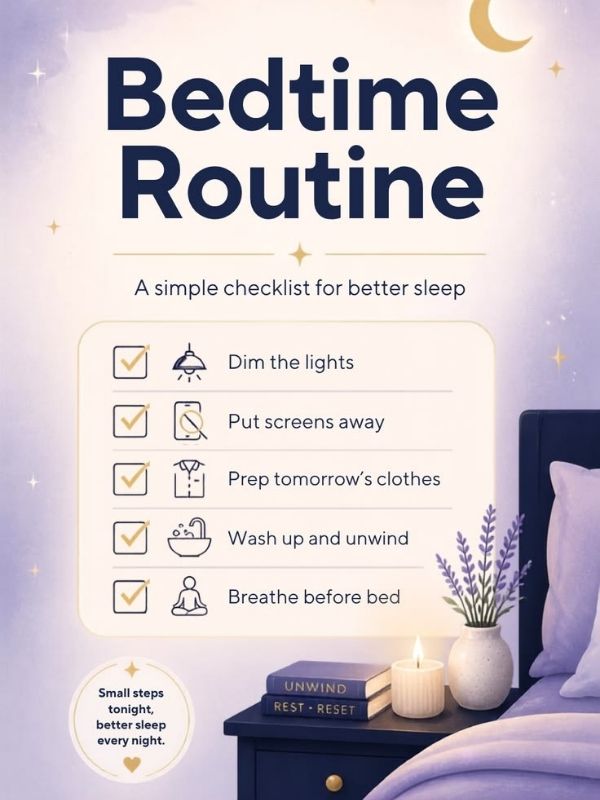
Summer bedtime and school bedtime are often very different. Therefore, do not wait until the night before school to make a sudden change.
Start moving bedtime earlier gradually. You can also begin waking your child a little earlier each morning.
A consistent evening routine can make the adjustment easier. For example, your child might shower, put away electronics, prepare clothes, read for a while, and then go to bed.
Try to keep the routine predictable. Children often respond better when they know what comes next.
If bedtime has been especially relaxed during the holidays, give everyone time to adjust. There is no need to turn the transition into a battle.
Instead, focus on consistency. Over several days, the new schedule should begin to feel normal.
Sleep preparation is an essential part of The Ultimate back-to-school checklist: 30 things parents should do because rested children are generally better prepared to handle the demands of a school day.
Check out our
18 High School Graduation Party Ideas That Feel Meaningful, Fun, and Worth Celebrating
16 Kindergarten Graduation Party Ideas That Feel Sweet, Joyful, and Worth Remembering
10 Graduation Party Backdrop Ideas That Make the Day Feel Even More Special
20 Graduation Party Gift Ideas That Feel Thoughtful, Useful, and Truly Memorable
20 Fun Water Play Activities for Kids to Beat the Heat
10. Practice the morning routine
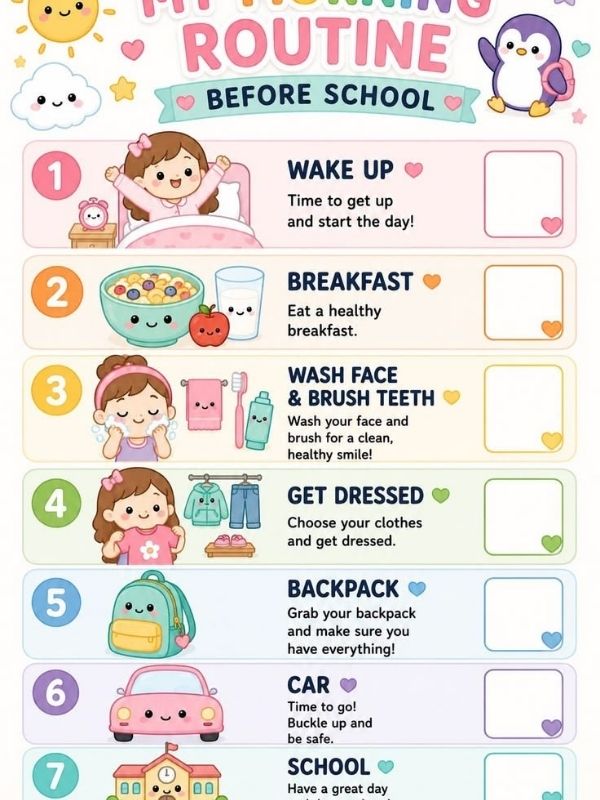
A school morning can become chaotic very quickly. That is why practicing the routine before school starts can be surprisingly helpful.
Choose a morning when everyone has enough time. Let your child practice getting dressed, brushing their teeth, eating breakfast, packing their bag, and getting ready to leave.
You do not need to make it exactly like a real school morning. The purpose is simply to identify problems.
Maybe the shoes are difficult to find. Perhaps breakfast takes too long. Or maybe the backpack is always missing one item.
Once you know where the delays happen, you can solve them before school begins.
Older children can take responsibility for more parts of the routine. Younger children may need reminders or visual prompts.
A practice morning can make the real thing much smoother. Therefore, it deserves a place in The Ultimate back-to-school checklist: 30 things parents should do.
11. Plan easy school breakfasts
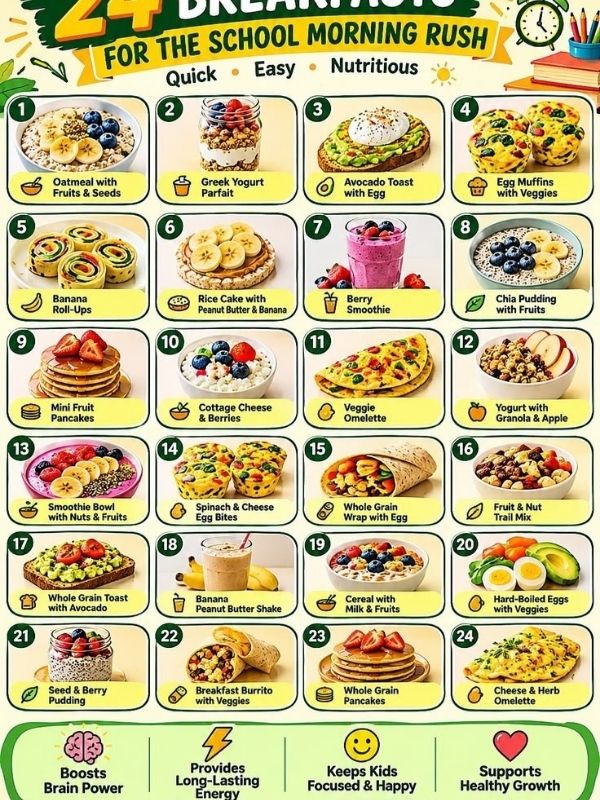
Breakfast does not need to be complicated to be useful.
Before school starts, think about several simple breakfast options your family can prepare quickly. Depending on your household, these might include oatmeal, eggs, fruit, yogurt, whole-grain toast, or another familiar option.
The important thing is having choices available when mornings get busy.
Create a short list of meals your child already enjoys. Then, check that you have the basic ingredients before the first week begins.
If your mornings are especially rushed, prepare what you can the night before. Setting out dishes or preparing certain ingredients can save a few minutes.
Also, remember that children may have different appetites in the morning. Avoid turning breakfast into a stressful negotiation.
Planning ahead keeps mornings calmer, which is why this simple food step belongs on The Ultimate back-to-school checklist: 30 things parents should do.
12. Plan school lunches
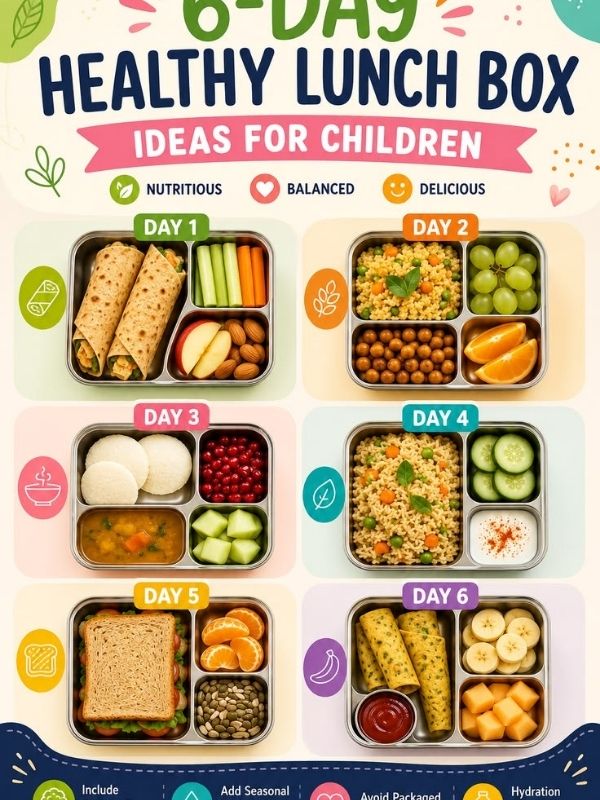
Lunch planning becomes much easier when you have a few dependable ideas ready.
Start by checking the school’s lunch rules. Some schools have restrictions or specific guidelines, so make sure your choices fit those requirements.
Then, think about foods your child actually eats. A beautifully packed lunch is not very useful if your child refuses most of it.
Create a small rotation of familiar foods and add variety where it works. You can also involve your child in choosing between acceptable options.
Before school begins, check your lunch containers. Make sure lids fit properly and that everything is clean and in good condition.
If your child packs their own lunch, practice the routine together. They can learn where containers, napkins, and other items belong.
Lunch planning can remove one more morning decision from your plate. That makes it an important part of The Ultimate back-to-school checklist: 30 things parents should do.
Check out our
20 Cute Graduation Money Gift Ideas for High School Seniors
15 Back to School Routines for a Stress-Free Morning
20 Cute Back to School Outfits for Teens in 2026
25 Cute Back to School Nail Designs Teens Will Adore
30 Back to School Hairstyles That Are Quick and Cute
18 High School Graduation Party Ideas That Feel Meaningful, Fun, and Worth Celebrating
13. Stock up on everyday household basics
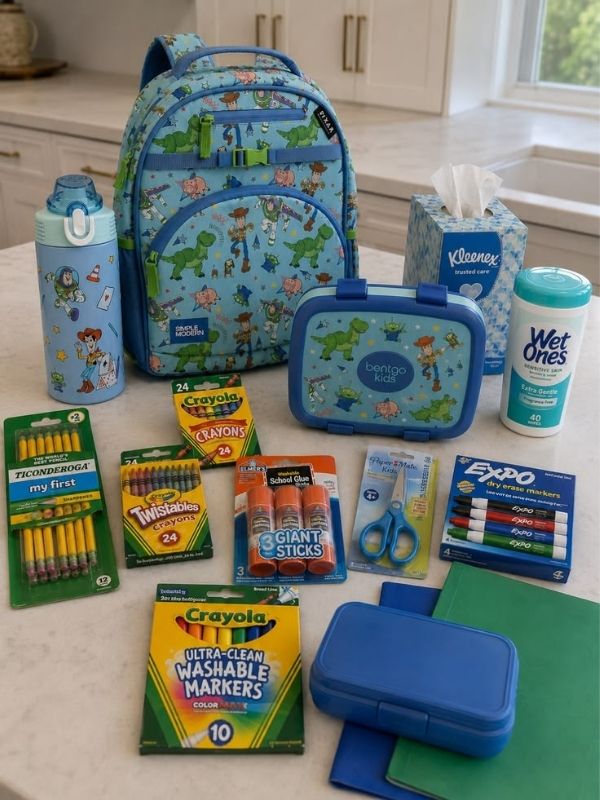
Back-to-school season often means the whole household becomes busier. Therefore, it helps to make sure basic household supplies are available.
Check items you use regularly, such as laundry detergent, tissues, toiletries, cleaning supplies, breakfast staples, and lunch ingredients.
You do not need to buy everything in bulk. Instead, focus on the things your family uses frequently.
This is also a good time to check whether school-related supplies are mixed in with household items. Creating simple storage areas can make mornings easier.
For example, keep lunch containers together instead of having different pieces scattered across several cupboards.
Likewise, keep school stationery in one accessible location.
The idea is not to create a perfectly organized home. It is simply to remove unnecessary searching from your daily routine.
This practical preparation fits neatly into The Ultimate back-to-school checklist: 30 things parents should do because small household systems can make busy school days easier.
14. Check transportation arrangements
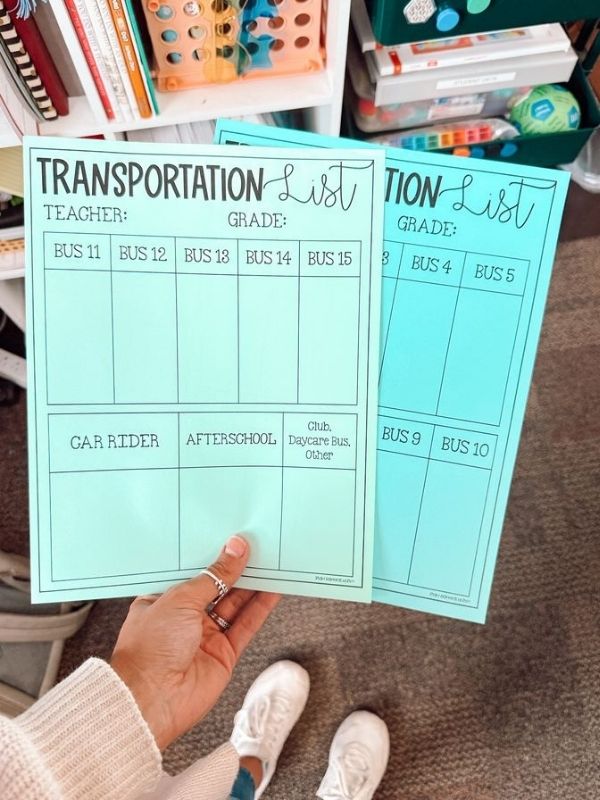
Transportation is one detail that should never be left until the first morning.
Confirm how your child will get to and from school. If they use school transportation, check pickup locations, times, rules, and contact information.
If you drive, think about your morning route and how much time you realistically need.
If your child walks or cycles, make sure they understand the route and the safety rules that apply to them. Younger children may need an adult to accompany them.
Also, create a backup plan. What happens if the usual driver is unavailable? What happens if transportation is delayed?
You do not need to worry about every possible situation. However, having one backup option can make unexpected changes less stressful.
Transportation planning is therefore a key part of The Ultimate back-to-school checklist: 30 things parents should do.
15. Confirm after-school arrangements
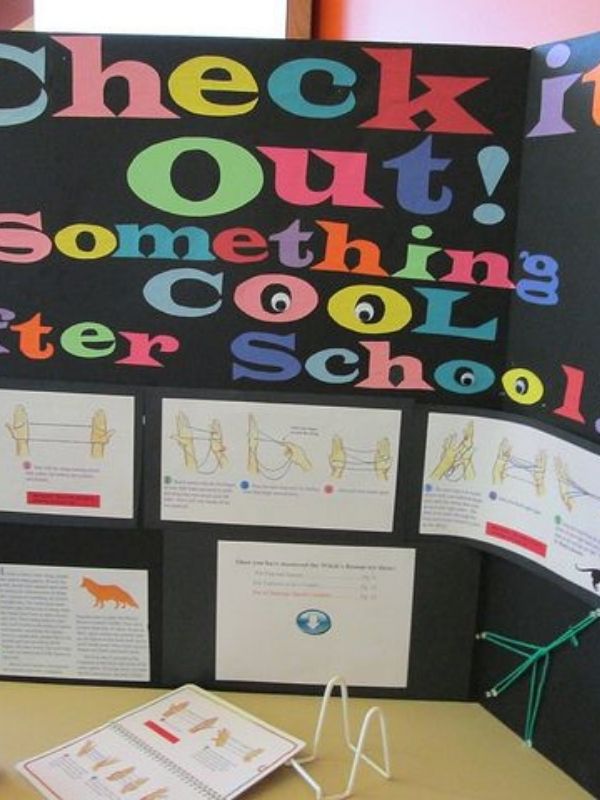
The school day does not always end when the final bell rings.
If your child attends an after-school program, tutoring session, sports activity, or another supervised activity, confirm the schedule before school starts.
Make sure you know where your child should go after dismissal and who is responsible for them.
If someone else will regularly pick them up, confirm that the school has the correct information and permissions.
It is also helpful to discuss the routine with your child. They should know what happens after class rather than having to figure it out on their own.
Keep important phone numbers accessible. If plans change, you want to be able to contact the right person quickly.
Clear after-school planning can prevent unnecessary confusion. So, make it part of The Ultimate back-to-school checklist: 30 things parents should do.
16. Update emergency contact information
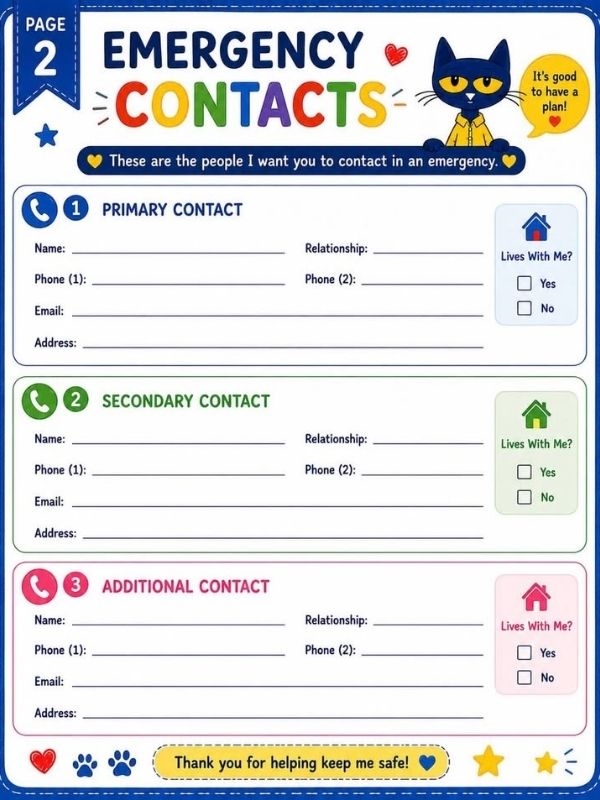
Take a moment to check the emergency information the school has for your child.
Phone numbers change. Workplaces change. Families move. Therefore, information that was correct last year may no longer be current.
Make sure the school has the right parent or guardian contact details. If another trusted adult is authorized to collect your child, check that their information is accurate too.
You should also make sure your own phone contains important school numbers.
If your child is old enough, teach them basic contact information they may need in an emergency. Keep the conversation calm and age-appropriate.
This is not about frightening children. Instead, it is about helping them know who they can turn to if they need assistance.
Updating emergency details is a simple but important step in The Ultimate back-to-school checklist: 30 things parents should do.
Check out our
16 Backyard Party Ideas for Adults on a Budget
10 Cute Sober Paint and Sip Night Ideas for Adults
30 Easy Popsicle Stick Craft Ideas for Kids and Adults to Make at Home
20 Creative Tourist Halloween Costume Ideas for Adults and Couples
17. Review school rules with your child
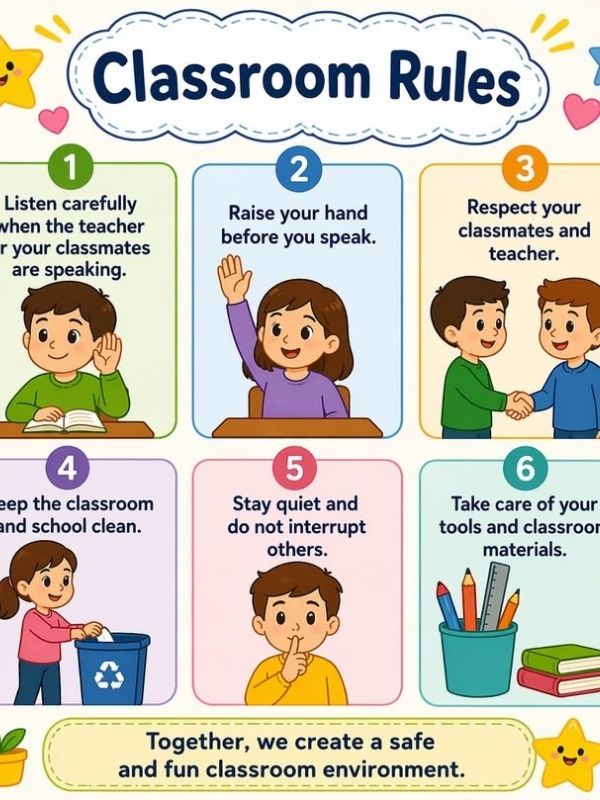
Children are more likely to follow rules when they understand them.
Before school begins, review the major expectations with your child. Talk about classroom behavior, respectful communication, technology use, uniforms, attendance, and playground expectations where appropriate.
You do not need to give a long lecture. Instead, have a relaxed conversation.
Ask your child what they remember from the previous year. Then, discuss anything that may have changed.
This is also an opportunity to explain why certain rules exist. For example, classroom rules often help teachers keep everyone safe and create an environment where students can learn.
Keep the conversation positive. School rules should not be presented as a list of threats.
A short discussion now can make expectations clearer later. That makes this a worthwhile part of The Ultimate back-to-school checklist: 30 things parents should do.
18. Talk about feelings surrounding the new school year
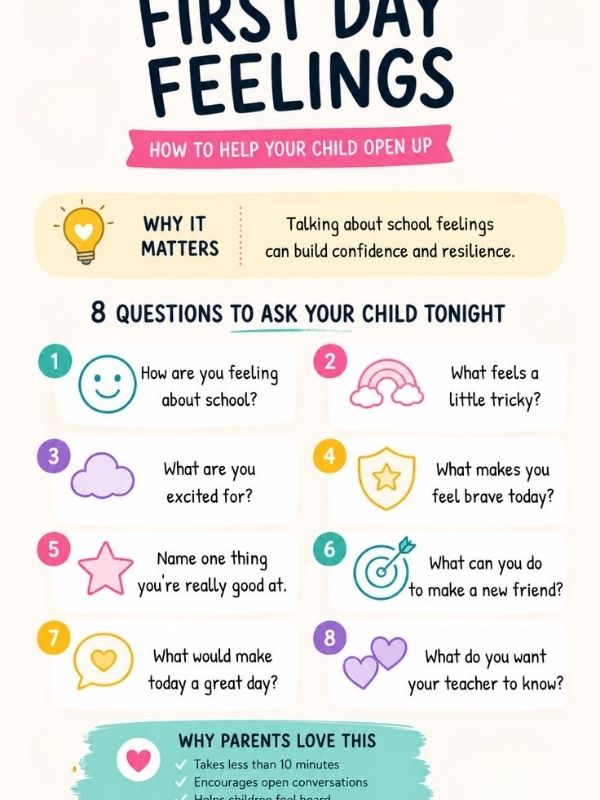
Not every child feels excited about returning to school.
Some children may be eager to see friends, while others may feel nervous about a new teacher, harder subjects, or changes in their routine.
Give your child room to talk without immediately trying to solve every concern.
Ask open questions such as, “What are you looking forward to?” or “Is there anything about school that you are worried about?”
Listen carefully. Sometimes children simply need to know that their feelings are being taken seriously.
If your child has a specific concern, work through practical options together. For example, you might discuss how they can ask a teacher for help or find a familiar person during the first few days.
Emotional preparation is just as valuable as physical preparation. That is why The Ultimate back-to-school checklist: 30 things parents should do should include conversations, not just shopping.
19. Set a few simple school-year goals
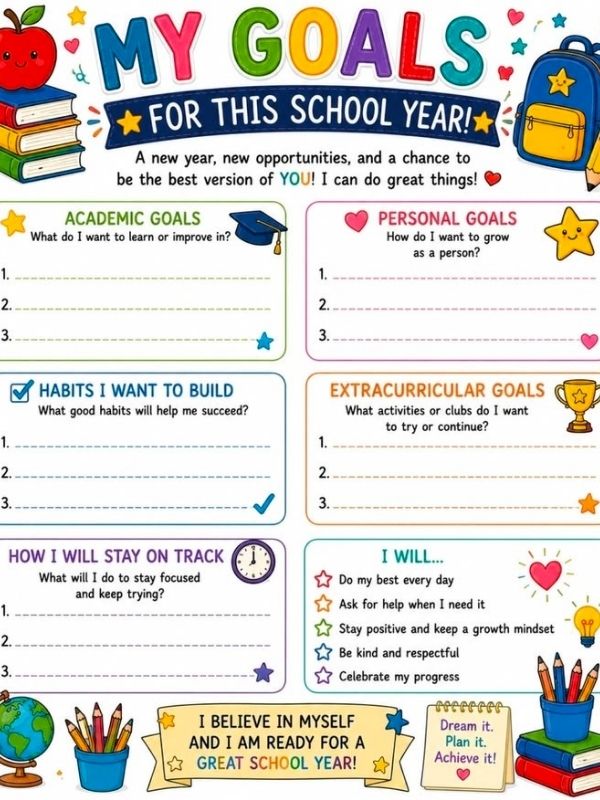
A new school year can be a good time for children to choose a few realistic goals.
The goals do not need to be about getting perfect grades. They might involve completing homework on time, reading more often, becoming more organized, participating in class, or asking for help when something is difficult.
Let your child have a voice in choosing the goals. They are more likely to care about goals that feel meaningful to them.
Keep the number small. Two or three goals are usually easier to remember than a long list.
You can also revisit the goals after several weeks. Ask what is working and what needs to change.
Remember that the purpose is progress, not pressure.
Goal setting adds purpose to your preparations, making it a natural part of The Ultimate back-to-school checklist: 30 things parents should do.
20. Create a homework routine
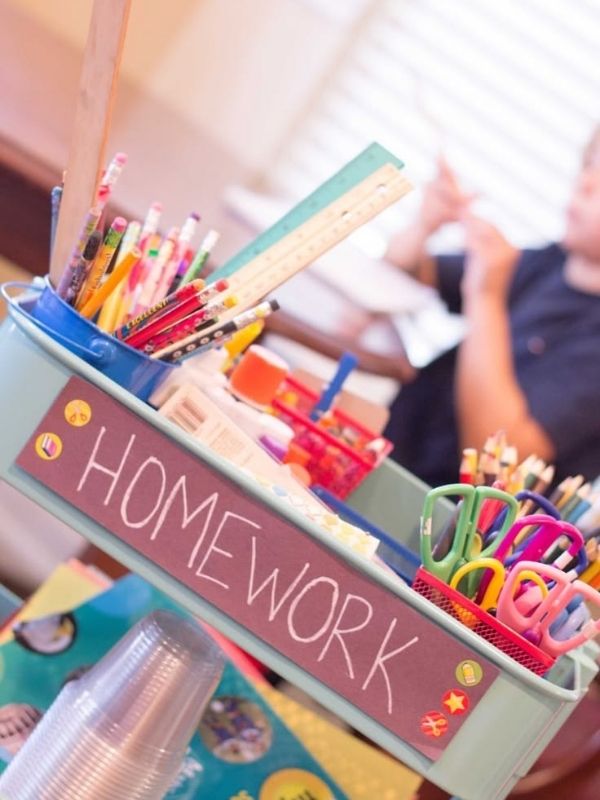
Homework becomes easier when children know when and where it happens.
Choose a routine that works with your family’s schedule. Some children prefer to start soon after getting home, while others need a short break first.
The important thing is consistency.
Set aside a regular period for schoolwork and make sure the necessary supplies are nearby.
You can also teach your child to check their assignment list before beginning. That way, they know exactly what needs to be completed.
For younger children, parents may need to provide more supervision. Older children can gradually become more independent.
Try not to make homework the only focus of the evening. Children still need time for meals, relaxation, family interaction, and sleep.
A balanced routine is more sustainable than an exhausting schedule.
That is why a homework plan deserves a clear spot in The Ultimate back-to-school checklist: 30 things parents should do.
21. Organize school documents
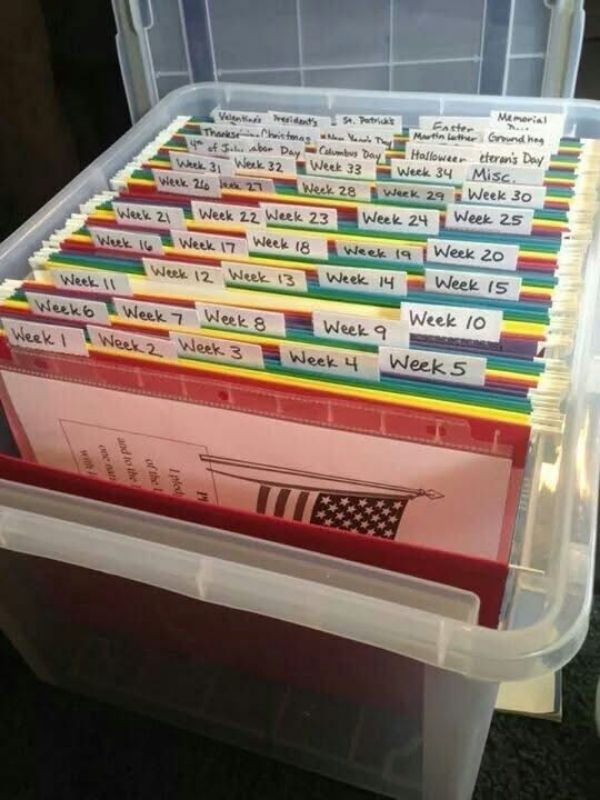
Important school documents have a habit of disappearing when they are needed most.
Create one physical folder for papers and one digital folder for electronic documents. Store school calendars, permission forms, receipts, contact details, schedules, and other useful information there.
You can organize the physical folder using simple sections such as “important dates,” “forms,” and “school information.”
For digital documents, use clear filenames so you can find them quickly.
Do not keep every piece of paper forever. Once something is no longer useful, recycle or discard it if appropriate.
The goal is easy access, not a mountain of paperwork.
A little organization now can save you from searching through drawers later. Therefore, document management belongs on The Ultimate back-to-school checklist: 30 things parents should do.
22. Check technology and school devices

If your child uses a laptop, tablet, calculator, headphones, or another school device, test it before classes begin.
Charge the device and make sure it turns on properly. Check the charger, protective case, and other essential accessories.
If the school requires specific applications or accounts, make sure your child can access them.
Also, review basic digital organization. Remove unnecessary files and create folders for the new school year.
You do not have to make the device look perfect. It simply needs to be ready for everyday use.
If your child is younger, discuss basic care. They should know where the device belongs when it is not being used.
Technology problems are much easier to solve before school starts than during a busy weekday morning. Consequently, this task belongs on The Ultimate back-to-school checklist: 30 things parents should do.
23. Review the family schedule
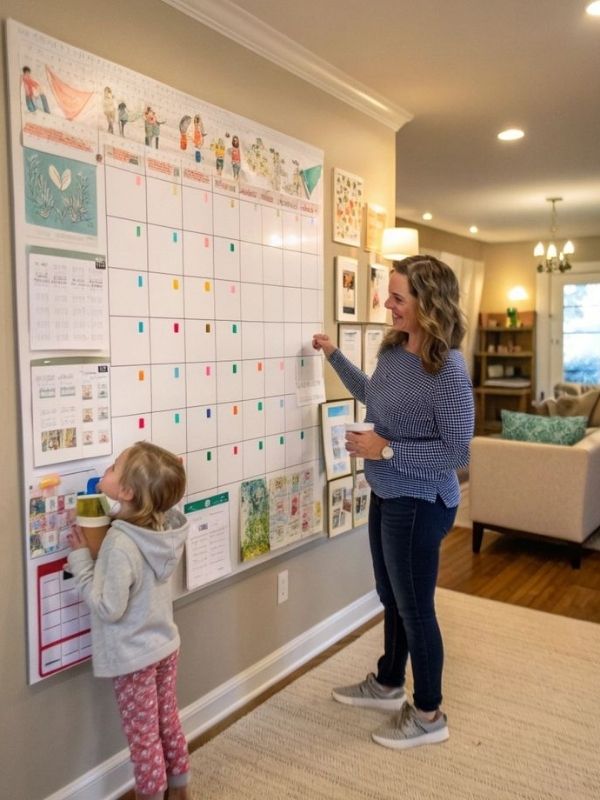
Once school starts, the family calendar can fill up quickly.
Look at work schedules, school events, appointments, sports, clubs, religious activities, and other regular commitments.
Then, identify possible conflicts before they happen.
If two activities overlap, decide early how you will handle them. You may also want to assign certain responsibilities among family members.
A shared calendar can be especially useful. Even a simple paper calendar on the refrigerator can help everyone see what is happening.
Avoid filling every available hour. Children need downtime, and parents do too.
A schedule should support your family rather than make everyone feel like they are constantly racing from one place to another.
Planning the family calendar is therefore an important part of The Ultimate back-to-school checklist: 30 things parents should do.
24. Prepare a simple morning command center
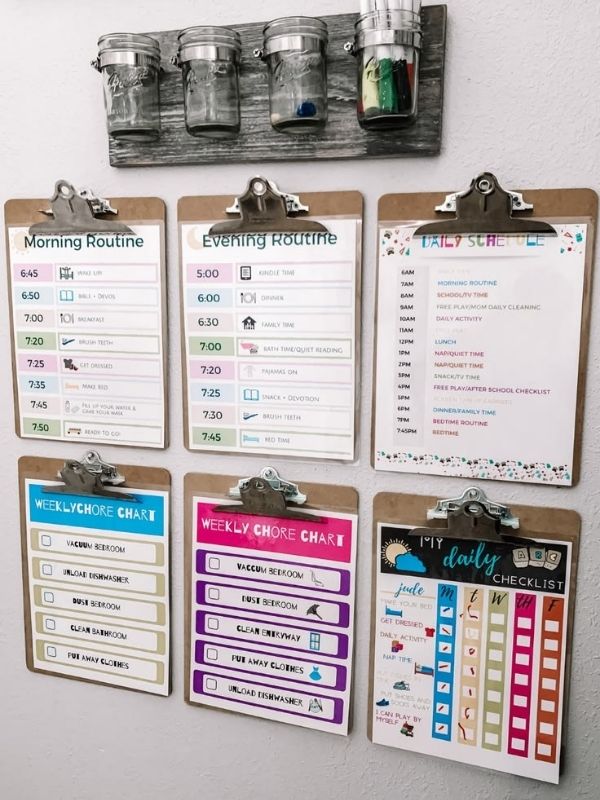
A small “morning station” can make busy days easier.
Choose one area near the door or another convenient location. Keep commonly needed items there, such as backpacks, shoes, school papers, keys, and water bottles.
You can also place a simple checklist where children can see it.
For younger children, pictures can help them remember each step. Older children may prefer a written list.
The point is to create one place where the things needed to leave the house are easy to find.
You do not need expensive organizers. A few baskets, hooks, or shelves can work perfectly well.
Once the system is established, encourage everyone to return items to their proper place.
This tiny home improvement can have a surprisingly big effect on rushed mornings, making it a useful part of The Ultimate back-to-school checklist: 30 things parents should do.
25. Plan for sick days and unexpected changes
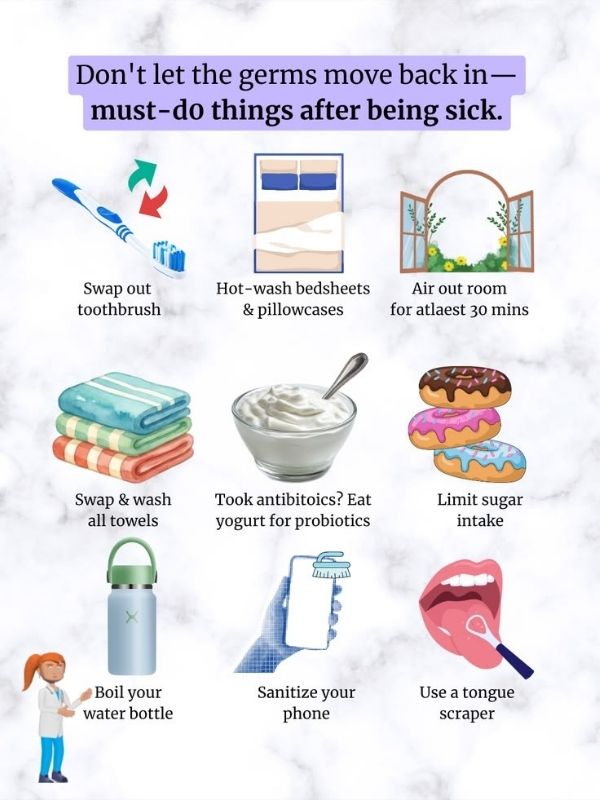
Nobody wants to think about a child missing school, but unexpected days happen.
Think about what your family will do if your child is unwell or if school closes unexpectedly.
Know the school’s attendance procedures and how parents should report an absence.
It can also help to identify a trusted person who may be able to assist with childcare if your usual arrangement falls through.
Keep important contact information accessible.
For schoolwork, teach your child to ask teachers or classmates about missed assignments when appropriate.
The goal is not to plan for every possible problem. Instead, create a simple backup plan so you are not making decisions under pressure.
Unexpected situations become easier when the basics are already understood. Therefore, this preparation belongs on The Ultimate back-to-school checklist: 30 things parents should do.
26. Set boundaries around screens
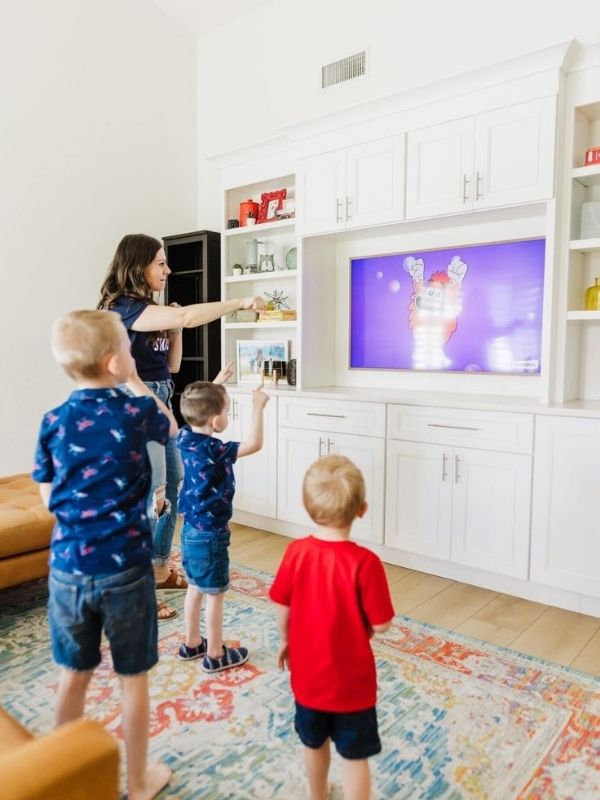
During school holidays, screen habits can become more relaxed. As school approaches, it may help to establish clearer expectations.
Talk with your child about when devices can be used and when they need to be put away.
Instead of creating complicated rules, focus on the times that matter most, such as homework, meals, family conversations, and bedtime.
You can also create charging stations outside bedrooms if that works for your household.
Make sure the expectations are realistic and age-appropriate.
Most importantly, explain that the goal is balance rather than punishment.
If parents follow the same general household rules, children may find the transition easier.
Setting technology boundaries can make school routines calmer, which is why it belongs in The Ultimate back-to-school checklist: 30 things parents should do.
27. Do a final shopping trip
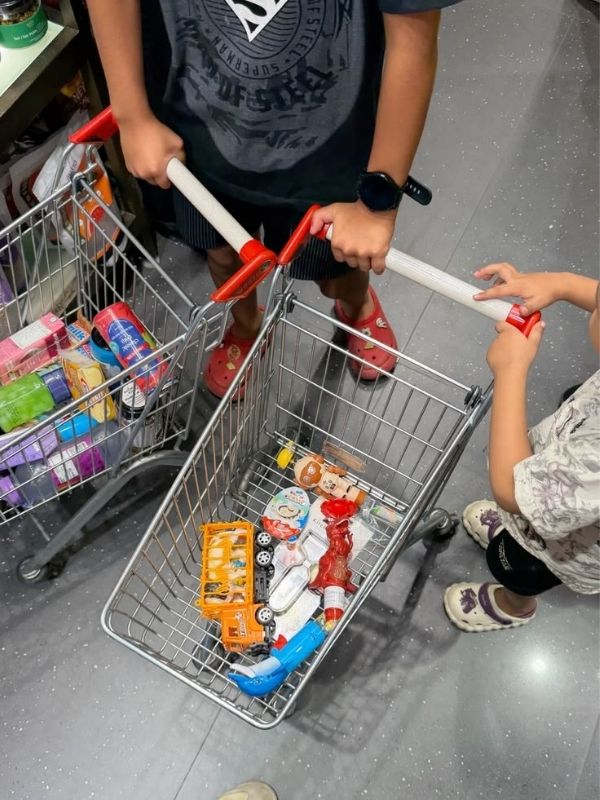
Only after checking what you already own should you make your final shopping list.
Group items by category so you do not wander around the store buying random things. You might have sections for stationery, clothing, footwear, lunch supplies, and personal items.
Stick to the list as much as possible.
If your child comes shopping with you, give them a small amount of responsibility. They can compare options or choose between items that meet the requirements.
You do not need to buy everything at once if the school does not require it immediately.
Some supplies may be easier to purchase later, especially if you are working within a budget.
The purpose of the final shopping trip is to close the gaps, not to start over.
That makes this one of the final practical steps in The Ultimate back-to-school checklist: 30 things parents should do.
28. Pack everything a few days early
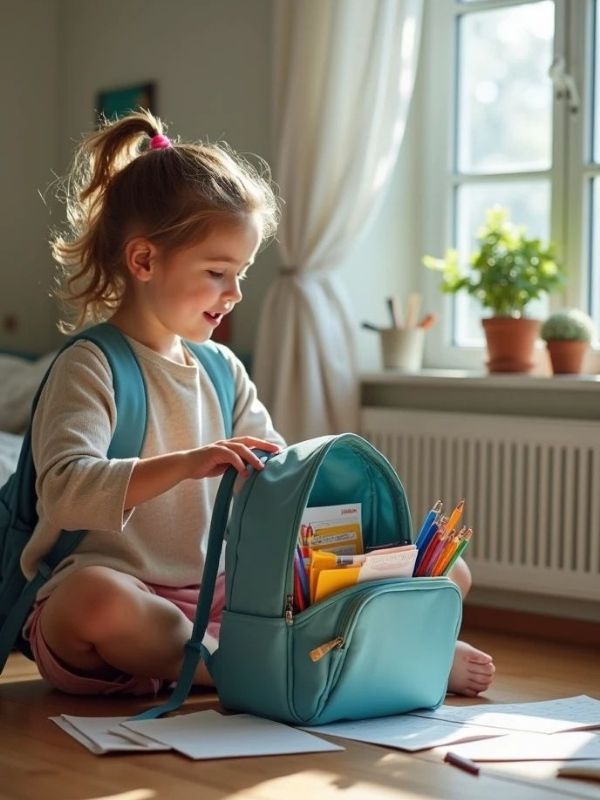
Do not wait until the night before school to pack.
A few days before the first day, gather the supplies, clothing, backpack, lunch container, and other necessary items.
Pack what can safely be packed in advance. Keep anything that needs to stay fresh or refrigerated aside.
Then, check the school supply list one more time.
This final review often catches small things that were overlooked earlier.
You can also prepare the first-day outfit and place the backpack somewhere easy to find.
By doing this early, the night before school becomes much calmer.
There is something reassuring about knowing that most of the work is already finished. That is precisely why early packing deserves a place in The Ultimate back-to-school checklist: 30 things parents should do.
29. Have a calm night before school
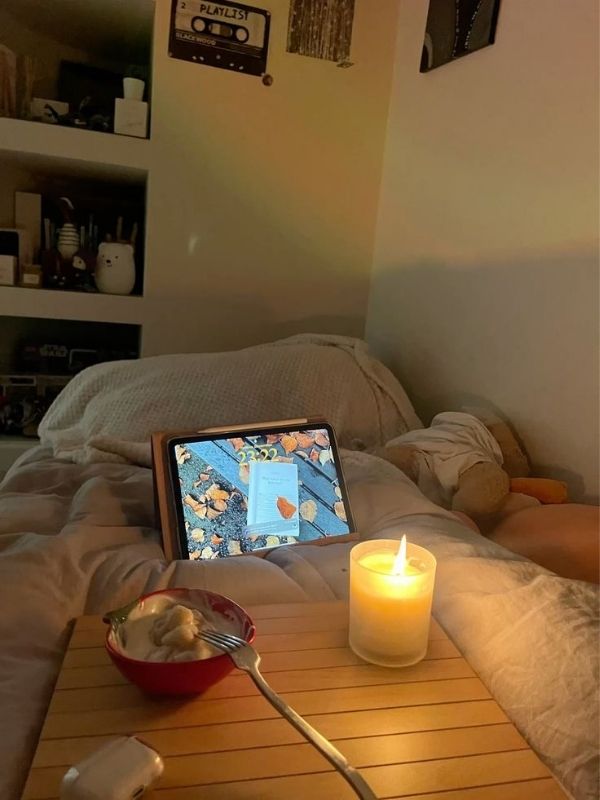
The night before school should not feel like a final exam.
Once bags are packed and clothes are ready, give your child time to relax.
Eat dinner, talk about the next day, and allow enough time for the normal bedtime routine.
Avoid introducing a long list of new rules at the last minute. If something still needs to be done, keep it simple.
You can also talk briefly about what your child is looking forward to. A positive conversation can help shift attention away from first-day nerves.
Parents may feel nervous too, especially when a child is starting a new school or grade. However, keeping the evening calm can help everyone feel more settled.
A peaceful final evening is one of the simplest ways to complete The Ultimate back-to-school checklist: 30 things parents should do.
30. Give yourself room to adjust
Even the best preparation cannot make every school morning perfect.
A child may forget something. Traffic may be slow. Breakfast might take longer than expected. A new routine may need changing after the first week.
That is normal.
Instead of expecting everything to work perfectly from day one, treat the first couple of weeks as an adjustment period.
Notice what is working and what is causing unnecessary stress. Then, make small changes.
Maybe backpacks need to be packed earlier. Perhaps bedtime needs to move slightly. You might discover that a different breakfast routine works better.
The important thing is to keep improving the system instead of blaming yourself when something goes wrong.
By the end of the first few weeks, your family will likely have found its rhythm.
And that is the real purpose of The Ultimate back-to-school checklist: 30 things parents should do: not perfection, but a smoother, more organized start to the school year.
How to Make Back-to-School Preparation Less Stressful
Preparing for school can feel like a huge job when every task is sitting in your head at the same time. However, breaking everything into smaller pieces changes the experience completely.
Start with the things that have deadlines. School forms, transportation arrangements, required supplies, and important dates should come first. After that, move toward the tasks that improve your daily routine, such as meal planning, bedtime, homework, and organization.
It can also help to spread the work across several days. For example, one afternoon can be dedicated to clothes, another to school supplies, and another to organizing the home.
Most importantly, involve your children where appropriate. They can help sort supplies, choose lunch options, organize backpacks, prepare clothing, and practice their morning routine.
This approach teaches responsibility while also taking some work off your shoulders.
The best thing about using The Ultimate back-to-school checklist: 30 things parents should do is that you do not have to complete everything perfectly. Use it as a guide, adapt it to your family’s needs, and skip anything that does not apply to your situation.
Common Back-to-School Mistakes Parents Should Avoid
One common mistake is waiting until the last weekend to do everything. While it may be possible, it can make an already busy period feel unnecessarily stressful.
Another mistake is buying supplies before checking what you already have. This can lead to wasted money and extra clutter.
Some parents also focus so heavily on physical preparation that they forget emotional preparation. A child may have a new backpack and fresh notebooks but still feel worried about returning to school.
Likewise, families sometimes create schedules that are too complicated. A routine should make life easier, not turn every hour into another appointment.
Finally, avoid expecting the first school week to run perfectly. New routines need time.
Instead, use The Ultimate back-to-school checklist: 30 things parents should do as a flexible framework. If something does not work, adjust it. If a particular routine works beautifully, keep it.
Frequently Asked Questions
1. When should parents start preparing for back-to-school?
Ideally, begin several weeks before school starts. This gives you enough time to check supplies, organize clothing, review school information, establish routines, and handle unexpected tasks without rushing.
2. What should parents buy before school starts?
Start with the school’s required supply list. Then, check what you already have before buying anything new. Focus on essential stationery, clothing, footwear, lunch supplies, and other items your child’s school specifically requires.
3. How can parents make school mornings easier?
Prepare as much as possible the night before. Lay out clothing, pack backpacks, organize shoes, prepare lunch items, and check the next day’s schedule. A consistent morning routine can also reduce decision-making.
4. How can parents help children who feel nervous about school?
Give them opportunities to talk about their concerns. Listen without immediately dismissing their feelings, and then discuss practical ways to handle specific worries. A familiar routine can also provide reassurance.
5. Should children help with back-to-school preparation?
Yes, when the task is appropriate for their age. Children can sort supplies, organize backpacks, choose between lunch options, prepare clothing, and practice morning routines. This can help them feel more prepared and responsible.
Conclusion
Back-to-school preparation does not have to become a frantic race against the calendar. With a little planning, you can handle the important tasks gradually and give your family enough time to settle into the new routine.
Start with school information and deadlines. Then, move through supplies, clothing, transportation, meals, homework, bedtime, and emotional preparation. Along the way, let your child take responsibility for tasks they can manage.
Most importantly, remember that preparation is meant to make family life easier, not create another source of pressure.
Use The Ultimate back-to-school checklist: 30 things parents should do as your starting point, then adjust it to suit your child’s age, school, schedule, and your family’s needs.
You may not have the perfect first morning. You may forget a small item. You may even discover that your carefully planned routine needs changing after a few days. That is completely fine.
What matters is having a thoughtful starting point.
Once the bags are packed, the clothes are ready, the school information is organized, and everyone knows what to expect, you can finally breathe a little.
The new school year is coming. And this time, you are ready for it.