35 Patio Design Inspiration Ideas for a Beautiful Outdoor Space
Some of the most enjoyable moments at home happen outside. It might be a quiet morning spent enjoying breakfast, an afternoon surrounded by beautiful plants, or an evening chatting with family while the sky changes colour. However, when a patio feels bare, cluttered, or uncomfortable, it becomes easy to overlook this valuable part of the home. That is where these 35 patio design inspiration ideas come in. They offer practical ways to turn an ordinary outdoor area into a welcoming space that reflects your personality and suits your everyday life.
The good news is that creating a beautiful patio does not always require expensive renovations. Sometimes, a fresh furniture arrangement, a few colourful planters, or softer lighting can make a noticeable difference. Likewise, changing the flooring or adding a simple shade structure can completely change the atmosphere. The secret is to understand what your patio needs before buying decorations.
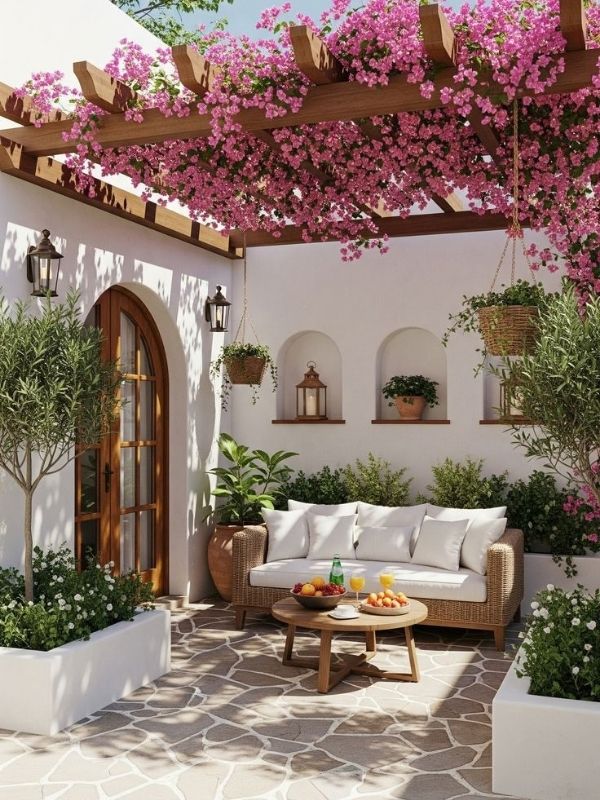
Even if you have a spacious backyard, a compact courtyard, or a small paved area beside your home, there are plenty of ways to make it feel special. You can create a peaceful garden retreat, an inviting dining corner, or a modern outdoor lounge without copying someone else’s entire design.
Throughout this guide, you will discover patio decorating ideas that combine beauty with everyday functionality. Each suggestion in 35 Patio Design Inspiration Ideas explains how to achieve the look, what to consider, and how to adapt the design to your available space. As you explore these 35 Patio Design Inspiration options, remember that the most successful patio is not necessarily the largest or most expensive. Instead, it is the one that makes you want to step outside and enjoy the space you have.
Check out
25 Stunning Black and White Nail Designs for Women
25 Polka Dot Nail Designs for Short Nails
15 No-Cook Camping Food Ideas for Easy Outdoor Meals
35 Patio Design Inspiration Ideas for a Beautiful Outdoor Space
1. Create a Cozy Outdoor Living Room

Outdoor living room is often more inviting when it feels like a natural extension of the living room. Rather than placing a few chairs randomly across the patio, arrange the furniture to create a comfortable conversation area. An outdoor sofa, two armchairs, and a low coffee table can provide everything you need for relaxed afternoons and informal gatherings.
Start with furniture that suits the size of your patio. On a smaller surface, a compact loveseat and two lightweight chairs may work better than a large sectional. Meanwhile, a spacious patio can accommodate a bigger seating arrangement without feeling crowded. Leave enough room for people to walk between the furniture and nearby doors.
Next, introduce cushions, an outdoor rug, and a few decorative accessories. Neutral fabrics create a calm foundation, while patterned cushions add personality. A side table also comes in handy for drinks, books, and snacks.
For a cohesive appearance, repeat two or three colours throughout the space. For example, beige cushions, dark green planters, and natural wood furniture can create a relaxed garden-inspired look. However, remember to choose fabrics and materials suitable for outdoor conditions.
The result is a patio that feels comfortable rather than overly decorated in 35 Patio Design Inspiration Ideas. More importantly, you create a space that works for everyday relaxation as well as entertaining friends and family.
2. Design a Modern Minimalist Patio

If you prefer clean lines and uncluttered surroundings, a minimalist patio may be exactly what you need. This style focuses on simplicity, carefully chosen materials, and furniture that serves a clear purpose. Instead of filling every corner with accessories, you allow a few well-selected pieces to create the overall impression.
Begin with a restrained colour palette. Shades of white, charcoal, grey, beige, and soft brown work particularly well together. Next, choose furniture with simple shapes, such as a rectangular dining table, a streamlined outdoor sofa, or chairs with slim metal frames.
Flooring also plays an important role. Large concrete pavers or understated outdoor tiles can establish a clean visual foundation. Nevertheless, the surface should suit your climate and provide appropriate slip resistance, especially where rain is common.
To prevent the patio from feeling cold, introduce a little greenery. One large planter, a small ornamental tree, or several carefully arranged pots can soften the straight lines. Similarly, warm outdoor lighting adds atmosphere without creating visual clutter.
These 35 patio design inspiration ideas include options for different tastes, and minimalism is particularly useful when you want a polished appearance without too many decorative purchases. Keep the layout open, hide unnecessary storage items, and choose durable pieces that are easy to maintain. Ultimately, the beauty of this design comes from restraint, balance, and thoughtful details.
Save for later
Prom Flyer Ideas: 15 Designs Students Will Love
15 Modern Kitchen Design Ideas That Look Expensive But Are Budget-friendly
16 Beautiful Wooden Range Hood Ideas to Elevate Your Kitchen Design
25 Cute Back to School Nail Designs Teens Will Adore
3. Bring Nature Closer with a Garden Patio

A garden-inspired patio creates a lovely connection between your seating area and the surrounding landscape. Instead of treating plants as occasional decorations, make them an important part of the design. Their varied shapes, textures, and colours can soften paving and make an outdoor space feel more welcoming.
First, consider the plants that suit your local climate, available sunlight, and watering routine. Flowering plants can introduce seasonal colour, while leafy varieties provide a lush background. You might also combine low-growing plants with taller pots to create different visual levels.
Next, position containers around the patio edges rather than scattering them across every available surface. This arrangement keeps walking areas clear while allowing greenery to frame the seating zone. If space permits, a narrow planting bed along one side can connect the patio with the garden beyond.
Natural materials help strengthen the look. Wooden furniture, stone paving, woven baskets designed for outdoor use, and terracotta-style containers can complement the plants beautifully. However, ensure that decorative containers drain properly and that moisture-sensitive materials receive suitable protection.
For an especially peaceful atmosphere, include a comfortable chair near the plants. It can become your favourite place to read, enjoy a drink, or simply take a break from a busy day.
The best part of this 35 Patio Design Inspiration Ideas is that a garden patio does not need an elaborate landscape plan. Even a few healthy plants, arranged thoughtfully, can create a fresh and inviting outdoor retreat.
4. Add a Beautiful Pergola for Shade and Style

A pergola can give your patio a stronger architectural identity while helping define the area as an outdoor room. Its overhead beams create a sense of structure, making the seating or dining space feel intentional rather than exposed.
Before choosing a design, decide how much shade you need. Traditional open-beam pergolas allow sunlight to pass through, while adjustable canopies or suitable roof coverings provide greater protection. In particularly hot or rainy climates, the covering material deserves careful consideration.
Wooden pergolas offer a natural appearance that pairs beautifully with garden planting. Alternatively, metal structures can complement contemporary homes with their clean lines. Whichever material you choose, make sure the structure is properly installed and designed for the local weather conditions.
Once the framework is in place, decorate it with outdoor-rated string lights, hanging planters, or climbing plants suited to your climate. These additions can make the space feel softer without overwhelming the structure. However, avoid attaching heavy items unless the pergola has been designed to support them.
Arrange your furniture underneath so that the shaded area has a clear purpose. For instance, a dining table works well beneath a pergola near the house, while lounge chairs create a relaxing destination farther into the garden.
A pergola requires more planning than a simple furniture update. Nevertheless, it can transform the appearance and usability of a patio, particularly when shade and visual definition are priorities.
5. Choose Natural Stone for Timeless Appeal

Flooring establishes the foundation of your patio, so it deserves attention before you purchase decorative accessories. Natural stone offers variation in colour and texture, giving an outdoor space a grounded appearance that works with many architectural styles.
Depending on local availability, you might consider flagstone, slate, granite, or other suitable paving stones. Each material has its own texture, maintenance requirements, and response to weather. Therefore, request samples before making a final decision, especially when the finished patio will cover a large area.
For a relaxed garden setting, irregular stone shapes can create a more organic appearance. In contrast, evenly cut paving gives the surface a more formal and contemporary finish. Both options can look beautiful when their colours complement the house and surrounding landscape.
The colour of the stone also influences the overall atmosphere. Warm beige and brown tones pair naturally with timber furniture, while cooler grey shades complement modern metal finishes. Meanwhile, lighter surfaces may help a space feel visually open, although their temperature and maintenance needs depend on the particular material.
Proper installation is essential. The base must be prepared correctly, drainage should be planned, and joints should suit the paving system. Otherwise, an attractive surface may develop uneven areas or drainage problems over time.
Although natural stone can involve a higher initial cost than some alternatives, its distinctive appearance makes it worth considering for a long-term patio project. Choose a finish suitable for outdoor use especially for 35 Patio Design Inspiration Ideas, and the flooring can provide a beautiful foundation for the rest of your design.
Bookmark
15 No-Cook Camping Food Ideas for Easy Outdoor Meals
10 Outdoor Halloween Decorations on a Budget
Eco-Friendly Outdoor Decor :15 Ways to Style a Sustainable Yard
25 Garden Bridal Shower Decor Ideas for a Stunning Outdoor Party
6. Make a Small Patio Feel More Spacious
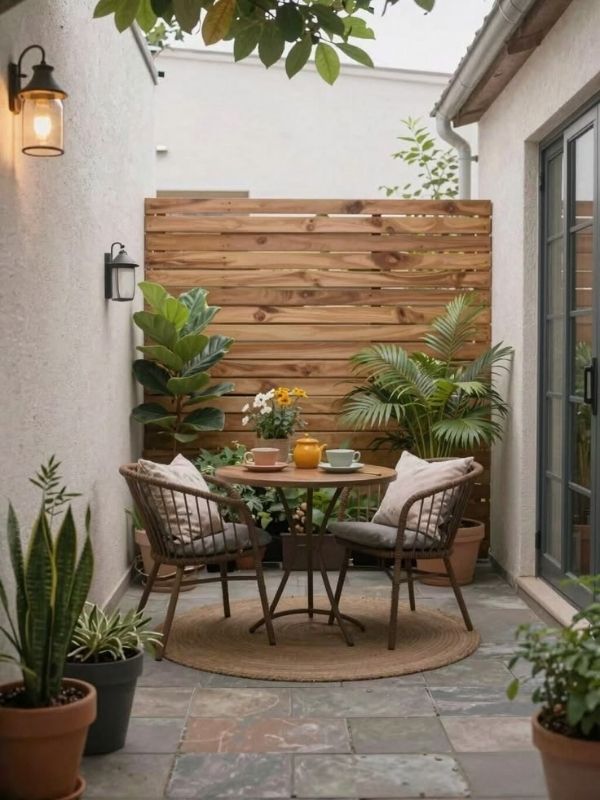
A compact patio can still feel welcoming when every item has a clear purpose. Rather than attempting to squeeze oversized furniture into the area, focus on proportion, movement, and visual openness.
Begin by measuring the available floor space. Then, select a small bistro table, folding chairs, or a narrow bench that fits comfortably without blocking doors and pathways. Furniture with open frames can also make the area appear less crowded because more of the floor remains visible.
Next, use vertical space. Wall-mounted planters, slim trellises, and hanging containers bring greenery into the design without taking up much floor area. A wall light can provide evening illumination while keeping a side table free for other essentials.
Colour can help create a sense of continuity. For instance, pale paving, neutral furniture, and cushions in one accent shade produce a calm appearance. However, you do not need to avoid bold colours altogether. A colourful chair or patterned cushion can provide an attractive focal point.
Storage is another important consideration. Choose a bench with a storage compartment or a compact table that can accommodate small accessories. This helps keep the patio tidy after use.
When exploring 35 patio design inspiration ideas, remember that a small space does not need to imitate a large backyard. Its charm may come from intimacy, simplicity, and a carefully arranged seating corner. By keeping the layout open and choosing furniture thoughtfully, you can make a modest patio feel both functional and stylish.
7. Create an Outdoor Dining Area

An outdoor dining area makes the patio useful for more than occasional relaxation. It provides a place for breakfast, family meals, weekend brunches, or informal dinners when the weather is pleasant.
Start with a table that accommodates the people who will use it most often. A round table can work well in a compact space because it avoids sharp corners, while a rectangular table suits a longer patio. Folding or extendable furniture may be especially practical if you sometimes host additional guests.
Comfort matters just as much as appearance. Choose chairs with suitable back support, and allow enough room to pull them out without hitting walls or planters. If the dining area receives strong sunlight, add a properly secured umbrella or another suitable shade structure.
Next, introduce simple decorative details. An outdoor-safe table runner, reusable placemats, or a low arrangement of plants can make the table feel inviting. Keep the centrepiece low enough for guests to see one another across the table.
Lighting also changes the mood. A pendant designed for outdoor use beneath a covered structure or warm string lights nearby can create a pleasant evening atmosphere. Any electrical installation should be suitable for outdoor conditions.
Finally, place the dining area where serving food is convenient. A position near the kitchen or an accessible doorway can reduce the effort involved in carrying dishes outdoors.
With the right arrangement, your patio becomes a natural gathering place on 35 Patio Design Inspiration Ideas. It can feel special enough for entertaining while remaining practical for ordinary meals at home.
8. Decorate with a Stylish Outdoor Rug

An outdoor rug is a simple way to give a patio more personality without changing the flooring. It can visually connect the seating arrangement, introduce colour, and make a paved area feel more like a furnished room.
First, choose a size that suits the furniture layout. A rug that is too small may look disconnected from the seating area, whereas an appropriately sized one can bring the chairs and table together. Before buying, measure the area and consider how the furniture legs will sit on the rug.
Material selection is equally important. Look for products specifically designed for outdoor conditions, with suitable resistance to moisture and fading. A rug that dries slowly may be inconvenient in a rainy climate, so check the manufacturer’s care guidance before making your choice.
Patterns offer plenty of decorating possibilities. Stripes can complement a coastal-inspired patio, while geometric designs work well with contemporary furniture. Floral patterns introduce a garden feel, and neutral woven textures provide a quieter foundation for colourful cushions.
For a balanced appearance, repeat one or two colours from the rug elsewhere in the design. For example, a rug with muted blue details can coordinate with blue cushions or a ceramic planter. This small connection makes the arrangement feel intentional.
Maintenance should not be overlooked in this 35 Patio Design Inspiration Ideas. Sweep away loose debris, allow the rug to dry properly, and clean it according to its care instructions. Keep an eye on the edges to prevent curling or tripping hazards.
A well-chosen outdoor rug can make the patio feel more finished, especially when the existing paving is plain or visually cold.
9. Add Colour with Vibrant Outdoor Cushions
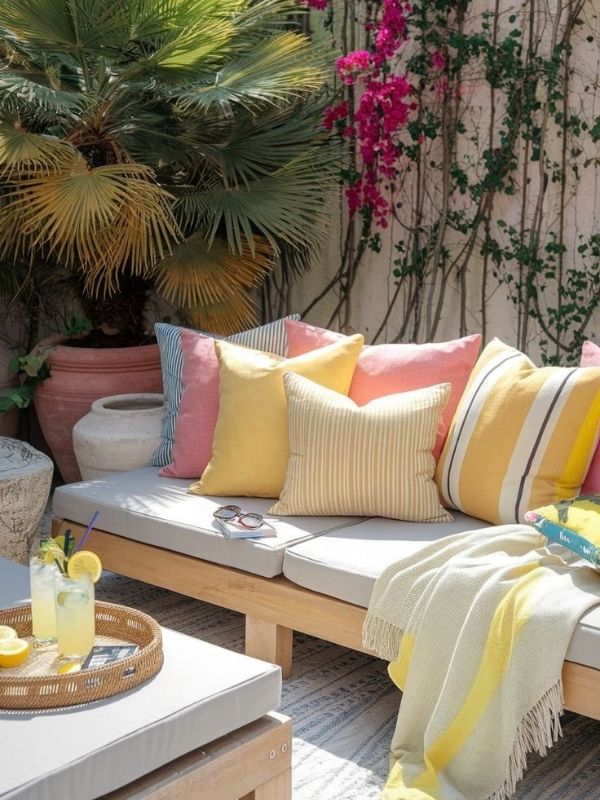
Sometimes, the furniture is perfectly functional, but the patio still feels a little flat. In that case, colourful cushions can introduce a fresh look without requiring a complete makeover.
Begin with the colours already present in the space. If your patio features wooden furniture and neutral paving, shades of terracotta, olive green, mustard, or blue can add warmth and interest. Alternatively, a monochromatic palette with different shades of one colour creates a more understated appearance.
Mixing patterns can also work beautifully. Try pairing a small geometric print with a larger botanical pattern, then use a plain cushion to give the eye a resting point. Although variety adds personality, keeping a consistent colour palette prevents the arrangement from feeling chaotic.
Comfort is important, so check the cushion filling and fabric before purchasing. Outdoor-rated materials are generally more suitable for exposure to sunlight and moisture. Nevertheless, even weather-resistant cushions benefit from proper care, particularly during heavy rain.
Consider the furniture shape as well. Square cushions often suit structured chairs, while longer cushions can soften a wooden bench. You can also use a lumbar cushion to introduce a contrasting pattern without filling the entire seat with prints.
For a budget-conscious update, replace only the cushion covers when the existing inserts remain in good condition. This approach makes it easy to refresh the patio when your tastes change or a new season inspires a different colour scheme.
The result is a more personal outdoor space in 35 Patio Design Inspiration Ideas that feels thoughtfully decorated without being overly formal.
Save for later
15 Cozy Dog Space Ideas for Small Homes
15 DIY Laundry Folding Table Ideas for Small Spaces
18 Small Space Organization Hacks That Actually Work
20 Fresh Spring Home Decor Ideas to Brighten Your Space
10. Use Potted Plants to Frame the Patio

Potted plants are useful when you want greenery without committing to permanent landscaping. They can define the patio edges, soften hard surfaces, and introduce colour wherever the design needs it.
Start by choosing containers that complement the patio materials. Terracotta-style pots suit warm, rustic settings, while dark metal or simple stone-look containers can work with modern furniture. You can also mix container shapes, provided their colours or finishes create a clear connection.
Next, vary the height of your plants. Taller containers can anchor the corners, while medium-sized pots soften the edges of a seating area. Smaller containers work well on stable side tables or broad steps where they will not obstruct movement.
Plant selection should depend on sunlight, rainfall, drainage, and the amount of maintenance you can manage. Some plants thrive in bright conditions, while others prefer partial shade. Consequently, observe the patio throughout the day before deciding where each pot belongs.
Grouping containers in odd numbers can create a relaxed arrangement, although symmetry may suit a formal entrance patio. Either way, leave enough room for watering and routine care.
For an extra design detail, repeat one plant variety in several containers. This creates continuity without making every corner identical. You might also combine leafy plants with seasonal flowers for a mix of textures and colour.
With a little planning, potted plants can turn a plain paved area into a lively outdoor retreat. They are particularly useful for renters or homeowners who want flexibility as their patio design evolves.
11. Install Warm Outdoor Lighting
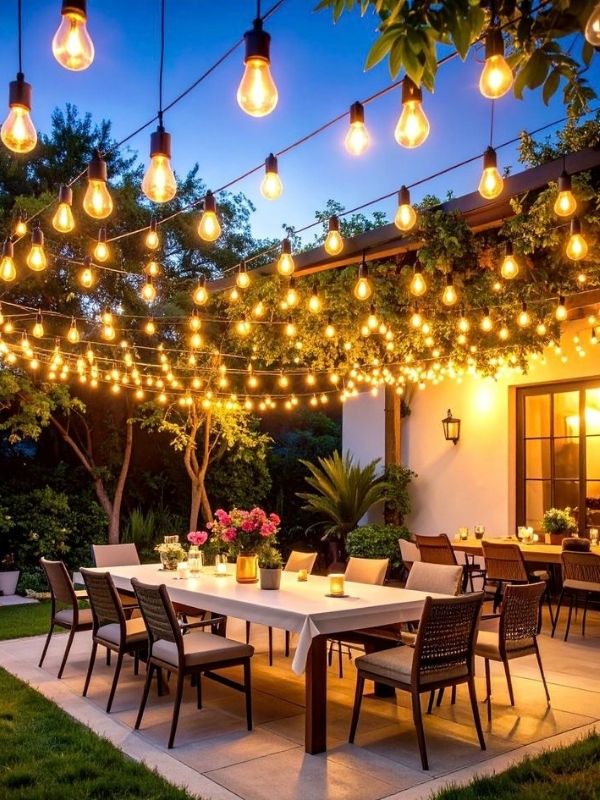
Lighting can change the atmosphere of a patio dramatically. During the day, the space may rely on natural sunlight, but after sunset, thoughtful illumination helps it remain useful and welcoming.
Begin by identifying the areas that need light. Seating corners benefit from soft ambient illumination, while dining tables and steps may require more focused lighting. Combining these layers creates a balanced effect instead of relying on one bright fixture.
String lights are a popular choice because they add a gentle glow above seating areas. You can hang suitable outdoor-rated lights along a pergola or between properly installed supports. However, ensure that the fixings are secure and the arrangement does not create an obstruction.
Lanterns and solar-powered garden lights offer other options. Place them where they illuminate the space without producing glare. Solar fixtures can be convenient in sunny locations, although their performance depends on available daylight and product quality.
For a modern patio, wall lights or discreet step lighting can complement clean architectural lines. Select fixtures designed for the exposure they will experience, and have permanent electrical work installed by a qualified professional.
Colour temperature also affects the atmosphere. Warm white lighting generally creates a softer setting for relaxation, while brighter task lighting can help with food preparation or practical activities.
These 35 patio design inspiration ideas are intended to balance appearance with everyday use, and lighting illustrates that principle well. Rather than decorating randomly, place each light where it serves a purpose. The result is a patio that feels inviting after dark while remaining comfortable to navigate.
12. Build a Beautiful Brick Patio

Brick paving brings traditional character and a sense of permanence to an outdoor space. Its warm tones complement garden greenery, wooden furniture, and many styles of home architecture. Depending on the brick and installation method, it can also offer plenty of pattern choices.
One option is a classic running-bond pattern, where the joints are staggered. This creates a familiar, understated appearance. Alternatively, a herringbone pattern introduces more movement and can become a distinctive feature of the patio floor.
Colour deserves careful consideration. Traditional red and brown bricks create a warm atmosphere, while muted or mixed tones can look more contemporary. Before selecting a large quantity, view samples outdoors because natural light can change how the colours appear.
Brick paving works particularly well when connected to a garden path or planted border. You can use the same material for both areas to create continuity, or introduce a contrasting edge to define the seating zone.
However, not every brick is suitable for paving. Choose a product rated in 35 Patio Design Inspiration Ideas for the expected outdoor exposure, and make sure the base, joints, and drainage are appropriate for your site. An unsuitable brick may deteriorate or become slippery in wet conditions.
Furniture with simple shapes helps the paving remain visible. Meanwhile, outdoor cushions and potted plants soften the traditional surface without competing with its texture.
A brick patio can suit both older homes and newer properties when the colour and pattern are chosen carefully. It is a useful option if you want the floor itself to contribute warmth and visual interest.
13. Create a Relaxing Bohemian Patio
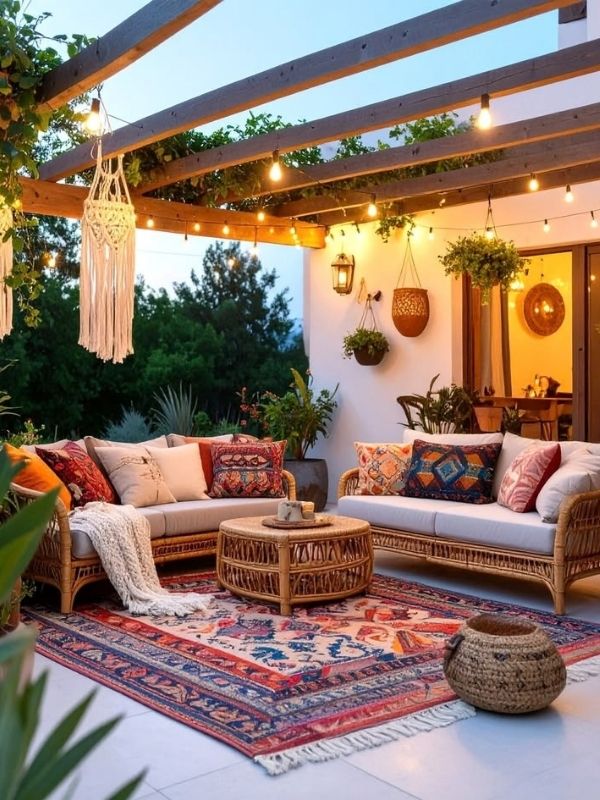
A bohemian-inspired patio feels relaxed, layered, and personal. Rather than relying on a perfectly matching furniture set, this style combines different textures, natural materials, and decorative details to create a comfortable outdoor retreat.
Begin with a simple foundation. Wooden seating, woven chairs, or a low outdoor table can provide a natural starting point. Then add cushions, throws suitable for outdoor use, and a patterned rug to introduce softness.
Colour can be expressive without becoming overwhelming. Earthy shades such as rust, sand, cream, and olive create a warm base. You can then introduce brighter colours through a few cushions or decorative pots. Repeating selected shades helps the different elements feel connected.
Plants are another important feature. Arrange containers at varying heights, and consider a suitable trellis or hanging planter if you have limited floor space. Choose varieties that suit your light conditions rather than selecting plants solely for their appearance.
Lighting adds to the atmosphere. Outdoor lanterns, warm string lights, and safely positioned solar lamps can make the patio feel inviting in the evening. Always choose fixtures intended for outdoor use, particularly when they will be exposed to rain.
The main challenge in this 35 Patio Design Inspiration Ideas with bohemian decorating is avoiding unnecessary clutter. Every object should contribute something, whether it provides comfort, colour, texture, or practical use. Leave enough open space for walking and everyday activities.
This approach is ideal if you enjoy collecting distinctive accessories in 35 Patio Design Inspiration Ideas or prefer a patio that feels less formal. With a few thoughtful layers, the area can become an expressive space that reflects your individual style.
Check out
60 Halloween Spooky Basket Ideas for Kids, Teens and Adults
20 Fresh Spring Home Decor Ideas to Brighten Your Space
10 Amazing Bedside Table for Small Spaces
14. Design a Mediterranean-Inspired Patio
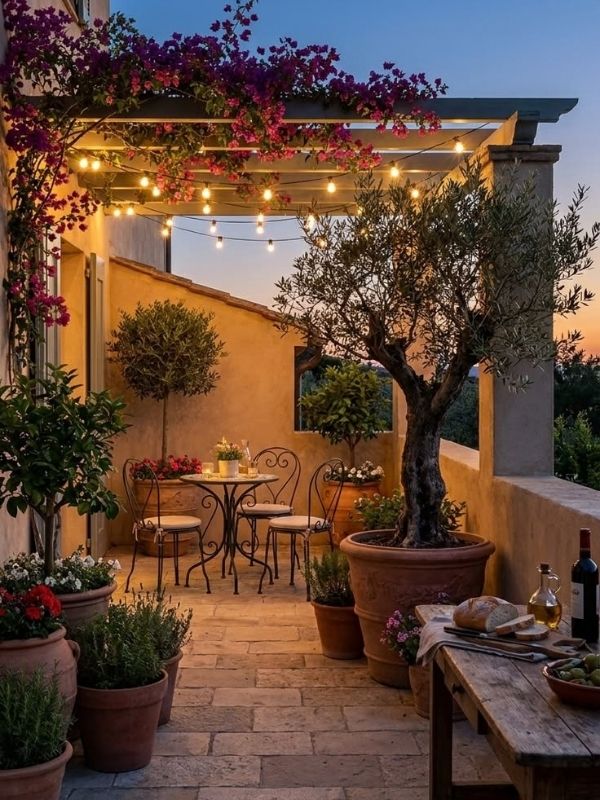
A Mediterranean-inspired patio combines warm colours, textured materials, greenery, and relaxed outdoor living. The look often feels sunny and inviting, making it appealing even when the available space is relatively modest.
Start with a palette of terracotta, cream, sandy beige, muted blue, and olive green. These shades can appear through the flooring, furniture, cushions, and plant containers. You do not need to use every colour; two or three carefully repeated shades can establish the theme.
Terracotta-style paving or pots provide a natural starting point. If changing the floor is outside your budget, introduce the same warm tones through containers and accessories instead. This gives you a similar visual effect without a major renovation.
For seating, consider a wooden bench, a wrought-iron-style table, or comfortable chairs with light cushions. A small dining area can make the patio feel especially inviting, encouraging relaxed meals outdoors.
Plants should complement the local climate. Lavender, rosemary, and certain drought-tolerant varieties may suit some regions, but always check their growing requirements before planting. In hotter climates, choose species that tolerate the actual sunlight and rainfall available in your garden.
Decorative details can include patterned outdoor tiles, ceramic pots, and a simple wall feature. However, keep the arrangement balanced so that the patio does not become crowded with competing patterns.
A Mediterranean look does not require an elaborate courtyard. Even a few terracotta pots, warm-coloured cushions, and simple outdoor furniture can establish the atmosphere. The aim of this 35 Patio Design Inspiration Ideas is to create a relaxed place where meals, conversations, and quiet afternoons feel natural.
15. Make a Fire Feature the Focal Point
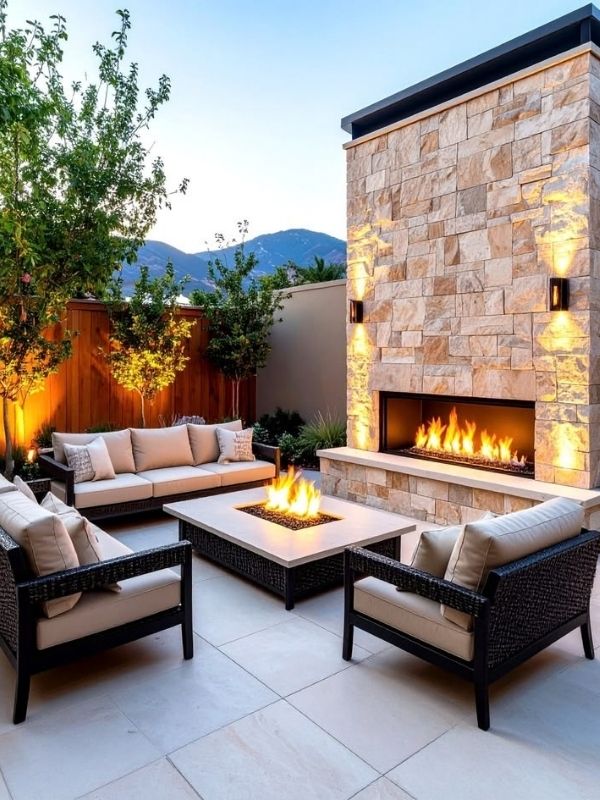
A fire feature can give a patio a clear centre and encourage people to gather in one place. Depending on local conditions and the design chosen, it may take the form of a purpose-built outdoor fireplace or a professionally installed gas fire table.
Start by considering the available space and intended use. A compact patio may benefit from a small feature designed specifically for that setting, while a larger outdoor lounge can accommodate a more substantial architectural element.
Arrange the seating so that people can converse comfortably without crowding the feature. Keep required clearances around heat sources, furniture, buildings, and overhead structures. Follow the manufacturer’s installation and operating instructions, along with local fire-safety requirements.
Materials around the focal point should suit the expected heat exposure. Ordinary decorative fabrics and unsuitable plastic furniture may not be appropriate nearby, so check product guidance before arranging the space.
To make the overall design feel cohesive, repeat the fire feature’s materials or colours elsewhere on the patio. For example in 35 Patio Design Inspiration Ideas, a stone surround might coordinate with stone planters, while a dark metal feature can complement metal chair frames.
You can also create a welcoming atmosphere without using the feature every day. Comfortable seating, an outdoor rug placed at a safe distance, and warm ambient lighting will help the area remain useful.
A fire feature involves more planning than cushions or potted plants, but it can provide a strong focal point for an outdoor living area. If you are considering an installation, consult a qualified professional about the safest and most suitable option for your property.
16. Choose a Black-and-White Patio Palette

Black and white create a clear, graphic appearance that can suit both contemporary homes and traditional outdoor spaces. The contrast gives the patio structure, while a few carefully selected textures prevent the design from feeling too stark.
Start with the larger elements. Light paving, a dark dining table, or black-framed chairs can establish the colour scheme without requiring every item to match. Alternatively, a patterned outdoor rug can introduce both colours in one feature.
Patterns deserve a little restraint. Stripes, checks, and geometric prints can look striking, but using several competing patterns may make the space feel busy. Choose one dominant pattern and keep the remaining textiles relatively simple.
Next, introduce texture through wood, woven materials, or stone. These surfaces add warmth and depth while preserving the monochromatic palette. Green plants also work beautifully because their natural colour provides a gentle contrast.
Consider the practical side of the colour choices as well. Very dark surfaces can become hot in direct sunlight, while white fabrics may show dirt more readily. Select materials based on their outdoor performance, not just their appearance.
Lighting can reinforce the design after sunset. Dark-framed wall fixtures or discreet lights along the edges of the patio can highlight architectural lines without adding more decorative objects.
This palette among this 35 Patio Design Inspiration is especially useful when you want a coordinated appearance that can evolve over time. You can change the cushions, planters, or rug while keeping the main colours consistent. As a result, the patio remains visually connected even when individual accessories are replaced.
17. Add a Wooden Decking Area
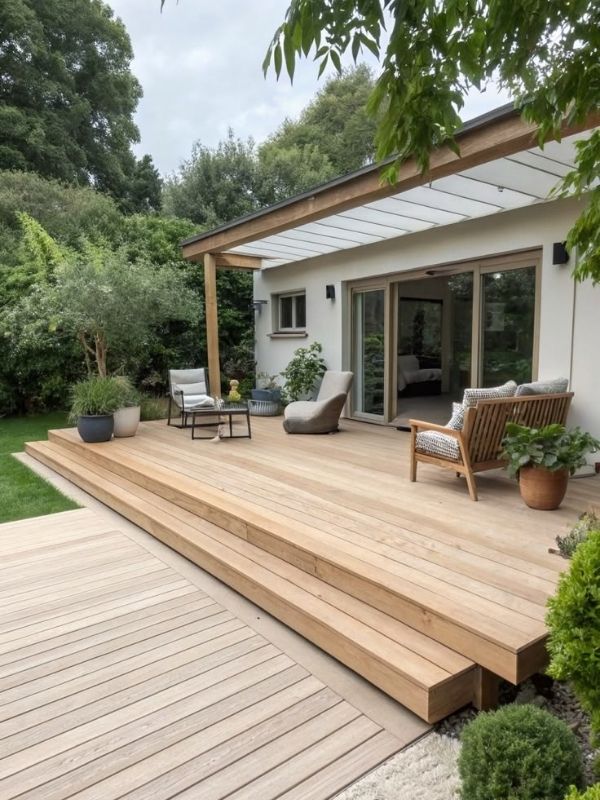
Wooden decking can introduce warmth and a distinct surface to a patio, particularly when the outdoor area connects directly to the house. Its linear boards create a strong visual direction and can help define a seating or dining zone.
Before choosing a material, consider how much maintenance you are comfortable with. Natural timber can develop character over time, but it may require cleaning, sealing, or other care according to its species and finish. Composite decking offers another option, although its appearance, heat retention, and maintenance requirements vary by product.
Colour also influences the overall effect. Warm brown boards complement natural garden planting, while grey-toned decking can work with modern furniture and neutral paving. Request samples whenever possible, since outdoor light can make finishes appear different from catalogue images.
You can use decking across the entire patio or combine it with another material. For instance, a small raised deck beside a paved area can establish a separate lounge zone. However, changes in level require suitable steps, edge protection where necessary, and a layout that remains easy to navigate.
Drainage and ventilation beneath the decking are essential design considerations. The structure must be installed according to the manufacturer’s requirements and local building conditions.
Once the surface is ready, add outdoor furniture, a rug designed for decking, and planters that will not trap excessive moisture against the boards. Keep the arrangement simple enough for the material to remain visible.
A wooden deck can create a welcoming foundation for an outdoor living space when its construction, finish, and upkeep suit the environment.
18. Create a Patio with a Water Feature
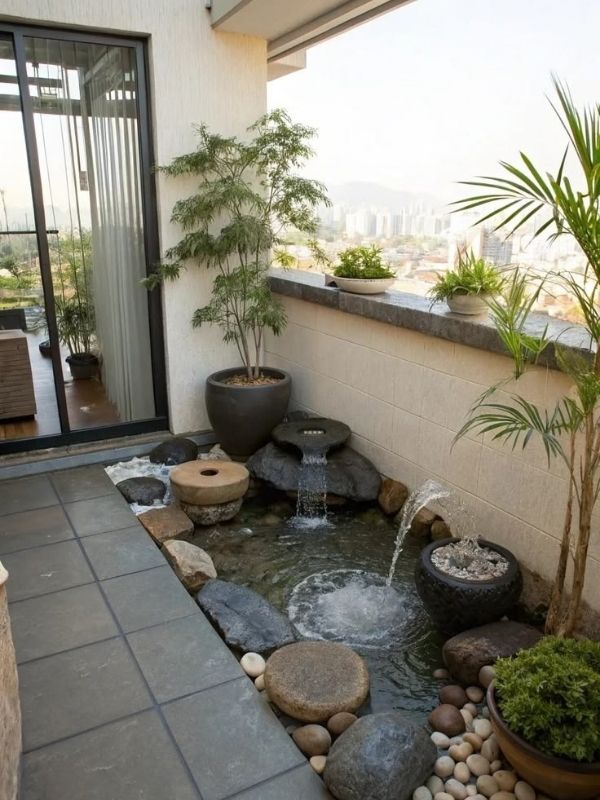
The gentle movement of water can introduce a calming element to an outdoor space. A water feature also gives the patio a focal point that differs from furniture, planting, or decorative paving.
For a compact area, consider a small self-contained fountain or a wall-mounted feature designed for outdoor use. Larger patios may accommodate a more substantial fountain or a carefully designed pond beside the seating area.
Placement is important. Position the feature where it can be appreciated without blocking pathways or interfering with dining and conversation. You should also consider the sound level, since a feature that is too loud may make the patio less relaxing.
Water and electricity require particular care. Choose equipment rated for outdoor conditions, provide suitable drainage, and use a qualified professional for electrical installation. If young children or pets use the area, assess the design for appropriate safety precautions.
The surrounding materials can help the feature blend naturally into the patio. Stone-look finishes, neutral containers, and moisture-tolerant plants can create a cohesive appearance. However, ensure that nearby surfaces do not become unnecessarily slippery from splashes.
Routine maintenance matters too. Follow the manufacturer’s cleaning instructions, check the water level, and prevent standing water from becoming a nuisance. In warmer regions, inspect the feature regularly because evaporation may be faster.
A water feature does not have to dominate the entire garden. Even a modest fountain can make a seating corner feel more intentional. When combined with comfortable chairs and suitable planting, it can help transform an ordinary patio on this 35 Patio Design Inspiration Ideas into a peaceful outdoor retreat.
19. Design a Rustic Farmhouse Patio
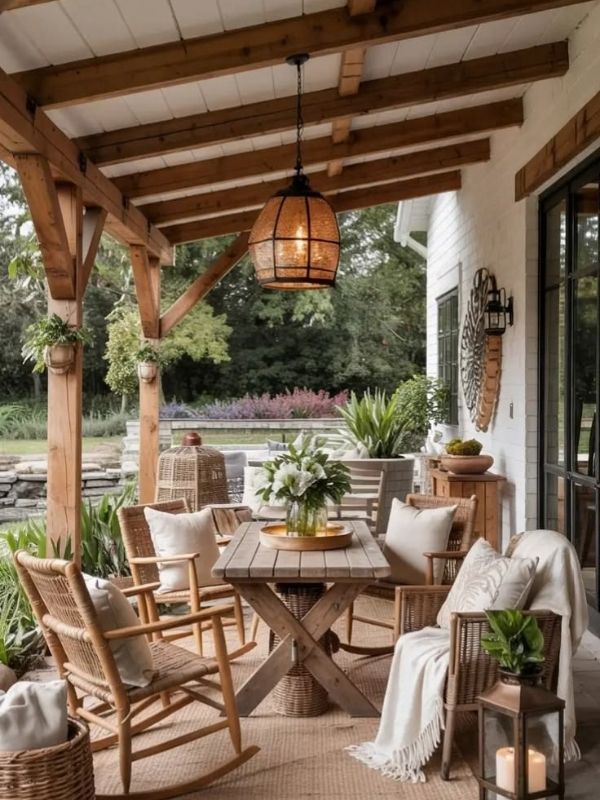
A rustic farmhouse patio combines familiar materials, practical furniture, and a welcoming atmosphere. Rather than aiming for a perfectly polished appearance, it celebrates natural textures and simple details that feel comfortable and lived-in.
Wood is a useful starting point. A sturdy dining table, a wooden bench, or chairs with natural finishes can establish the style. Pair these pieces with neutral cushions and a few woven accessories to soften the harder surfaces.
For the flooring, consider brick, stone, or textured concrete in colours that complement the house. You can also introduce a gravel border or planted edge to create a gentle transition between the patio and the garden.
Decorative containers add character. Metal planters, terracotta pots, and simple ceramic vessels can work together when their colours remain connected. Fill them with plants suited to your climate, and group them near the seating area rather than spreading them everywhere.
Lighting should feel warm and practical. Outdoor-rated wall fixtures or string lights can make the patio inviting after sunset. Meanwhile, a simple centrepiece on the dining table adds personality without making the arrangement too formal.
Storage is useful in a farmhouse-inspired setting because practical objects can become part of the design. A weather-resistant storage bench, for example, provides seating while keeping cushions organised.
Although rustic decor often includes distressed finishes, you do not need to buy everything in a vintage style. A few natural materials and well-chosen accessories can create the same relaxed atmosphere.
This design works particularly well for families who want a patio that feels welcoming during ordinary meals, informal gatherings, and quiet afternoons outdoors.
20. Build a Privacy-Focused Patio Retreat

A patio can be beautiful yet still feel exposed if it faces a neighbouring property or a busy street. Introducing privacy thoughtfully can make the area more comfortable without turning it into a closed-off space.
Begin by identifying the views you want to soften. You might need screening along one boundary rather than around the entire patio. This approach preserves openness while giving the seating area a greater sense of separation.
A slatted screen can suit a contemporary design, while a trellis with suitable climbing plants creates a softer garden appearance. Tall planters may also help define the edge of a patio, provided the containers are stable and the plants suit the available light.
Outdoor curtains offer another option beneath a suitable covered structure. They can add softness and provide temporary screening, although they should be secured properly and used according to the manufacturer’s guidance in windy conditions.
Consider the direction of the sun and the movement of air before installing a permanent barrier. A solid screen may block useful breezes or create a darker corner, so its height and position deserve careful thought.
Once the boundary feels more private, arrange the seating to take advantage of the sheltered atmosphere. Comfortable chairs, soft lighting, and a few plants can turn the area into a quiet retreat.
Privacy features should complement the architecture rather than compete with it. Match the screen material to existing furniture or fencing where possible, and leave enough room for maintenance.
The result is a patio that feels more personal and relaxing while remaining connected to the outdoors.
21. Introduce a Pergola with Climbing Plants
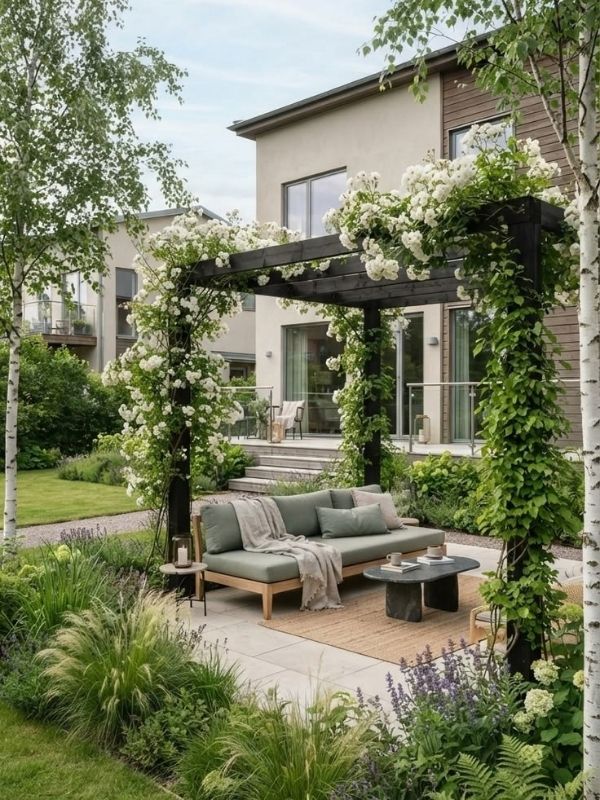
A pergola becomes even more attractive when climbing plants soften its framework. The combination of structure and greenery creates a garden feature that can provide visual interest throughout the year, depending on the plants selected.
Start by choosing a climber suitable for your climate and the amount of sunlight the pergola receives. Some varieties grow vigorously, while others remain more manageable. Check their mature size, watering needs, and maintenance requirements before planting.
The support structure must also suit the plant. Secure the pergola properly, and confirm that its design can accommodate the expected growth and weight. Heavy vines should not be added to a structure that was not designed to support them.
Next, decide how much coverage you want. A lightly planted framework preserves more sunlight, whereas denser growth can create a greener overhead effect. Keep in mind that deciduous plants may provide seasonal shade, while evergreen varieties retain their leaves for longer periods.
Arrange the furniture beneath the pergola with enough room to move comfortably. A small dining set works well in a garden setting, while lounge chairs can create a quieter relaxation zone.
Lighting can be incorporated carefully around the structure. Outdoor-rated string lights may highlight the framework, but avoid damaging the plants or placing cables where routine pruning becomes difficult.
Regular maintenance keeps the design attractive. Guide new growth where needed, remove damaged plant material, and inspect the structure periodically.
This idea in this 35 Patio Design Inspiration Ideas suits anyone who wants a patio that feels connected to the garden. Rather than relying entirely on decorative objects, you allow living greenery to become a defining part of the architecture.
22. Give the Patio a Coastal-Inspired Look
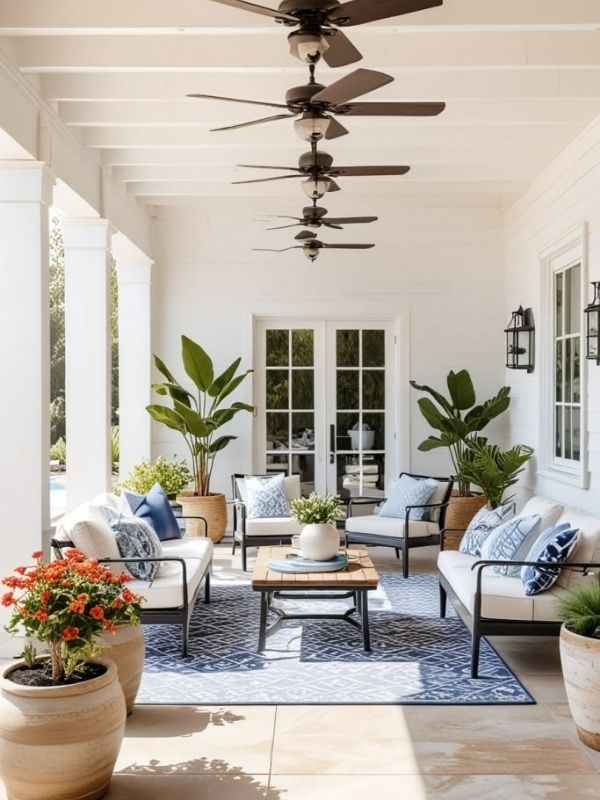
A coastal-inspired patio feels light, relaxed, and uncluttered. Although the style takes inspiration from seaside settings, you can adapt it to almost any home by focusing on airy colours, natural textures, and comfortable outdoor furniture.
Begin with a palette of white, sand, pale blue, and soft grey. These colours can appear through cushions, rugs, planters, and furniture finishes. If the patio already has dark paving, lighter accessories can help create the desired contrast without replacing the floor.
Furniture should feel casual rather than formal. A woven chair, a simple wooden bench, or a light-coloured outdoor sofa can provide a comfortable foundation. Choose materials designed for your actual weather conditions, especially if the patio receives strong sun, frequent rain, or salty air.
Natural textures help prevent the design from feeling plain. Consider rope-style details, woven outdoor accessories, and weather-resistant timber finishes. A striped cushion can add a familiar coastal touch, while a few smooth ceramic pots keep the look balanced.
Plants should reflect the local environment. Ornamental grasses and other suitable varieties can create a relaxed landscape, but always check their growing requirements before planting.
Keep accessories selective. A large decorative anchor or a collection of themed ornaments is not necessary to establish the style. Instead, let the colours, textures, and open layout do most of the work.
For evening use, introduce soft lighting and comfortable seating. The overall effect should feel peaceful and easy to maintain.
A coastal patio works particularly well when you want an outdoor space that looks fresh without appearing overly decorated.
23. Use Decorative Patio Tiles
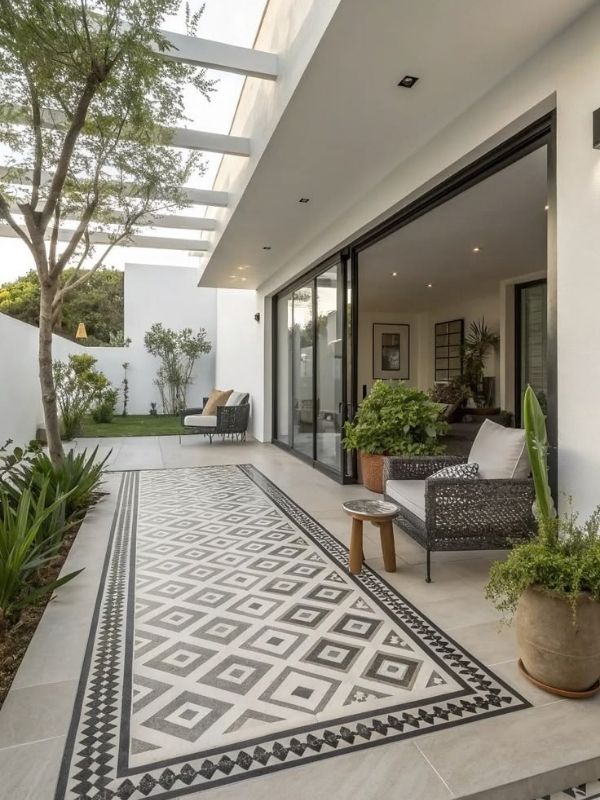
Decorative tiles can turn the patio floor into a major design feature. With the right pattern and colour, they bring personality to an otherwise plain outdoor area while helping establish the style of the furniture and accessories.
Begin by deciding whether you want the entire floor to feature a pattern or only a small section. A patterned border can frame a dining area, while a decorative tiled centre can create a focal point beneath a table or seating arrangement.
Geometric designs offer a contemporary appearance, whereas floral motifs can complement traditional or Mediterranean-inspired settings. If the patio already contains colourful furniture, simpler tiles may create a better balance.
Material suitability is essential. Not every indoor tile is appropriate for outdoor use, particularly where rain, temperature changes, or frequent moisture are concerns. Choose products rated for the expected exposure and ensure the finish provides appropriate slip resistance.
The installation should also account for drainage and movement. A properly prepared base and suitable jointing materials help the tiled surface perform as intended. For a large or technically complex area, professional installation may be worthwhile.
Once the tiles are installed, keep the surrounding decor relatively simple. Neutral furniture allows a patterned floor to stand out, while a few coordinated cushions can repeat its colours.
If replacing the entire floor is not practical, consider using decorative outdoor tiles in a smaller, clearly defined zone. This can create a similar visual effect without extending the renovation across the whole patio.
The goal is to make the flooring feel intentional. When the pattern, furniture, and surrounding materials work together, decorative tiles can give the patio a distinctive identity.
24. Create a Family-Friendly Patio
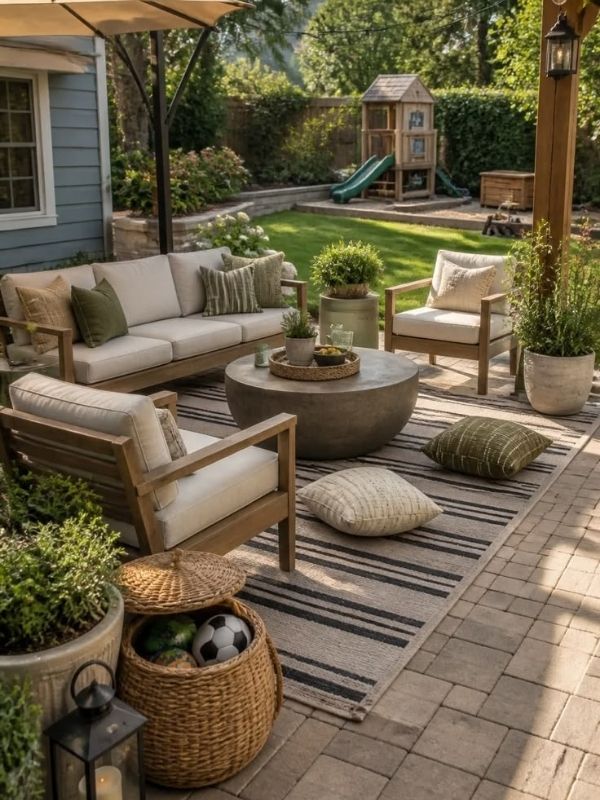
A family-friendly patio should feel welcoming while remaining practical for different activities. It may need to accommodate meals, conversations, quiet reading, and occasional play, so the layout should be flexible rather than overly delicate.
Begin by dividing the space into simple zones. A dining table can occupy one side, while a small seating area provides room to relax. If children use the patio, keep an open section available for suitable activities instead of filling every corner with furniture.
Choose durable materials that can handle regular use. Outdoor furniture with sturdy frames, washable cushion covers, and easy-to-clean surfaces can simplify maintenance. However, always inspect furniture for stability, sharp edges, and any features that may present a hazard.
Shade is particularly important in sunny conditions. A properly secured umbrella or suitable covered structure can make the area more comfortable during warmer parts of the day. Ensure that the arrangement remains stable in changing weather for 35 Patio Design Inspiration Ideas.
Storage also helps the patio remain organised. A suitable storage bench or weather-resistant container can hold cushions and outdoor accessories when they are not in use. Keep pathways clear so that people can move around without tripping over loose items.
Plants add beauty, but place delicate containers where they will not be knocked over easily. If you have young children or pets, check whether the plants you choose are safe for the people and animals using the space.
Finally, use colours and textures that make the patio feel inviting. Comfortable seating, a simple outdoor rug, and warm lighting can create an area that works for both everyday routines and family gatherings.
25. Design a Luxury Resort-Inspired Patio
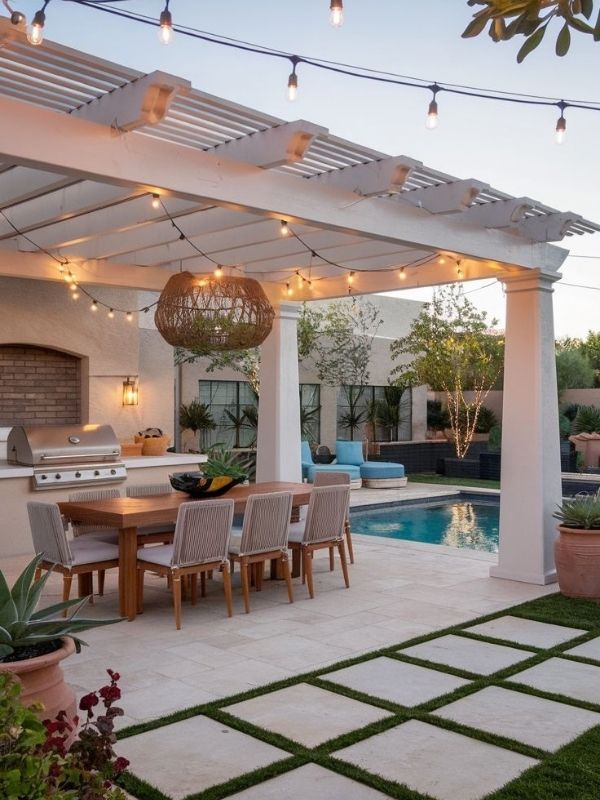
A resort-inspired patio focuses on comfort, spaciousness, and carefully coordinated details. You do not need a large property to achieve the atmosphere; the important thing is to create a setting that feels considered and relaxing.
Start with comfortable seating. Deep outdoor chairs, a well-proportioned sofa, or a pair of adjustable loungers can provide a place to unwind. Choose furniture that fits the space and offers suitable support, rather than selecting pieces solely because they look luxurious.
Next, establish a cohesive colour palette. Cream, beige, warm grey, and natural wood create a calm foundation. You can introduce darker accents through planters, side tables, or light fixtures for additional contrast.
Shade makes a substantial difference to comfort. A pergola, retractable awning, or suitable umbrella can help create a sheltered lounge area. Select a design that suits your weather conditions and provides the level of protection you actually need.
Layered lighting adds atmosphere in the evening. Combine general illumination with discreet lights near pathways and seating areas. If you use candles or decorative lanterns, follow appropriate fire-safety precautions and keep them away from combustible materials.
Plants can frame the lounge without overwhelming it. A few large containers may create a stronger visual effect than many small pots scattered around the floor.
For the final touch, add outdoor cushions, a practical side table, and a rug designed for exterior use. Keep unnecessary accessories to a minimum so that the space feels calm rather than crowded.
The aim is to create a patio that encourages you to slow down. By prioritising comfort, shade, and visual consistency, you can bring a relaxed resort atmosphere into your own outdoor space.
26. Make Gravel the Star of Your Patio
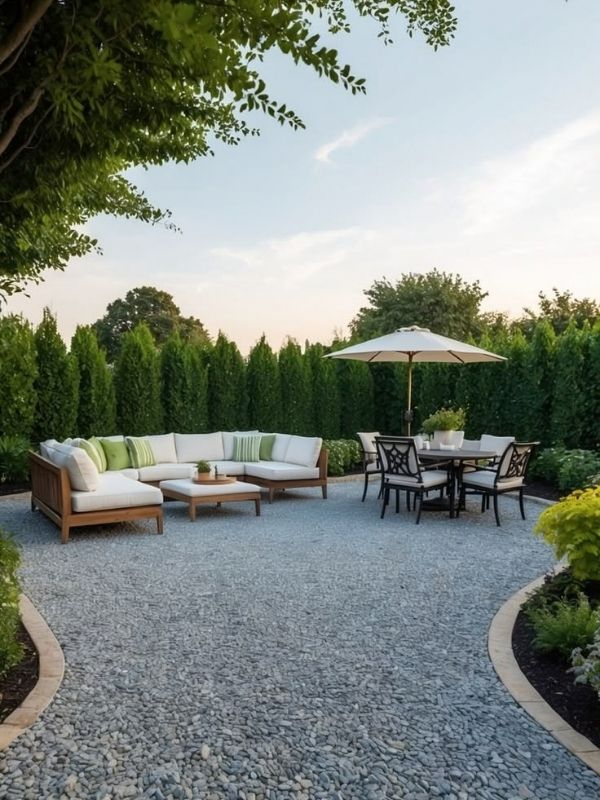
Gravel can provide an attractive alternative to a fully paved patio. Its varied textures create a relaxed garden appearance, and it can work particularly well in informal seating areas or courtyards.
Begin by selecting gravel suitable for the intended use. The size, shape, and colour of the stones affect both appearance and comfort underfoot. Smaller decorative gravel can look delicate, while larger aggregate creates a more pronounced texture. Consider samples before ordering enough material for the entire area.
Proper preparation is essential. The ground should be prepared with a suitable base and edging to keep the gravel contained. Drainage and weed management also need attention, since the finished surface should remain stable and practical.
Furniture selection matters too. Chairs with narrow feet may sink or wobble on loose gravel, so choose suitable furniture or provide stable pads beneath the legs. A small paved area under the dining table can also make moving chairs easier.
For a cohesive design, combine gravel with stone pavers, timber edging, or planted borders. These materials help define the seating area and prevent the patio from looking unfinished. You might also use stepping stones to connect the gravel zone with a garden path.
Colour influences the atmosphere. Pale gravel creates a lighter appearance, while darker stones can complement contemporary furniture. However, consider how the material will look when wet and how easily debris will be visible.
Gravel can be a practical option for certain outdoor settings, but it is not ideal for every household or mobility need. Evaluate the surface carefully before committing to it, especially where smooth movement is important.
27. Add Built-In Patio Seating
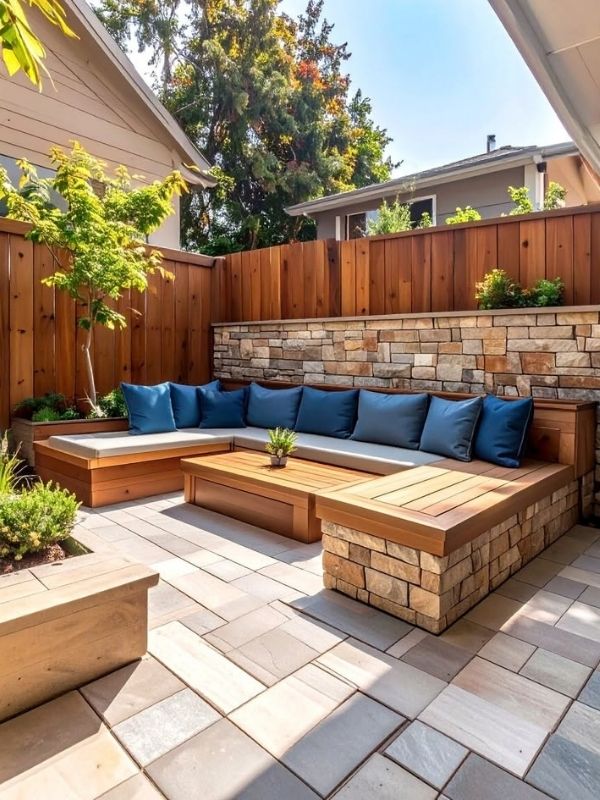
Built-in seating can make a patio feel more organised while reducing the need for multiple separate chairs. It is particularly useful along a wall, around the edge of a courtyard, or beside a raised planter.
Begin by identifying a suitable location. A bench positioned against a wall can preserve the centre of the patio, while an L-shaped arrangement can define a conversation area. Make sure the seating does not block doors or narrow the main walking route.
Materials should suit the weather and the design of the house. Masonry seating offers a solid, permanent appearance, whereas properly constructed timber seating can create a warmer effect. The structure must be designed for outdoor exposure and installed securely.
Comfort deserves attention from the beginning. Check the seat height, depth, and back support, particularly if people will use the bench for extended periods. Outdoor cushions can soften the surface, provided they can be stored or maintained appropriately.
Storage can be incorporated into some designs. A purpose-built compartment beneath a bench may hold small outdoor items, but it should allow suitable ventilation and protect stored belongings from moisture.
You can also connect the seating to nearby planting. A built-in bench beside a planter creates a garden-inspired corner, while a simple masonry seat with neutral cushions can complement a modern patio.
Although built-in seating requires more planning than movable furniture, it can help a small patio use its available space efficiently. Consider the intended layout carefully before construction because a permanent bench is harder to reposition later.
When the proportions and materials are right, the result feels integrated with the patio rather than added as an afterthought.
28. Create a Covered Patio for All-Weather Comfort
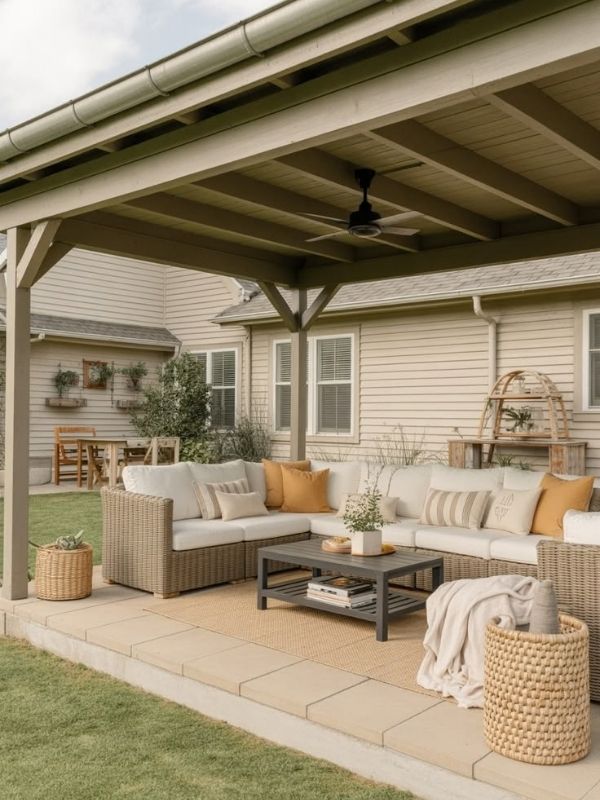
A covered patio can make an outdoor area more useful by providing shelter from direct sunlight and, depending on the design, rain. It also creates a clearer boundary between the house and the garden.
The right covering depends on the local climate and the way you plan to use the space. A retractable awning offers flexibility, while a permanent roof can provide more consistent protection. Pergolas with suitable additional coverings offer another option, although their weather protection varies.
Before installation, consider drainage, ventilation, structural support, and any local building requirements. A poorly planned roof can direct water towards the house or create uncomfortable heat beneath the covering.
Furniture should be chosen according to the level of exposure. Even beneath a roof, wind-driven rain and humidity may affect cushions and materials. Select outdoor-rated products and follow their care instructions.
Lighting and airflow are also important. A covered space may need suitable wall lights or ceiling fixtures for evening use. In warm weather, adequate ventilation helps prevent the area from feeling stuffy.
For decoration, consider an outdoor rug, a few planters, and coordinated cushions. The covered structure already provides a strong architectural feature, so you do not need to fill the ceiling or walls with too many additional objects.
If your patio receives intense afternoon sunlight or frequent showers, a well-designed cover may significantly improve comfort. However, choose the structure based on actual weather conditions rather than appearance alone.
With appropriate planning, the covered area can function as an outdoor extension of the home, suitable for meals, conversations, and quiet relaxation across a wider range of conditions.
29. Decorate with Hanging Planters
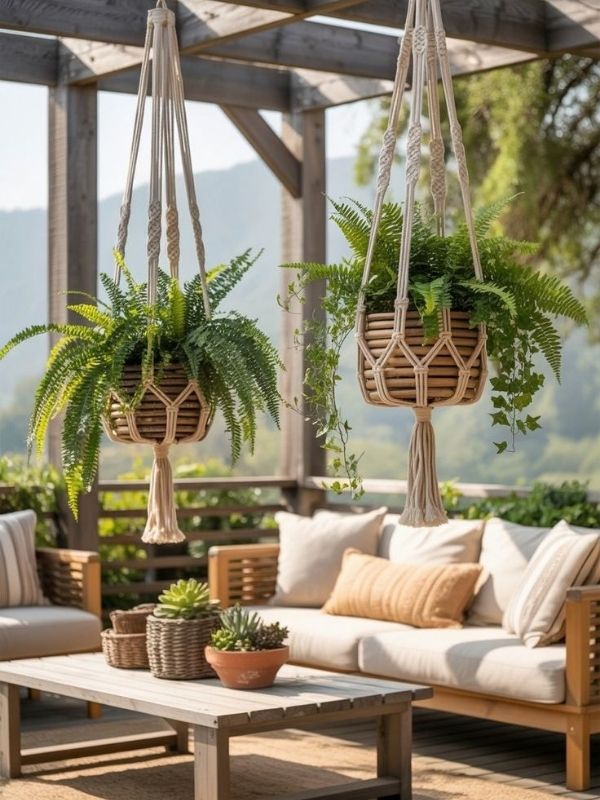
Hanging planters are a useful way to add greenery without occupying valuable floor space. They work especially well on compact patios, covered seating areas, and spaces where the walls or overhead structure need a little more visual interest.
First, identify suitable locations. A secure pergola beam, purpose-built hanging support, or correctly installed wall bracket may provide an appropriate fixing point. Always check the weight limits and structural suitability before hanging a planter, especially after watering makes it heavier.
Next, select plants that match the available light and airflow. Trailing varieties can create a cascading effect, while compact leafy plants offer a more restrained appearance. The right choice depends on the growing conditions rather than the shape alone.
Container design helps connect the planters to the rest of the patio. Woven-style containers, ceramic pots, or simple dark planters can work well, provided they are suitable for outdoor use and allow appropriate drainage.
Consider the arrangement carefully. Hanging planters look attractive when they add height without obstructing people’s heads or interfering with doors. Avoid positioning them where excess water will drip onto electrical fixtures, furniture, or slippery walking surfaces.
You can also use repetition to create a more cohesive look. Two or three matching containers along a covered edge may appear more intentional than many unrelated pots scattered overhead.
Maintenance should remain manageable. Choose a watering routine that suits your schedule, and make sure the plants can be reached safely for pruning and care.
With thoughtful placement, hanging planters can soften a patio’s hard lines and create a stronger connection to nature. They are especially useful when you want more greenery but have limited room for additional containers.
30. Use a Bold Accent Wall
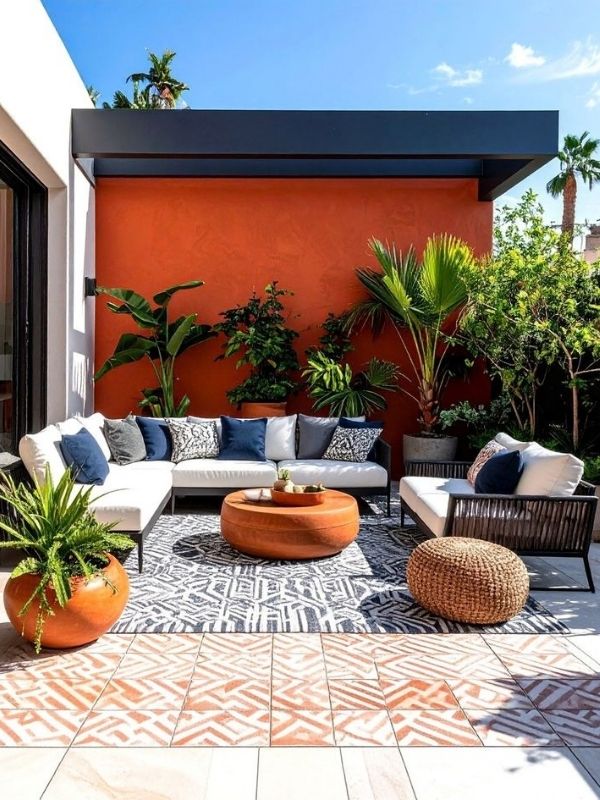
An accent wall can give a patio a distinctive focal point without requiring a complete renovation. It works particularly well when the outdoor area already has a simple layout and needs one strong design feature.
Start by choosing the wall or boundary that naturally draws attention. This might be the wall behind the seating area, the side of a covered patio, or a suitable garden boundary. A feature placed in the wrong location may compete with the architecture rather than enhance it.
Colour is one way to create impact. Deep green, warm terracotta, muted blue, or charcoal can provide contrast against neutral furniture. However, select a finish suitable for the wall material and outdoor exposure. Exterior surfaces often require different preparation and products from indoor walls.
Texture offers another option. Outdoor-rated decorative panels, suitable stone cladding, or carefully selected tiles can introduce depth without relying on a bright colour. Make sure the materials are appropriate for moisture and temperature changes.
Once the accent wall is complete, keep the nearby decorations relatively simple. A pair of planters, one wall light, or a bench can help the feature stand out without creating visual clutter.
You can also use the wall to support a vertical garden, provided the structure, drainage, and maintenance requirements are properly considered. This creates a living feature that changes as the plants grow.
An accent wall can be especially effective on a small patio because it draws the eye towards one carefully designed area. Rather than adding more furniture, you create interest through colour, texture, and thoughtful placement.
31. Design a Tropical-Inspired Patio
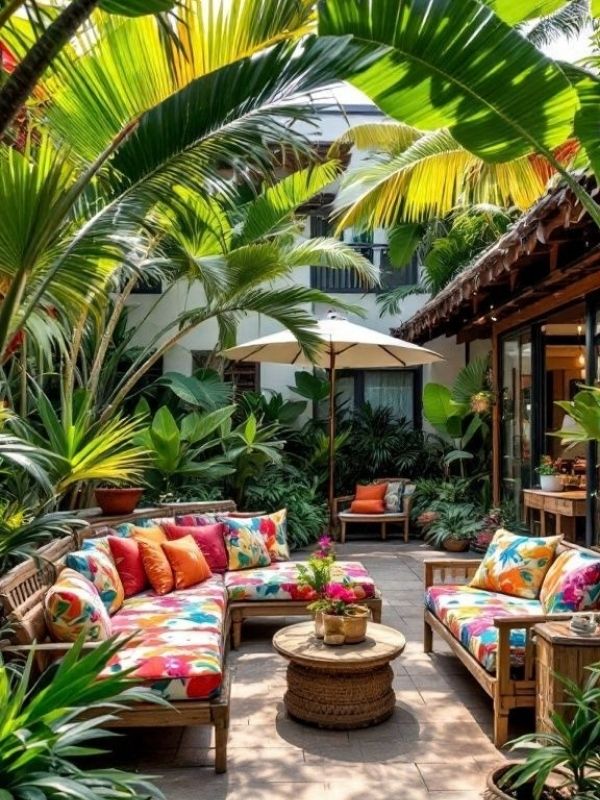
A tropical-inspired patio uses lush greenery, natural textures, and relaxed furniture to create a garden-like atmosphere. You can adapt the style to your own climate by selecting plants that thrive locally rather than copying a tropical landscape exactly.
Begin with the planting. Large-leaved varieties can provide bold shapes, while smaller plants add texture around their base. Choose species according to sunlight, rainfall, available space, and maintenance needs. Some tropical-looking plants require considerable water, so consider the practical demands before planting.
Furniture can be simple. Wooden chairs, woven outdoor seating, or a neutral sofa allow the greenery to remain the main attraction. Natural-looking materials work particularly well, although they must still be suitable for outdoor conditions.
Next, introduce colour through cushions and planters. Leafy green surroundings pair nicely with cream, sand, muted yellow, or terracotta. A few brighter accents can add energy without overwhelming the space.
Shade is another important consideration. Tropical-style plants may prefer different light conditions, so arrange containers accordingly. A pergola or suitable umbrella can also make the seating area more comfortable in strong sunlight.
Watering and drainage should be planned from the beginning. Containers need suitable drainage holes, and plants should not sit in water unless the species requires those conditions. Grouping plants with similar care needs can simplify maintenance.
For evening use, add warm lighting and comfortable seating. The aim is to create a space that feels relaxed and connected to nature rather than overly themed.
Even a modest patio can capture this atmosphere through layered greenery, natural textures, and a carefully selected colour palette.
32. Create a Multi-Level Patio Design
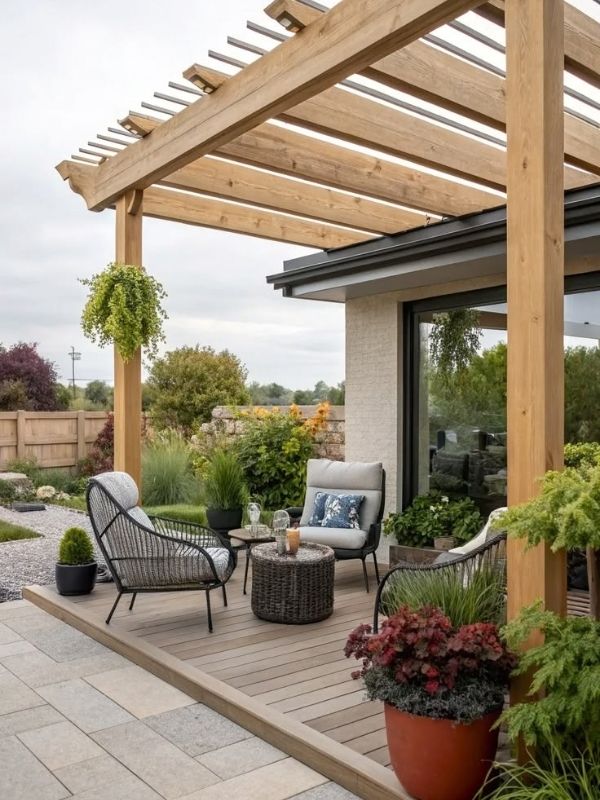
A multi-level patio introduces different heights to a garden, helping separate activities and create a stronger sense of structure. It may be useful on a sloping site or where the outdoor area needs distinct dining and lounging zones.
Before planning the levels, assess the ground conditions, drainage, and the relationship between the patio and the house. Changes in height require careful design because steps, retaining structures, and transitions must remain stable and safe.
One level might contain the dining table, while a lower area provides comfortable lounge seating. Alternatively, a raised platform can frame a small garden feature or establish a separate destination within a larger yard.
Material consistency helps connect the different sections. You could use the same paving throughout and vary the arrangement, or combine complementary materials such as stone and timber. Repeating colours across the levels prevents the design from appearing fragmented.
Planting can soften the transitions. Suitable planters along the edges or a planted border beside a retaining wall can make the structure feel more integrated with the garden.
Lighting deserves attention around changes in height. Appropriate illumination can improve visibility after dark, although permanent electrical work should be installed by a qualified professional.
A multi-level design can be attractive, but it is not necessary for every patio. On a small or relatively flat site, a single well-planned surface may be more practical and easier to maintain.
If you are considering substantial changes to ground levels, consult an appropriate professional before construction. Proper planning helps ensure that the finished patio is both visually appealing and suitable for everyday use.
33. Turn a Corner into a Quiet Reading Nook
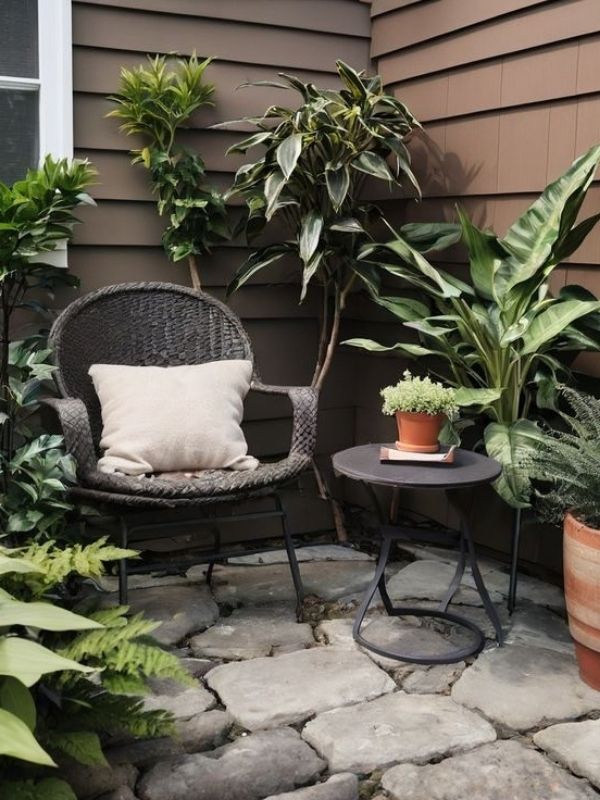
Not every patio in this 35 Patio Design Inspiration Ideas needs to accommodate a large gathering. Sometimes, the most useful feature is a small corner where you can sit quietly with a book, enjoy a drink, or take a break outdoors.
Start by choosing a spot that feels comfortable at the time of day you expect to use it. A shaded corner may be ideal in hot weather, while a sunnier position can be pleasant in cooler conditions. Observe the movement of sunlight before arranging the furniture.
A comfortable chair or compact outdoor loveseat can provide the foundation. Add a small side table for books and drinks, making sure it remains stable on the patio surface. If the area is narrow, a bench against the wall may preserve more floor space.
Plants can help the nook feel separate from the rest of the patio. A tall container, a small trellis, or a few carefully grouped pots may provide a sense of enclosure without blocking airflow.
Textiles add comfort. Choose an outdoor cushion in a colour that coordinates with the rest of the patio, and keep a suitable storage solution nearby if the fabric needs protection from rain.
Lighting is useful if you enjoy reading later in the day. A properly rated outdoor wall light or a suitable portable lamp can provide illumination, depending on the available power and weather exposure.
The key is to keep the nook simple. Too many accessories may make the corner feel crowded, especially when the available space is limited.
With a comfortable seat, a little greenery, and convenient lighting, an overlooked part of the patio can become one of the most enjoyable places at home.
34. Create an Outdoor Kitchen and Entertaining Zone
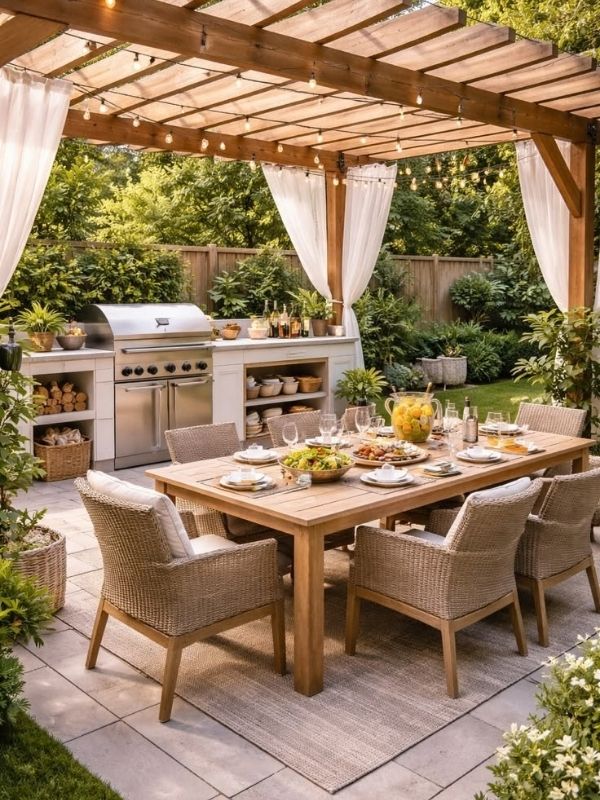
An outdoor kitchen can make a patio especially useful for people who enjoy preparing meals and hosting guests. However, the design should begin with practical needs rather than an impressive list of appliances.
First, decide what you will use regularly. A simple preparation counter and suitable cooking equipment may be sufficient for occasional gatherings. A larger installation might include additional storage, a sink, or refrigeration, depending on the available space and utilities.
Position the cooking zone so that it does not interfere with the dining area or main walking routes. There should be adequate working room around appliances, along with the clearances required by the manufacturer. Cooking equipment must be installed and used according to local regulations and professional guidance.
Materials should be chosen for outdoor exposure and the specific demands of food preparation. Countertops, cabinets, and nearby flooring need suitable durability and maintenance requirements. Surfaces around heat-producing appliances must also meet the manufacturer’s safety specifications.
Next, create a comfortable dining arrangement nearby. A table with enough room for serving dishes can make meals easier to manage, while a small lounge area allows guests to relax after eating.
Lighting is important for evening entertaining. Provide suitable illumination for food preparation as well as softer lighting around the seating area. Outdoor electrical installations should be handled by a qualified professional.
If a full kitchen is beyond your budget, begin with a movable serving cart, a small preparation table, or an organised dining zone. These additions can improve the way you use the patio without requiring major construction.
The goal is to create an outdoor area that supports your routine. A thoughtful layout can make entertaining easier while preserving the comfort and visual appeal of the rest of the patio.
35. Personalise the Patio with Meaningful Details
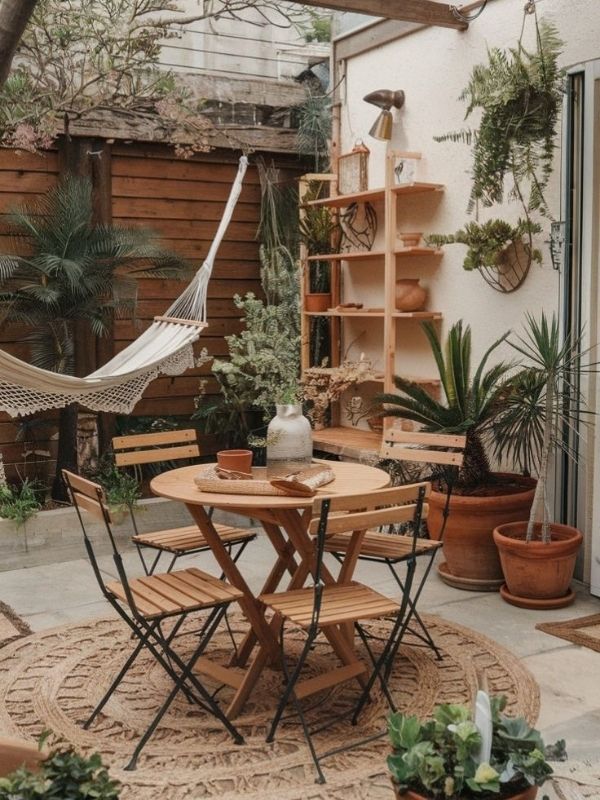
The final idea in this 35 Patio Design Inspiration Ideas brings everything together: make the patio feel like yours. Beautiful furniture and coordinated colours can create an attractive setting, but personal details give the space a sense of character.
Start with items that have a practical purpose. A favourite outdoor cushion, a handmade planter, or a table inherited from a family member can add meaning without filling the patio with unnecessary objects. Choose pieces that suit the weather or can be stored safely when they are not in use.
You might also introduce a colour that you particularly enjoy. Use it in cushions, pots, outdoor artwork, or a small decorative accessory. Repeating that shade in two or three places can connect the different elements without making the design feel overly coordinated.
Plants offer another opportunity for personal expression. Grow herbs you enjoy using in meals, select flowers that suit your taste, or choose a container that reminds you of a favourite place. The best choices are those you can care for comfortably.
Think about how you want the patio to feel. If you prefer peaceful mornings, prioritise a comfortable chair and gentle lighting. For family gatherings, create flexible seating and a practical dining arrangement. Meanwhile, a creative person may enjoy a small outdoor table for drawing, journaling, or other quiet activities.
You do not need to complete the entire design in one weekend. Add pieces gradually, observe how the space works, and adjust the arrangement when something feels inconvenient.
Among these 35 patio design inspiration ideas, personalisation is what turns a collection of attractive features into a genuinely enjoyable outdoor space. Your patio does not have to follow every trend. It simply needs to reflect the way you live and the things that make home feel welcoming.
Conclusion
A beautiful patio is not simply an outdoor area filled with stylish furniture. It is a space that makes everyday life more enjoyable, whether you use it for meals, quiet mornings, gardening, or conversations with the people you love.
These 35 patio design inspiration ideas demonstrate how different elements can work together to create that experience. Comfortable seating provides a place to relax, while suitable flooring establishes the foundation. Plants introduce life and colour, and thoughtful lighting helps the space remain inviting after sunset.
You do not need to tackle every suggestion at once. Instead, begin with the part of your patio that needs the most attention. Perhaps you need better shade, a more comfortable seating arrangement, or a simple way to introduce greenery. Once that improvement is complete, you can gradually add other features that suit your needs.
Remember to consider your climate, available space, maintenance routine, and budget before making major purchases. A design that looks beautiful but is difficult to maintain may not serve you well over time.
Ultimately, the most successful patio is one that feels comfortable, functional, and personal. Choose the ideas that match your lifestyle, make thoughtful adjustments as you go, and give yourself room to experiment. With a little planning and creativity, even an ordinary outdoor area can become a welcoming extension of your home.