35 Thanksgiving Bulletin Board Ideas to Make Your Classroom More Festive
The classroom can feel completely different when autumn decorations appear, student artwork fills the walls, and everyone has something to contribute. These 35 Thanksgiving bulletin board ideas will help you turn an ordinary classroom into a warm, welcoming space filled with creativity, gratitude, and seasonal charm.
Even if you teach preschool, kindergarten, elementary school, or older students, there is an idea here that can fit your classroom, available supplies, and teaching style.

The best part in this 35 Thanksgiving Bulletin Board Ideas is that you do not need expensive decorations or an entire weekend to create a beautiful display. With construction paper, markers, recycled materials, and a little imagination, you can make something your students will enjoy throughout November. Even better, many of these boards can support writing practice, reading activities, teamwork, and conversations about kindness.
Some teachers prefer colourful turkeys and pumpkins, while others enjoy interactive displays that grow as students contribute their ideas. Fortunately, you can combine both approaches. From a simple gratitude tree to a classroom filled with handmade paper leaves, the following ideas offer practical ways to decorate your space without losing sight of what students are learning.
Bookmark this posts
60 Fall and Thanksgiving Nail Ideas to Try This Season
20 Thanksgiving Breakfast and Brunch Ideas for a Cozy Morning
10 Thanksgiving Vegetable Ideas Everyone Will Love
35 Thanksgiving Bulletin Board Ideas for a Festive Classroom
A successful Thanksgiving display does more than fill an empty wall. It gives students an opportunity to express themselves, celebrate their work, and participate in creating a classroom they feel proud of. Therefore, consider your students’ ages, available wall space, and lesson plans before choosing a design.
The ideas below include traditional autumn decorations, hands-on art projects, reading displays, and collaborative activities. Some require only paper and markers, whereas others can become larger projects that develop over several days. You can also adapt the colours, wording, and activities to suit your classroom community.
1. Create a Thankful Tree Filled With Colourful Leaves
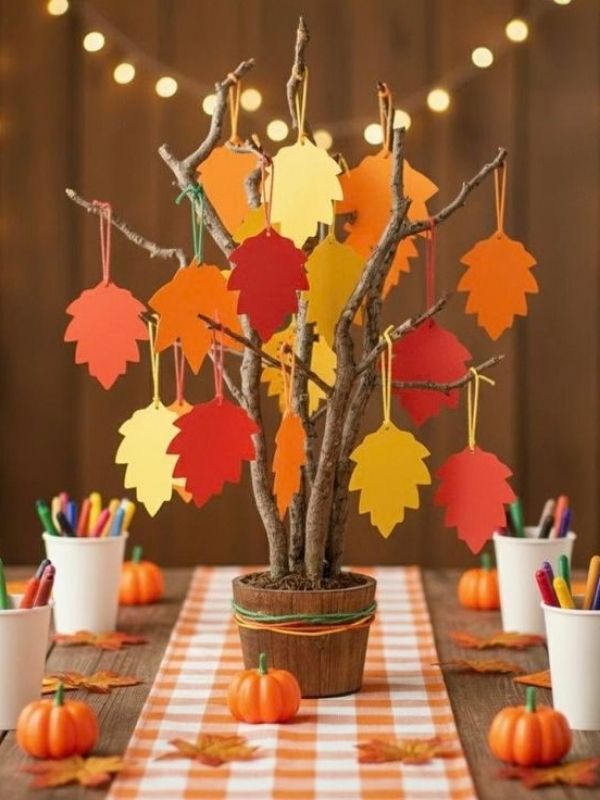
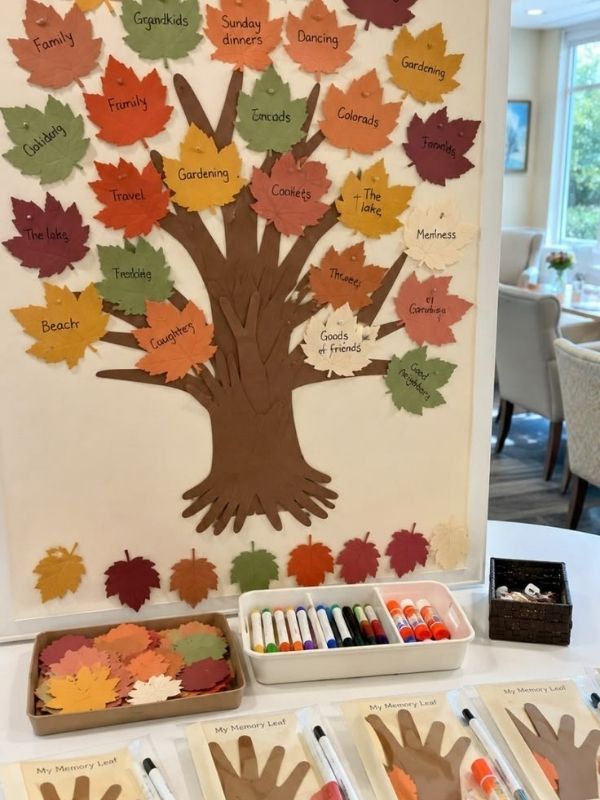
A thankful tree is one of those classic Thanksgiving bulletin board ideas that can transform a plain classroom wall into something personal and meaningful. Rather than covering the entire display with ready-made decorations, begin with a large tree trunk made from brown construction paper or recycled packaging paper.
Next, cut leaves from red, orange, yellow, and golden paper. Give each student one or two leaves and ask them to write or draw something they appreciate. Younger children might draw a favourite book or a helpful person, while older students can write a complete sentence explaining their choice.
Once everyone finishes, arrange the leaves across the branches. Gradually, the tree will become fuller as more students contribute. You can even leave a small basket of blank leaves beside the board for additional responses throughout the month.
For the heading, choose a simple phrase such as Our Thankful Tree or Gratitude Grows Here. Finally, add a few falling leaves around the border to create a natural autumn effect.
2. Design a Pumpkin Patch of Gratitude
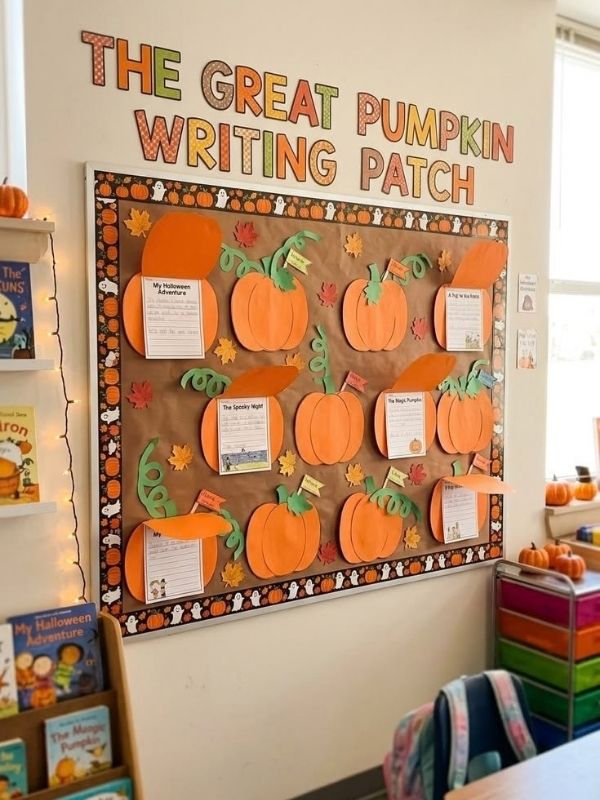
Pumpkins are easy to recognise, simple to cut from paper, and perfect for a bright seasonal display. For this idea, cover your bulletin board with light blue, cream, or pale brown paper. Then, create a pumpkin patch using orange paper pumpkins in different sizes.
Ask each student to decorate one pumpkin and complete the sentence, “I am thankful for…” Their responses might mention friends, learning something new, family traditions, favourite activities, or small moments that made them happy.
To make the display more interesting, add green paper vines and leaves between the pumpkins. You could also use darker orange markers to create curved lines that resemble the natural ridges of a pumpkin. As a result, even simple paper cutouts will look more detailed.
These 35 Thanksgiving bulletin board ideas include options that work especially well for younger students, and this pumpkin patch is one of them. Children can practise handwriting, spelling, and drawing while helping to decorate the classroom.
For a finishing touch, add the title Our Little Patch of Thankfulness. If your class has many students, arrange the pumpkins in several rows rather than squeezing them together. This gives every child’s contribution enough space to be seen.
Check out
15 Thanksgiving Potluck Ideas for Work Everyone Will Love
30 Thanksgiving Punch and Cocktail Ideas for Your Holiday Gathering
40 Easy Thanksgiving Crafts for Kids and Adults to Make Together
15 Fun Thanksgiving Activities for Couples to Enjoy Together at Home
3. Make a Turkey With Student-Created Feathers
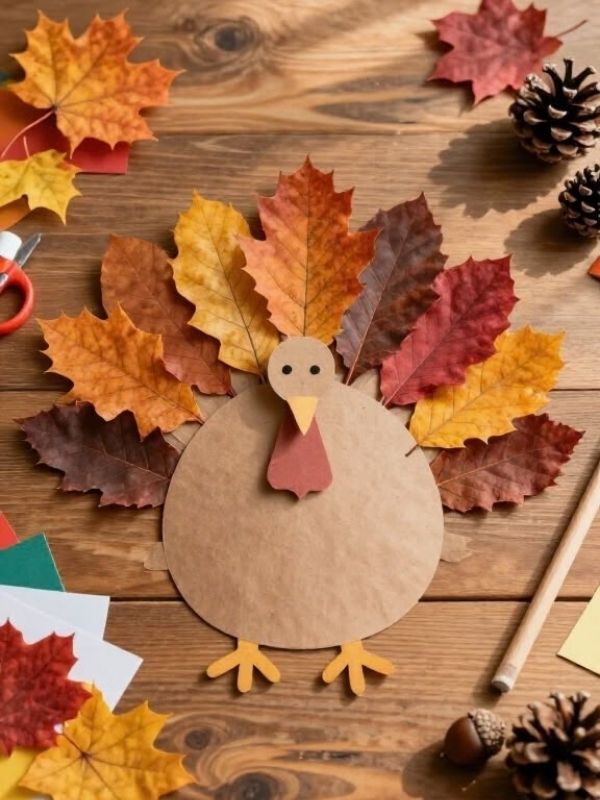
A large turkey can become the centrepiece of one of this 35 Thanksgiving bulletin board classroom decorations. Start by cutting a turkey body from brown paper, then add a colourful beak, small wings, and a pair of feet. You can draw the face yourself or invite students to help with the details.
The feathers are where the learning activity begins. Cut out individual feather shapes using red, orange, yellow, green, and purple paper. Give each student a feather and ask them to write one thing they appreciate or one positive experience they have had at school.
After collecting the feathers, arrange them in a fan shape behind the turkey. Make sure every feather remains visible so that the display represents the whole class rather than just a few students.
For the heading, try Our Class Has So Much to Be Thankful For. Alternatively, younger children may enjoy a playful title such as Gobble Up the Gratitude.
This design also offers an opportunity to practise descriptive writing. Older students can explain why they chose their particular response, while younger learners can dictate a sentence for an adult to write down.
As the month progresses, you can replace blank feathers with new responses. Consequently, the turkey becomes an evolving classroom project instead of a decoration that students stop noticing after the first day.
4. Turn the Bulletin Board Into a Cornucopia of Kindness

A cornucopia, often called a harvest horn, creates a lovely focal point for a Thanksgiving display. To make one, cut a large curved basket shape from brown paper and position it in one corner of the board. Then, add paper fruits, vegetables, leaves, and small harvest decorations spilling from its opening.
Instead of writing ordinary gratitude messages, ask students to describe acts of kindness they have noticed. For example, a child might mention a classmate who shared supplies, helped explain a difficult task, or invited someone to join a game.
Write each response on a different fruit or vegetable shape. Apples can represent helpful actions, pears can feature encouraging words, and corn shapes can carry examples of teamwork. However, these categories are optional, so feel free to keep the activity simple.
Use the heading A Cornucopia of Kindness and add small labels such as Respect, Helping, and Sharing. These words can reinforce the classroom values you want students to practise.
The display is particularly useful because it connects seasonal artwork with everyday behaviour. Furthermore, it encourages children to notice positive actions instead of focusing only on what they personally receive.
By the end of November, the board can become a colourful collection of real examples of kindness from your classroom community.
5. Display a Wall of Thankful Handprints

Handprint art is a wonderful option when you want students to participate directly in decorating the classroom. It works especially well with younger children because they can create something recognisable without needing advanced drawing skills.
For a paper-based version, trace each child’s hand onto coloured construction paper. This avoids the mess of paint while still allowing students to personalise their designs. Let them cut out the shapes with age-appropriate assistance and decorate each hand with patterns, stickers, or small drawings.
Next, ask students to write something they appreciate inside their handprint. Depending on their age, they might write a single word, complete a sentence starter, or dictate their response.
Arrange the finished hands in a circle, a large heart, or a colourful wreath. You can also position them around the words Many Hands, One Thankful Class.
Among these 35 Thanksgiving bulletin board ideas, this activity is particularly useful for showing that every student has a place in the classroom. Each handprint contributes to the finished design, so no single piece needs to look perfect.
For a more detailed display, add a small paper label with each student’s first name. However, avoid publishing private family information or personal details that children may not want displayed publicly.
6. Create a Harvest of Gratitude Display
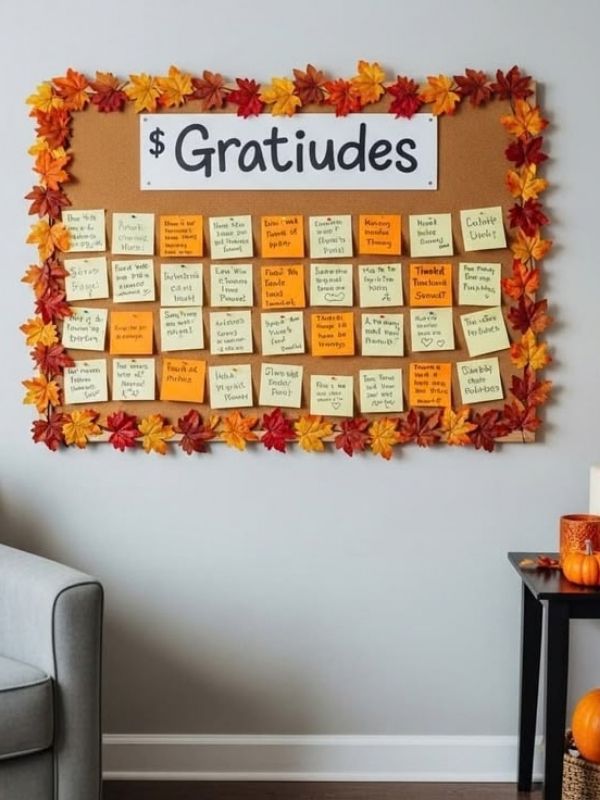
A harvest-themed bulletin board brings together pumpkins, apples, corn, sunflowers, and colourful autumn leaves. It is a flexible design because you can make it as simple or as elaborate as your classroom schedule allows.
Begin with a warm background in cream, pale yellow, or light brown. Add a large basket or wooden-cart design near the centre, then arrange paper produce around it. If you have old magazines or suitable scrap paper, you can use these to create textured fruit and vegetable shapes.
The interactive part comes from the messages attached to each item. Ask students to write about something they have learned, someone who has helped them, or an activity they enjoyed at school. Place these responses on the produce so the board gradually fills with meaningful contributions.
Choose a heading such as Harvesting Happy Moments or A Season of Gratitude. In addition, you can include vocabulary cards featuring words such as harvest, appreciation, community, and generosity.
This display can support a short writing lesson before students begin decorating. For instance, ask them to replace vague statements with specific examples. Rather than writing only “I am thankful for school,” a student might explain that a classmate helped them understand a maths problem.
As a result, the artwork becomes both a seasonal decoration and a useful language-learning activity.
Save for later
15 Fun Thanksgiving Activities for Couples to Enjoy Together at Home
25 Best Thanksgiving Games to Play with Family and Friends at Home
20 Thanksgiving Place Card Ideas for Guests
20 Thanksgiving Leftover Recipes Everyone Will Love
7. Build a Falling Leaves Gratitude Wall

Sometimes, a beautiful display comes from using a simple idea consistently. A falling leaves wall is an excellent example because it requires few supplies and can be updated throughout the month.
First, cover the board with a background that resembles a clear autumn sky. Cut a collection of leaves in different shapes and colours, including red, orange, yellow, and brown. Arrange some leaves near the top and others across the middle, creating the impression that they are drifting towards the ground.
Give students a leaf and invite them to finish a gratitude prompt. You might ask, “What made you smile this week?” or “What is something you appreciate about our classroom?” These questions help students think beyond familiar answers in 35 Thanksgiving Bulletin Board Ideas.
Attach the responses at different angles, but leave enough room for the writing to remain readable. You can also add a paper tree along one side of the board to connect the falling leaves with the wider autumn theme.
For the heading, consider Falling Into Gratitude or Every Leaf Has a Story. Both phrases work well with the seasonal design.
One advantage of this board is that you can introduce a new prompt every few days. Therefore, students have a reason to revisit the display and add fresh ideas as Thanksgiving approaches.
8. Make a Classroom Feast of Friendship

A Thanksgiving feast does not have to feature photographs of food or an elaborate paper table setting. Instead, use the familiar idea of sharing a meal to explore friendship, cooperation, and the little things that help a classroom feel welcoming.
Cover the board with a light background and create a large table across the bottom. Add paper plates, cups, napkins, and simple food shapes. You could include apples, bread, vegetables, or slices of pie, depending on the style you prefer.
Give every student a paper plate to decorate. On the plate, ask them to write one quality that makes a classroom community stronger. Examples include patience, honesty, encouragement, respect, and willingness to help.
Arrange the plates around the table, leaving space for a large title above them. Our Friendship Feast is a suitable choice, although We Bring Something Special to the Table works equally well.
To make the activity more personal, invite students to explain their chosen quality during a classroom discussion. They can then add a short example of how that quality helps people learn together.
This approach is one of the more adaptable 35 Thanksgiving bulletin board ideas because it does not depend on complicated artwork. Moreover, it encourages students to recognise that a positive classroom is built through everyday actions, not decorations alone.
9. Create a Pumpkin Patch of Compliments
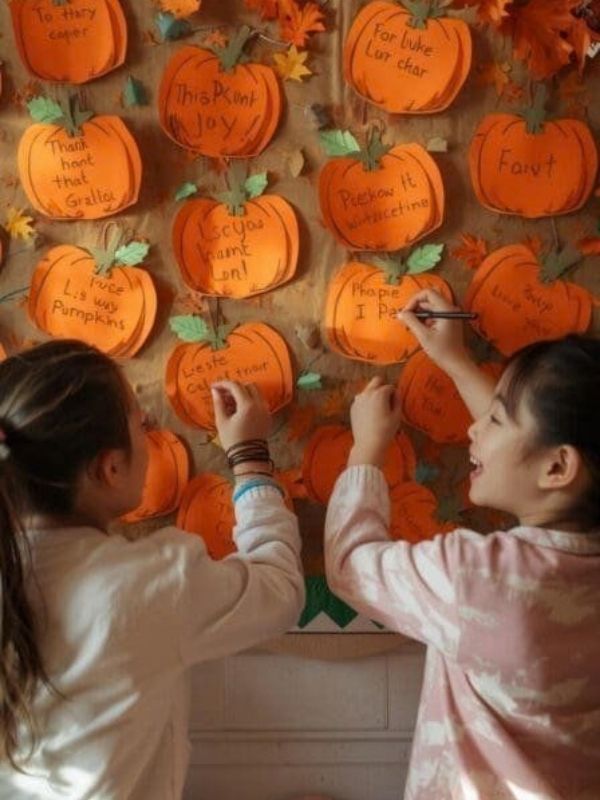
A compliment board can make a classroom feel more encouraging, particularly during a busy school term. Rather than focusing only on what students appreciate in their own lives, this display invites them to notice the helpful qualities of others.
Start by creating a pumpkin patch with paper pumpkins, green leaves, and curling vines. Give each student a pumpkin with a classmate’s name or provide a teacher-guided system that ensures everyone has a fair opportunity to participate.
Ask students to write a specific, respectful compliment. For example, they might recognise someone for explaining a lesson clearly, including others in group work, or showing persistence when a task was challenging.
Before posting the messages, review them to ensure that the comments are appropriate and that nobody is unintentionally left out. Students should never feel pressured to share personal information or participate in an activity that makes them uncomfortable.
Arrange the pumpkins across the board and add the heading Growing Kindness, One Compliment at a Time. You can also place a few paper flowers between them to make the patch more colourful.
For younger learners, sentence starters such as “You helped me when…” or “I appreciate the way you…” can make writing easier. Consequently, the activity becomes an opportunity to practise thoughtful communication as well as a way to decorate the classroom.
10. Design a Thankful Bookshelf
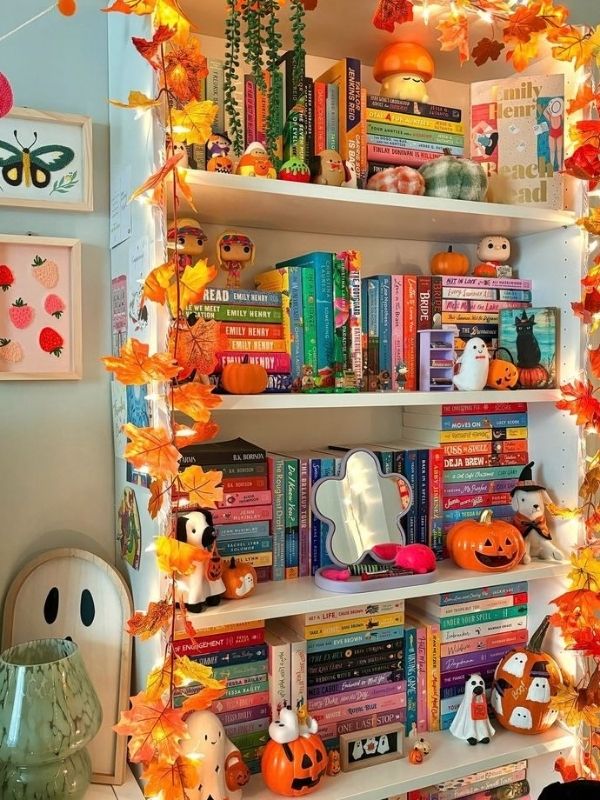
If your students enjoy reading, turn the bulletin board into a paper bookshelf filled with favourite stories. This design is especially useful for classrooms with a reading corner because it connects seasonal decoration with an everyday learning activity.
Create several horizontal shelves from brown paper or draw them directly onto the background. Then, cut colourful book shapes in different sizes and arrange them neatly across the shelves. Each book can display a title, a student’s name, or a short reading recommendation.
Ask students to choose a book they appreciate and explain why they would recommend it to a classmate. Younger children can draw a scene from their favourite story, while older students can write a short review featuring the characters, setting, and most interesting part.
Add small autumn details, such as paper leaves or tiny pumpkins, around the shelves. However, keep the books as the main focus so the display remains connected to reading.
A suitable heading is Thankful for Good Books. Alternatively, use Stories Worth Sharing if you want a title that remains relevant after Thanksgiving.
This is one of the 35 Thanksgiving bulletin board ideas that can continue serving a purpose throughout the school year. After the holiday, simply replace the autumn border and keep the student book recommendations. That way, the work you put into the board does not go to waste.
You may also like
10 Thanksgiving Desserts Other Than Pumpkin Pie
15 Thanksgiving Outfit Ideas for Family Dinner
18 Simple Thanksgiving Dinner Ideas for Small Families
11. Put Together a Thankful Classroom Garden
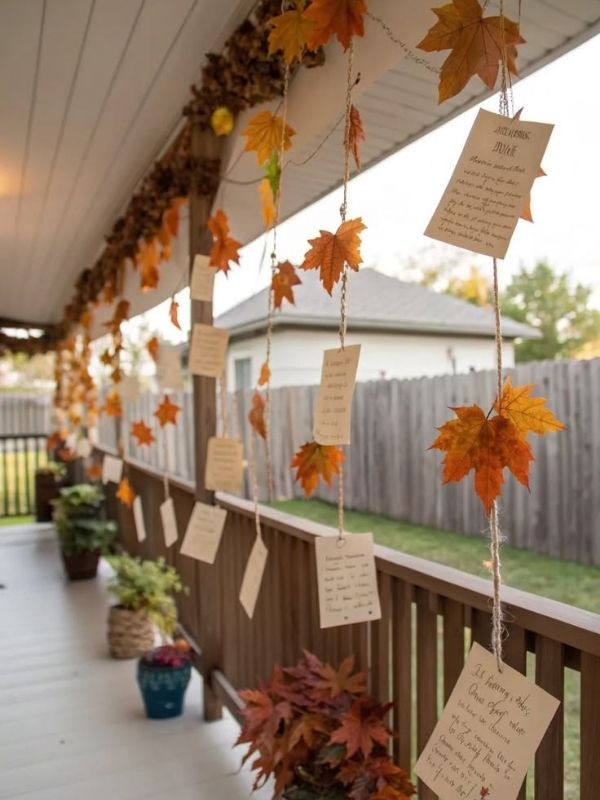
A classroom garden provides a fresh alternative to traditional turkeys and pumpkins. Although the theme is slightly different, it still fits Thanksgiving because it encourages students to think about the things that help them learn and grow.
Cover the lower part of the board with green paper to represent grass. Add a few paper flower stems, leaves, and garden details. Each flower should have a large centre where a student can write their name, with petals reserved for short gratitude statements.
For example, one petal might mention a supportive teacher, another could describe a new skill, and a third might celebrate a successful group project. Students can decorate their flowers with patterns and colours before you arrange them across the board.
Use the heading Our Classroom Is Growing With Gratitude. You could also add small labels such as Curiosity, Friendship, Effort, and Learning.
For a simple classroom connection, ask students to discuss what plants need to grow and compare those needs with what helps people develop new skills. They might mention practice, encouragement, patience, and opportunities to learn from mistakes.
The final display will look cheerful, even if students use different drawing styles. In fact, those differences make the garden more interesting because every flower reflects its creator.
12. Make a Gratitude Jar Bulletin Board

A gratitude jar is a familiar classroom activity, but displaying the responses on a bulletin board gives everyone a chance to read and reflect on them.
Start by cutting out a large jar shape from light blue, grey, or transparent-looking paper. Add a simple lid and decorate the outside with autumn leaves. You can also draw curved lines on the jar to suggest glass.
Next, prepare small paper slips in several colours. Invite students to write one thing they appreciate, a positive classroom memory, or something they learned that week. Fold the slips if you want to create a more realistic jar effect, or leave them flat so the words remain visible.
Arrange the slips inside the jar outline. For a more interactive display, add a paper pocket beside the jar where students can place new responses. You can then select appropriate notes to add to the main design throughout November.
Choose a title such as A Jar Full of Thanks or Little Notes, Big Gratitude. Keep the wording simple so that the display feels welcoming rather than overly formal.
This idea works well in this 35 Thanksgiving Bulletin Board Ideas especially when students need support expressing their thoughts. You can offer sentence starters, drawing options, or the choice to submit an anonymous note. As a result, the activity remains flexible for different ages and writing abilities.
13. Create a Turkey Made From Recycled Materials
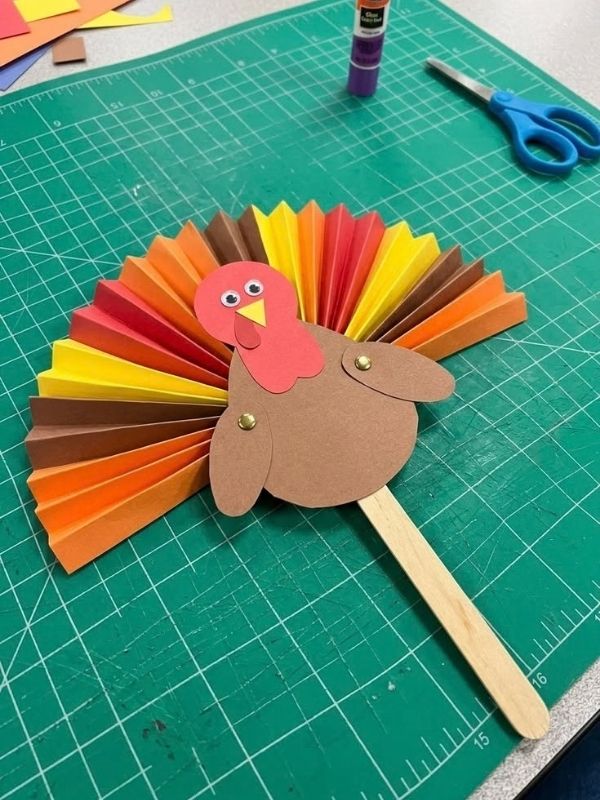
You do not need to purchase new craft supplies to create an impressive Thanksgiving display. In fact, a recycled-material turkey can help students see how ordinary items become useful art materials.
Begin by collecting clean cardboard, paper packaging, scrap paper, and suitable leftover craft materials. Cut a large turkey body from a cardboard box and cover it with brown paper. Then, use colourful scraps to make the feathers, beak, feet, and decorative details.
Students can contribute one feather each, using whatever suitable materials are available. Some may choose to create a layered paper feather, while others can decorate a plain shape with lines, dots, or small patterns.
Write a short gratitude message on each feather before attaching it to the turkey. If you want to connect the project to environmental awareness, ask students to describe one way they can reduce waste in the classroom.
Use the heading Creating More With What We Have. Alternatively, Our Thankful Recycled Turkey makes the seasonal connection clearer.
Before beginning, check that all materials are clean, safe to handle, and suitable for the students’ ages. Adults should manage any cutting or stapling that requires tools children should not use independently.
This board combines creativity, resourcefulness, and seasonal decoration in one manageable project.
Recommendations for you
12 Fun Movie Night Dinner Themes for Families
20 New Year’s Eve Charcuterie Board Ideas for Every Party
15 Eerie Halloween Chalkboard Ideas for Spooky Home Decor
15 Spooky Halloween Charcuterie Board Ideas
13 Christmas Charcuterie Board Ideas for Parties
14. Display a Tree of Helpful Hands

A helpful-hands board focuses on actions students can take to support their classroom community. It is similar to a gratitude tree, but the emphasis shifts from what children appreciate to what they can do for others.
Cut out a large tree trunk and several branches from brown paper. Next, prepare hand-shaped templates using construction paper in autumn colours. Give each student a hand shape and ask them to write one helpful action inside it.
Possible responses include sharing classroom supplies, listening when someone speaks, helping to tidy a learning area, or inviting a classmate to join an activity. Encourage students to choose actions they can realistically practise rather than making promises they cannot keep.
Arrange the hands around the branches as if they were leaves. You can mix the colours throughout the tree to make the display look balanced. A few paper acorns or falling leaves will add seasonal detail without overcrowding the board.
For the title, choose Helping Hands Make Our Classroom Better. You might also include a small section called This Week, We Will Try… and add a few class-selected actions.
These 35 Thanksgiving bulletin board ideas are designed to make classroom decoration more meaningful, and this board does so by connecting artwork with practical habits. In addition, you can revisit the messages during morning meetings to discuss how students are putting their ideas into practice.
15. Build a Wall of Thankful Words

Sometimes the most useful classroom displays are also the simplest. A thankful word wall focuses on vocabulary, making it particularly helpful for language arts lessons and classrooms where students are learning to express ideas more clearly.
Cover the board with a neutral autumn background, then create large word cards featuring terms such as grateful, generous, patient, helpful, respectful, and appreciative. Add small illustrations beside selected words to support younger learners.
Ask students to choose a word that describes something they value or a quality they want to practise. They can then write a sentence using that word and attach it underneath the matching card.
For example, a student might write, “I am grateful when my classmates help me understand a difficult question.” Another could explain how patience makes group work easier.
Arrange the cards in clear rows, leaving enough space for student responses. You can also use different colours to group words by meaning, such as kindness, learning, friendship, and community.
A suitable heading is Words That Make Us Thankful. To extend the activity, ask students to suggest synonyms or use the new words in a short paragraph.
Unlike some seasonal decorations, this board can remain useful after November. Simply replace the autumn border when the next classroom theme arrives, while keeping the vocabulary cards for future lessons.
16. Create a Friendship Wreath
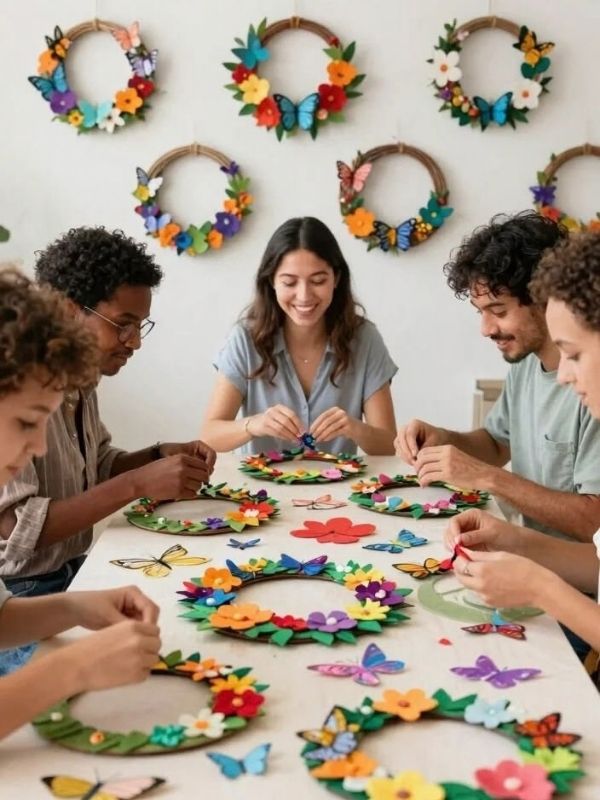
A friendship wreath offers a welcoming design for classroom doors or smaller bulletin boards. It is especially helpful when you want a display that uses student contributions without requiring a large amount of writing.
Cut a large ring from cardboard or arrange green paper leaves into a circular shape. Add smaller leaves in orange, yellow, and red to create a seasonal effect. Make sure the centre remains open enough for a short title or greeting.
Give every student a leaf and ask them to write one quality they appreciate in a good friend. Examples include honesty, patience, kindness, fairness, and a willingness to listen. Younger children can draw a small picture or choose from a list of suggested words.
Attach the completed leaves around the wreath. If the class is large, use several leaves per section so that every student has room to contribute. However, keep the writing large enough to read without standing too close.
Place the title Friendship Makes Our Classroom Shine above the wreath. You can also add a small message explaining that friendships grow when people treat one another with respect.
This project can start a useful conversation about inclusion and cooperation. Therefore, consider asking students how they can help a new classmate feel welcome or resolve a disagreement respectfully.
The result is a colourful seasonal display with a message that remains relevant long after Thanksgiving.
17. Design a November Weather and Gratitude Board

Autumn weather offers plenty of opportunities for classroom discussion, particularly when students are learning about seasons, observation, and descriptive language. A weather-and-gratitude board combines these topics in one interactive display.
Create a large autumn sky using blue or pale grey paper. Add paper clouds, sunshine, falling leaves, and a few simple weather symbols. Across the lower section, place a row of colourful umbrellas or small weather cards.
Each student can complete two prompts: one about the weather and another about something they appreciate that day. For example, they might observe that the morning is cool and explain that they enjoy reading quietly indoors when it rains.
Use the title A Little Gratitude in Every Season. Alternatively, November Skies, Thankful Hearts gives the board a more traditional seasonal feel.
To connect the display to a lesson, invite students to record observations over several days. They can compare cloudy and sunny conditions, notice changes in temperature, and practise using descriptive words.
You do not need to use actual weather data for the gratitude activity. Instead, let students contribute personal observations and keep the two sections visually separate.
This approach is useful when you want classroom decor to support regular teaching. Furthermore, it offers a natural way to refresh the board each morning without creating an entirely new design.
Save for later
How to Create a Motherhood Vision Board to Inspire Your Journey
60 Halloween Spooky Basket Ideas for Kids, Teens and Adults
40 Halloween Party Favour Ideas for Kids and Adults
18. Make a Paper Apple Orchard of Appreciation

An apple orchard can provide a bright, organised alternative to a traditional pumpkin display. It also works well for classrooms that have already used leaf or turkey crafts and need a different seasonal theme.
Begin by creating several tree trunks from brown paper. Add green, orange, or golden foliage, depending on the look you prefer. Then, cut out red, green, and yellow apples and arrange them across the branches.
Give each student an apple and ask them to write about something they appreciate in their learning environment. They might mention access to books, opportunities to ask questions, helpful classmates, or a subject they enjoy studying.
You can also ask older students to explain why the chosen item or experience matters to them. This encourages more thoughtful writing and gives the display a stronger educational purpose.
Add the heading An Orchard of Appreciation across the top. For a playful alternative, try Our Class Is Full of Sweet Reasons to Be Thankful.
If you teach younger children, prepare apple templates with a blank writing area so that students can focus on their responses rather than drawing the entire shape themselves. Older learners can create their own designs.
Finally, spread the apples evenly across the trees. A few fallen apples near the bottom will make the scene look fuller without hiding the students’ work.
19. Create a Thankful Mailbox Display
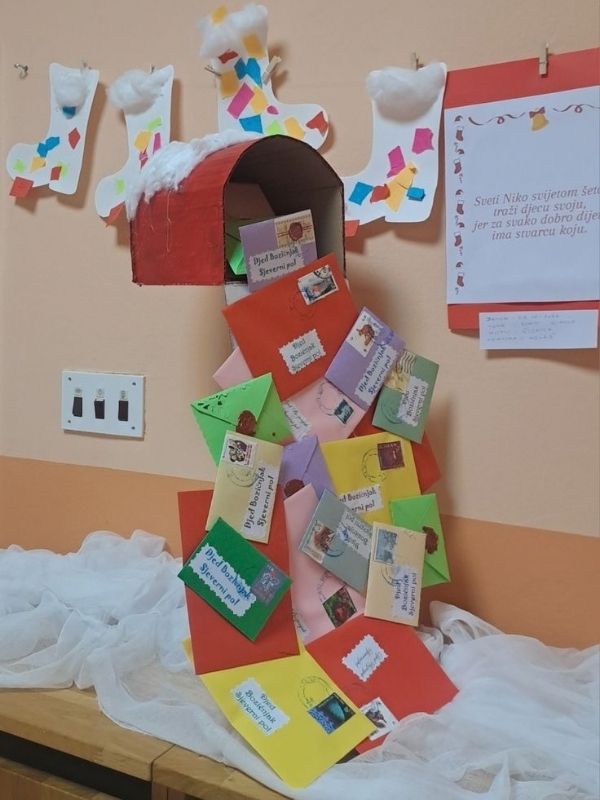
A classroom mailbox board encourages students to exchange positive messages in a structured way. It works especially well when you want to build a routine around appreciation rather than finish the entire activity in one lesson.
Cut out a large mailbox from red, brown, or blue paper. Add a flap and a simple label, then surround it with paper envelopes in autumn colours. Each envelope can represent a student, a classroom group, or a general gratitude category.
Provide small note cards where students can write appropriate messages of appreciation. For instance, they might thank a classmate for helping with an activity or recognise someone who made group work easier.
To keep the activity fair, explain that every student should have an opportunity to receive a positive message. You can organise the notes with a teacher-guided rotation, particularly in larger classes.
Use the title You’ve Got a Little Gratitude or Letters of Thanks. Keep the message cards brief enough for students to read comfortably.
For younger learners, offer sentence starters such as “Thank you for…” or “I appreciated it when…” Older students can practise writing complete notes with specific details.
The mailbox can stay beside the board throughout November. Therefore, students can contribute new messages during designated classroom times, while the main display gradually becomes more colourful.
20. Put Together a Thankful Rainbow
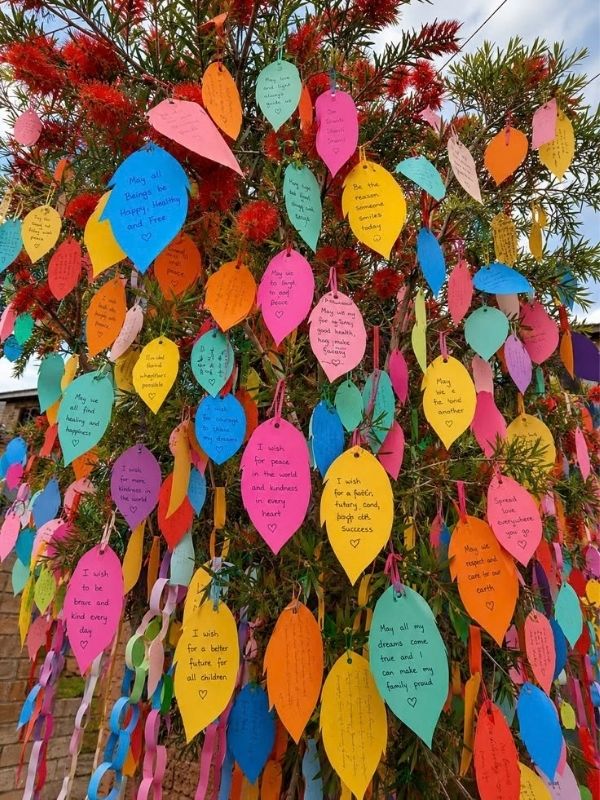
A rainbow brings colour into the classroom and gives students a simple visual structure for organising their responses. Although rainbows are not limited to Thanksgiving, they work beautifully with a gratitude theme.
Create large paper arcs in red, orange, yellow, green, blue, and purple. Arrange them across the board against a pale background, then add a few clouds at the ends. You can also include small autumn leaves around the edges to connect the design with November.
Assign a different prompt to each colour. For example, red could represent something students enjoy learning, yellow could feature a happy memory, and green could highlight a helpful action. Alternatively, keep all the colours open to any gratitude response.
Give each student a small paper strip in their chosen colour. After they write their response, place it along the matching section of the rainbow.
Choose a heading such as Every Colour Has a Reason to Be Thankful. This gives the display a clear purpose while keeping the design cheerful.
The activity is easy to adapt for different ages. Younger students can draw their answers, while older learners can write more detailed reflections. In addition, the rainbow creates a natural opportunity to discuss how different contributions can come together to form one complete classroom display.
21. Create a Class Quilt of Thankfulness
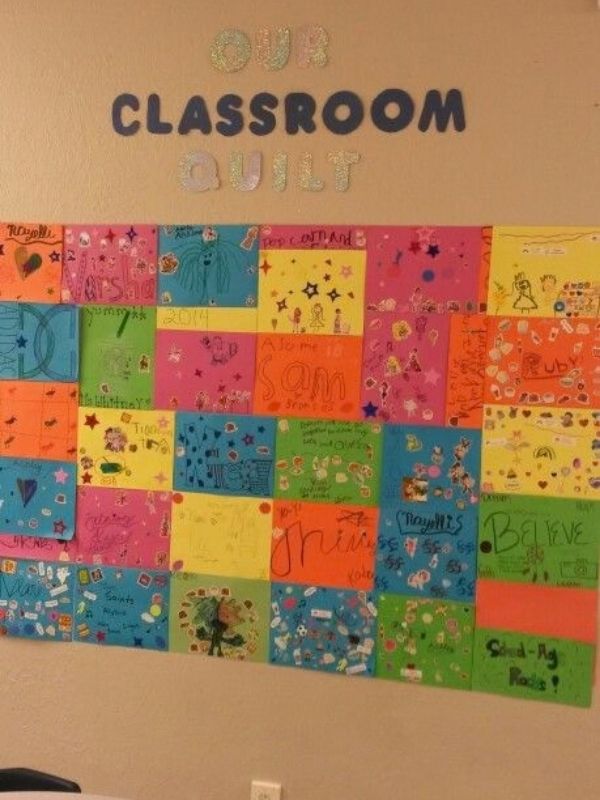
A paper quilt allows every student to create an individual square while contributing to a larger piece of classroom art. The finished display can look detailed and colourful, even when each square uses a very simple design.
Prepare equal-sized squares from construction paper or recycled card. Give each student one square and ask them to divide it into smaller sections, decorate it with patterns, or add a drawing related to something they appreciate.
Students can include short messages about learning, friendship, creativity, nature, or helpful experiences. If you want to incorporate writing practice, ask them to complete the sentence “Our classroom is special because…”
Once the squares are finished, arrange them in a grid with small spaces between them. Alternate the colours to create a balanced pattern, and add a plain border around the outside.
Use the heading Together, We Make Something Wonderful. You can also call it Our Thankful Class Quilt if you want the Thanksgiving theme to be immediately clear.
This is one of the more collaborative 35 Thanksgiving bulletin board ideas because students can see how their individual contributions become part of a larger design. No two squares need to look alike, and that variety is part of the finished artwork’s appeal.
For an additional lesson, ask students to identify patterns, count the squares, or describe how the colours are arranged.
22. Display a Harvest Basket of Learning
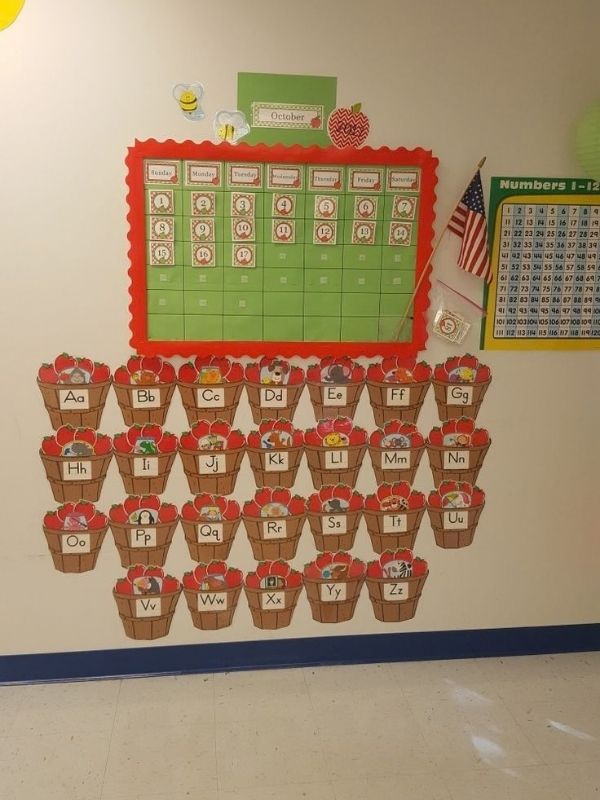
A harvest basket can represent more than fruit and vegetables. It can also symbolise the knowledge and skills students have collected throughout the term.
Create a large woven-looking basket from brown paper strips. You can weave real paper strips together before attaching them or draw simple horizontal and vertical lines on a flat basket shape. Next, cut out apples, pumpkins, corn, leaves, and other harvest-inspired decorations.
Ask students to choose one thing they have learned recently. Their responses might include mastering a multiplication method, reading a new type of story, improving their handwriting, or learning how to cooperate during group activities.
Write each response on a piece of paper produce and arrange it inside the basket. Encourage students to be specific so the display captures real progress rather than general statements.
For the title, use Look What We Have Gathered! or Harvesting Our Learning. Both phrases connect the seasonal imagery with classroom achievements.
To make the activity more reflective, ask students what helped them develop their chosen skill. They may mention practice, asking questions, feedback, or working with a partner.
This board is particularly suitable for classrooms that want a display linked to curriculum goals. Furthermore, it allows students to celebrate progress at different levels without comparing their achievements with those of their classmates.
23. Make a Gratitude Hot-Air Balloon Display
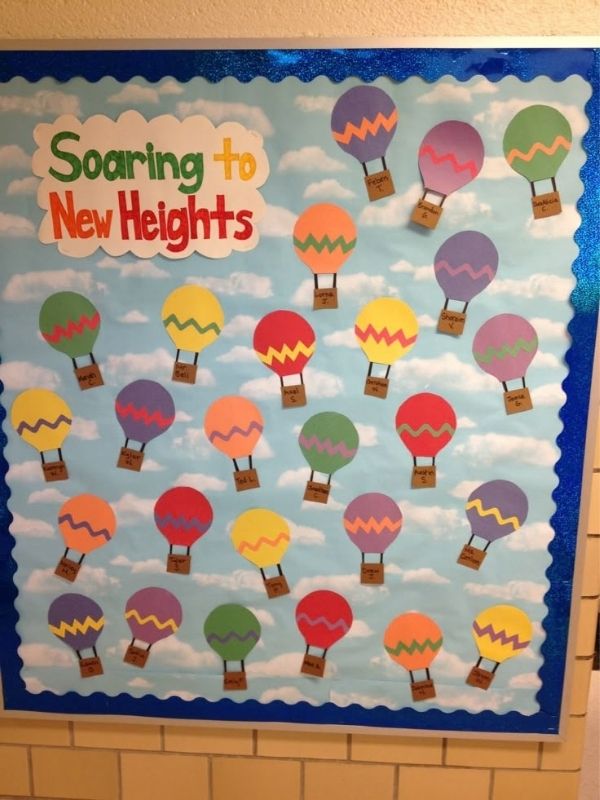
A hot-air balloon board gives a classroom a slightly different seasonal look while providing a clear space for student writing. It is especially attractive when you want to move beyond the usual collection of turkeys, leaves, and pumpkins.
Cut out one large balloon from coloured paper and add curved lines to suggest its panels. Attach a small paper basket underneath using strips of paper or drawn ropes. Then, create smaller balloons in different colours to represent individual students.
Ask each student to write one thing that helps them keep learning. Examples include curiosity, encouragement, practice, asking for help, and trying a new approach when something is difficult.
Arrange the balloons at different heights across the board. Add small clouds near the top and a few autumn leaves near the bottom to create a seasonal connection on 35 Thanksgiving Bulletin Board Ideas.
Choose a heading such as Gratitude Helps Us Grow or Rising With Thankful Hearts. The wording should be short enough to fit comfortably above the artwork.
For a writing extension, invite students to explain how their chosen quality helps them move towards a goal. Younger children can complete a sentence starter, while older students can write a brief paragraph.
The final display feels light and open because the balloons create natural spaces between the student contributions. As a result, the board can look full without becoming crowded.
24. Design a Thankful Sunflower Garden

Sunflowers offer a cheerful alternative to more traditional autumn decorations. Their large centres also provide plenty of space for student messages, making them useful for a gratitude display.
Create a green paper background along the lower section of the board and add several tall stems. Cut yellow petals from construction paper, then make brown or dark orange centres large enough to hold short responses.
Give each student a petal or a complete sunflower. Ask them to write something that brightens their day, such as a favourite activity, a supportive person, a new discovery, or a moment when they felt proud of their effort.
Arrange the sunflowers at different heights to make the garden look natural. You can add paper leaves and a few small butterflies, but avoid placing decorations over the writing areas.
Use the heading Growing a Little More Gratitude Every Day. Another option is Our Classroom Blooms With Appreciation.
For younger learners, the teacher can prepare the stems and petals in advance. Students can then concentrate on colouring, writing, and arranging their contributions.
Older children might write a short explanation of why their chosen experience matters. Therefore, the activity can support both art and language development.
Once the display is complete, invite students to read a few responses and identify ideas that they have in common. This creates a gentle reminder that people can appreciate different things while still sharing a classroom community.
25. Create a Thanksgiving Word Search Wall

A word search wall turns a classroom display into a small language game. Instead of using a conventional printed puzzle, build a large grid on the bulletin board and hide seasonal words among the letters.
Begin with a simple grid drawn on paper or created using a large sheet of card. Include words such as thanks, harvest, autumn, kindness, family, and gratitude. Make sure the letters are large enough for students to read from a comfortable distance.
Decorate the outer edges with paper leaves, pumpkins, and other seasonal shapes. Then, place a list of target words beside the grid so students know what to find.
You can make the activity interactive by giving students reusable markers or paper strips to identify discovered words, provided your board materials allow it. Alternatively, invite students to write the locations of the words on a separate answer sheet.
Choose a heading such as Find the Words That Matter or A Thanksgiving Vocabulary Challenge.
This design works well as a language arts extension because students can practise spelling, scanning, and recognising seasonal vocabulary. Older learners can help create the puzzle, while younger children can search for shorter words.
To keep the board useful throughout the month, replace the word list every week. Consequently, the same display can support several short activities without requiring a complete redesign.
26. Put Up a Wall of Thankful Teachers and Helpers
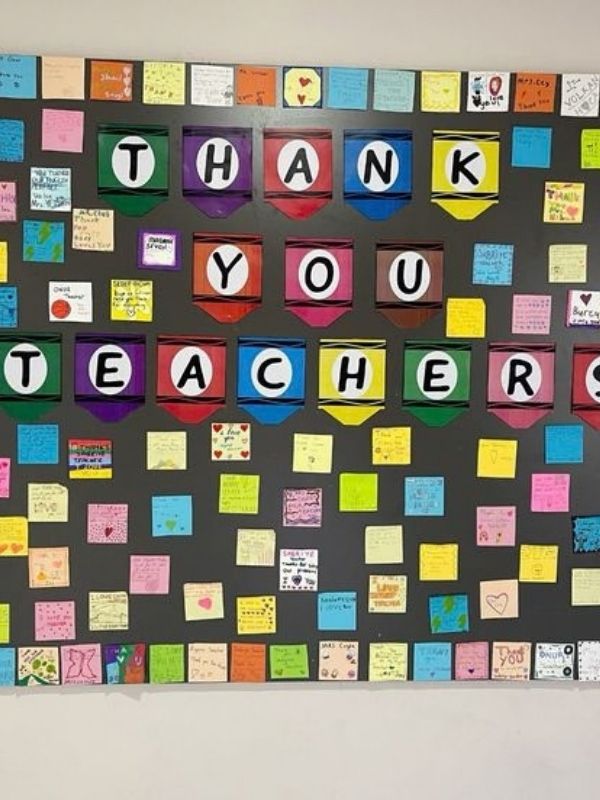
Students spend time with many people who contribute to their learning, including teachers, classroom assistants, librarians, office staff, and other school helpers. A display that recognises these contributions can encourage appreciation across the wider school community.
Start by creating a warm background with autumn leaves or a simple harvest border. Add paper frames or large name cards for the people your class wants to recognise. If photographs are appropriate and permitted by the school, you can include them; otherwise, use simple drawings or name cards.
Ask students to write a short thank-you message explaining how a particular person has helped them. For example, they might mention someone who recommended a book, explained a task, helped them find a classroom, or made the school environment more welcoming.
Before posting the notes, check that the wording is respectful and that all names are spelled correctly. You can also allow students to submit general messages for helpers whose names they do not know.
Use the heading Thank You for Helping Us Grow. This connects appreciation with learning and makes the display suitable for November.
Unlike boards that focus only on student responses, this design highlights the people who support the whole classroom. Furthermore, it provides an opportunity to discuss how many different roles contribute to a school community.
27. Create a Classroom Recipe for Gratitude

A recipe-themed bulletin board gives students a playful way to explore the qualities that make a classroom welcoming. Instead of listing ingredients for a meal, the class creates a recipe for a positive learning environment.
Begin with a large paper mixing bowl, a recipe card, and several ingredient shapes. You can use paper measuring cups, spoons, and small labels to complete the design. Choose autumn colours to keep the board connected to Thanksgiving.
Ask students to suggest ingredients for the recipe. Possible answers include two cups of kindness, a spoonful of patience, plenty of teamwork, a dash of humour, and a generous helping of respect. Encourage them to explain what each ingredient means in everyday classroom life.
Write the suggestions on separate cards and arrange them around the mixing bowl. Then, combine the class’s ideas into one large recipe card in the centre of the display.
A suitable title is Our Recipe for a Happy Classroom. You could also use Mixing Up a Little Gratitude.
For a writing extension, ask students to write their own short recipe for friendship or successful group work. They can use action words such as listen, share, encourage, and cooperate.
This activity combines humour, vocabulary, and social learning. Moreover, the finished board gives students a visual reminder of the behaviours that help everyone participate comfortably.
28. Make a Paper Lanterns of Gratitude Display
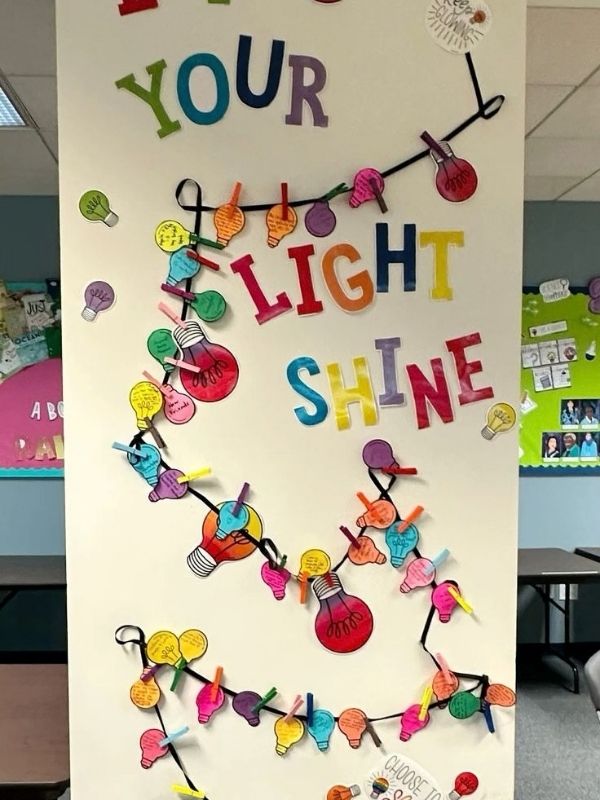
Paper lanterns can create a warm, cosy look without requiring complicated artwork. For a classroom-safe version, use flat paper lantern cutouts rather than candles or electrical decorations.
Cut several lantern shapes from coloured construction paper. Add simple lines, dots, or geometric patterns to each one. You can use red, orange, yellow, brown, and cream to maintain an autumn palette.
Give each student a lantern and ask them to complete a prompt about something that brings warmth or encouragement to their school day. They might mention a kind conversation, a favourite lesson, a helpful classmate, or a moment when they understood something new.
Arrange the lanterns across the board, connecting them with drawn strings or simple paper lines. Add small leaves around the edges, and place the title Little Lights of Gratitude above the display.
For younger students, prepare the shapes in advance and allow them to focus on colouring and drawing. Older students can write longer reflections or include a specific example of how someone helped them.
The lantern design is particularly useful if your classroom has limited wall space because the shapes can be arranged in a single row or a gentle curve.
As a result, you can create a polished display with relatively few materials while keeping the focus on students’ contributions.
29. Design a Thankful Puzzle Wall
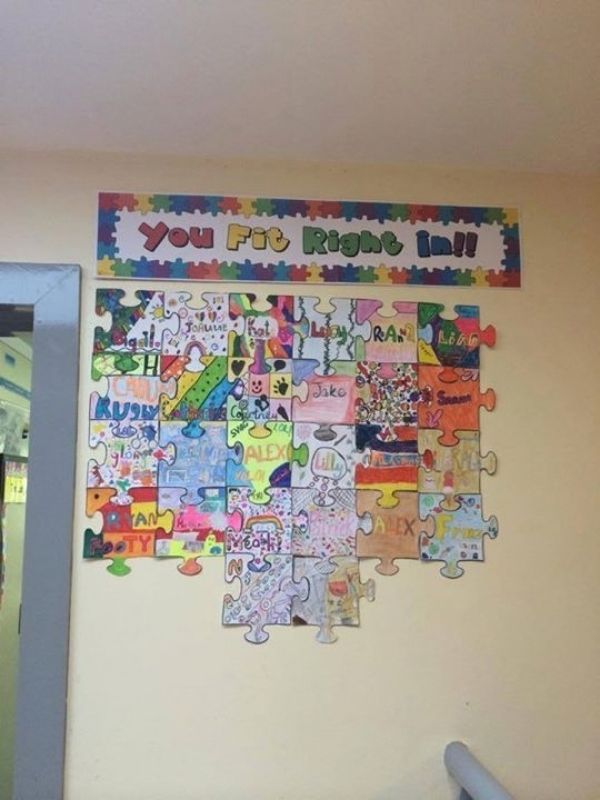
A puzzle wall provides a strong visual reminder that each student contributes to the classroom community. It is also a good choice for teachers who want to highlight teamwork without relying on traditional Thanksgiving symbols.
Cut large puzzle pieces from coloured card, making sure each piece can connect visually with the others. You can create a simple interlocking design by drawing puzzle tabs and spaces on a large sheet of paper before cutting the individual pieces.
Give every student one piece and ask them to write a response to the prompt, “What do you bring to our classroom?” Answers might include creativity, curiosity, humour, patience, helpfulness, or a willingness to learn.
Arrange the pieces together on the board, adjusting their positions until the design forms one complete puzzle. Leave enough space between the pieces for students to read the messages.
Use the heading Every Piece Matters or Together, We Make a Difference. Add a few small autumn leaves around the border if you want a stronger seasonal look.
The activity can lead to a useful discussion about different strengths. Students do not need to have identical interests or abilities to contribute to a shared learning environment.
This is one of the 35 Thanksgiving bulletin board ideas that can also work well for a classroom community theme at other times of the year. After Thanksgiving, simply change the heading and border while keeping the student-created puzzle.
30. Create a Thankful for Nature Display
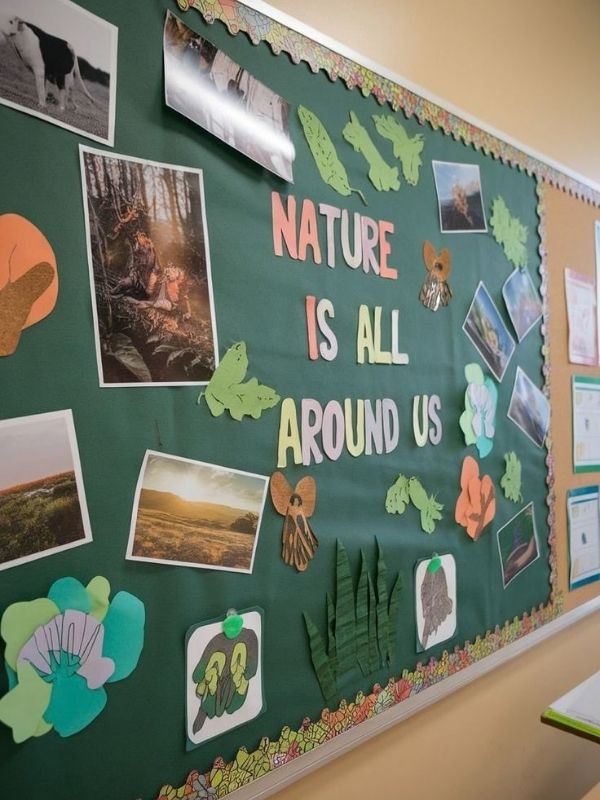
Autumn provides plenty of inspiration for nature-themed classroom art. Even if the local environment does not experience the same seasonal changes associated with a traditional American autumn, you can still use leaves, trees, flowers, birds, and other familiar natural elements.
Start with a simple landscape background. Add paper trees, flowers, birds, clouds, and leaves, using colours that suit your classroom. Students can create their own natural details or decorate prepared templates.
Ask each child to write or draw something in nature they appreciate. Possible responses include rain that helps plants grow, birds, flowers, trees, clean water, or time spent outdoors. Encourage students to explain why caring for the natural world matters.
Place the responses around the landscape and use the title Thankful for the World Around Us. You can also add a small section featuring simple environmental actions, such as putting litter in the correct bin or avoiding unnecessary waste.
For a lesson connection, discuss how people depend on natural resources and why they should use them responsibly. Keep the discussion suitable for your students’ ages and encourage practical, everyday examples.
This board offers a slightly different interpretation of Thanksgiving because it focuses on appreciation for the environment. Furthermore, it can be adapted to the plants, weather, and landscapes students actually recognise.
31. Put Together a Thankful for Learning Board

A learning-focused Thanksgiving display is especially useful when you want to celebrate student progress before the end of the term. It shifts attention away from decoration alone and gives students a chance to recognise how much they have learned.
Create a large open book in the centre of the board using white and brown paper. Around it, add smaller paper books, pencils, stars, and autumn leaves. Each student can contribute a card describing a skill, topic, or idea they understand better now.
For example, one learner might mention reading a longer story independently, while another may be proud of improving their confidence when speaking during class discussions. Encourage students to focus on their own progress rather than comparing themselves with classmates.
Arrange the cards around the book and add the heading Thankful for Every New Thing We Learn. You can also include a small section called Still Curious About… where students write questions they want to explore next.
This approach supports reflection and helps students recognise that learning develops over time in 35 Thanksgiving Bulletin Board Ideas. Additionally, it gives teachers a chance to identify topics that may need further explanation.
The final board in this 35 Thanksgiving Bulletin Board Ideas can be colourful without becoming crowded. Keep the main heading clear and arrange the student responses in neat groups so families and visitors can read them easily.
32. Create a Community Helpers Gratitude Board

A community helpers board gives students an opportunity to recognise the people who make everyday life easier and safer. It also works well as a classroom discussion starter because students can consider different jobs and the ways people support one another.
Decorate the background with simple autumn shapes, then add paper illustrations of community helpers. Depending on your lesson goals, these could include nurses, teachers, farmers, librarians, cleaners, postal workers, and emergency service workers.
Ask students to choose a role and explain why that work matters. Their responses might describe how farmers help provide food, how librarians connect people with books, or how cleaners help maintain shared spaces.
Place each response beside the matching illustration. If students choose the same role, let them add different examples rather than removing duplicate contributions.
Use the heading Thankful for the People Who Help Our Community. For younger children, offer picture cards and sentence starters. Older students can write more detailed explanations about how different jobs contribute to daily life.
This display can also connect with lessons about occupations, communication, and community responsibility. Furthermore, it helps students recognise that many kinds of work deserve appreciation, even when those jobs do not receive much attention.
33. Make a Thanksgiving Art Gallery
Sometimes students create wonderful artwork during lessons, but the finished pieces end up stored away instead of being displayed. A Thanksgiving art gallery solves that problem by giving student work a dedicated place on the classroom wall.
Begin with a simple autumn border and a title such as Our Little Gallery of Gratitude. Then, create paper frames using different colours or patterns. Each frame should have enough room for a small drawing, collage, or written response.
Invite students to make artwork based on a gratitude prompt. They might draw a favourite learning activity, create an autumn landscape, illustrate an act of kindness, or design an abstract picture using seasonal colours.
Let students choose an appropriate title for their work. Add a small name label if they are comfortable having their names displayed, and ensure that each piece receives a similar amount of space.
To keep the gallery organised, arrange the work in rows or columns rather than placing everything randomly. You can also leave one empty frame for a new piece that will be added later.
This display celebrates individual creativity while making the classroom feel more personal. In addition, it gives students a reason to revisit their work, explain their artistic choices, and appreciate the different ways classmates interpret the same theme.
34. Design a Thankful Stars and Wishes Board

Stars provide a simple shape for short messages and work well when you want a display that looks bright without using many materials. A thankful stars board can also encourage students to think about hopes, goals, and the positive experiences they want to remember.
Cut stars from yellow, gold, orange, and cream paper. You can vary their sizes to create depth, but make sure the writing areas remain large enough for students to use comfortably.
Ask each student to complete one of two prompts: “Something I am thankful for is…” or “One positive thing I hope to work towards is…” The first prompt focuses on appreciation, while the second encourages students to think about learning and personal goals.
Arrange the stars across a dark blue or deep brown background. Add a few smaller stars between the larger shapes and keep the main title near the top.
Choose A Sky Full of Thankful Stars or Shining With Gratitude. Both headings work well with the design.
For younger learners, provide sentence starters and allow drawings as an alternative to writing. Older students can explain why their goal matters and identify one practical step they can take towards it.
The result is a cheerful display that connects Thanksgiving with reflection, hope, and continued learning.
35. Build a Giant Classroom Gratitude Mosaic

A gratitude mosaic is a good choice when you want the entire class to contribute to one large piece of artwork. Rather than giving every student a different object, this project uses small paper shapes that combine to create a larger picture.
Choose a simple outline, such as a heart, a pumpkin, a tree, or the words Give Thanks. Draw the outline lightly on a large sheet of paper or mark the area where the finished mosaic will sit.
Give each student several small squares, triangles, or irregular paper pieces. Ask them to decorate the pieces with patterns, colours, or short gratitude words. You can also invite them to draw tiny symbols representing things they appreciate.
Arrange the pieces inside the outline, leaving small gaps if you want the background to show through. Use a limited colour palette to make the final image easier to recognise, but allow students enough freedom to personalise their contributions.
Place the heading Small Pieces, Big Gratitude above the mosaic. You could also add a short explanation that every student helped create the finished artwork.
Among these 35 Thanksgiving bulletin board ideas, the mosaic is particularly useful for collaborative art because each contribution becomes part of a shared design. Moreover, it can be adapted to almost any classroom size and reused as a model for future seasonal projects.
Before displaying the mosaic, check that the pieces are secure and that no message is hidden behind another shape. This final step helps the board look tidy while giving every contribution room to be appreciated.
Simple Tips for Making Your Thanksgiving Bulletin Board Look Better
Once you have chosen a design, a few practical decisions can make the finished display easier to read and maintain. You do not need expensive supplies; instead, focus on organisation, contrast, and student participation.
- Choose a clear heading. Keep the main title short enough to read from across the classroom.
- Limit your colour palette. Three to five coordinating colours can make a board look organised without becoming dull.
- Give student work room to breathe. Avoid overlapping written responses or placing decorations over important details.
- Prepare repeated shapes in advance. Templates can save time when every student needs a leaf, pumpkin, feather, or star.
- Use student contributions as the main decoration. Their writing and artwork often make the display more meaningful than store-bought pieces.
- Keep safety in mind. Use classroom-approved materials and adult assistance for cutting, stapling, or attaching decorations at height.
- Refresh interactive displays. Add new responses periodically so students have a reason to revisit the board.
Additionally, consider how the display fits your teaching goals. A gratitude tree can support writing, while a vocabulary wall can reinforce spelling and language development. Therefore, choose a design that gives students something to do, not just something to look at.
Frequently Asked Questions About 35 Thanksgiving Bulletin Board Ideas
1. What are the easiest among this 35 Thanksgiving bulletin board ideas for teachers?
The easiest options include a thankful tree, a pumpkin patch, a falling leaves wall, and a thankful word display. Each can be created with construction paper, markers, and a few basic classroom supplies.
To save time, prepare the main shapes before inviting students to contribute. Then, let them write, draw, or decorate their individual pieces. This approach reduces preparation while ensuring the finished board reflects the class.
2. How can I make a Thanksgiving bulletin board interactive?
Add a simple activity that students can complete throughout November. For example, provide blank leaves for a gratitude tree, paper envelopes for a thank-you mailbox, or vocabulary cards for a word wall.
You can also introduce a new prompt every few days. However, keep the instructions clear and allow enough space for responses to remain readable. If students share personal reflections, give them the option to keep sensitive information private.
3. What are suitable for this 35 Thanksgiving bulletin board ideas for preschool and kindergarten?
Young children often enjoy large paper turkeys, handprint displays, pumpkin patches, colourful leaves, and simple gratitude gardens. These designs use familiar shapes and do not require advanced writing skills.
For children who are still developing their handwriting, offer drawing options or let them dictate their ideas to an adult. In addition, prepare templates when cutting complicated shapes would take too much time.
4. How can I decorate a classroom bulletin board on a budget?
Use construction paper, clean cardboard, recycled packaging, scrap paper, and materials already available in the classroom. Many seasonal designs need only a background, a heading, and a collection of student-created shapes.
You can also reuse a display’s basic structure in another season. For example, a gratitude tree can become a winter tree by changing the colours and replacing the messages. As a result, one project can provide ideas for several classroom themes.
5. How do I make a 35 Thanksgiving bulletin board educational?
Connect the decoration to a lesson objective. Students can practise writing complete sentences on gratitude leaves, learn seasonal vocabulary through a word wall, recommend books on a paper bookshelf, or explore teamwork through a puzzle display.
Furthermore, ask students to explain their contributions. A short discussion about why they chose a particular word, picture, or message can strengthen speaking and listening skills while making the finished board more meaningful.
6. How early should I put up a Thanksgiving bulletin board?
You can begin planning several weeks before Thanksgiving, depending on your school calendar and the time available for classroom activities. A simple display may take one lesson, while a collaborative project can develop over several days.
Starting early also gives students time to contribute new messages and artwork. Nevertheless, choose a schedule that fits your teaching plans rather than rushing to complete an elaborate design.
7. How can I make a Thanksgiving display welcoming to every student?
Focus on appreciation, kindness, learning, friendship, and community. Autumn leaves, harvest baskets, books, stars, and classroom gardens can create a seasonal look without requiring every child to celebrate Thanksgiving in the same way.
Invite students to share responses that feel comfortable to them. You can also offer several prompts so that children with different experiences have an appropriate way to participate.
Conclusion
A thoughtful classroom display can do much more than make an empty wall look attractive. It can celebrate student creativity, encourage kind behaviour, support classroom lessons, and give children a chance to share their ideas with others.
These 35 Thanksgiving bulletin board ideas offer a variety of options, from simple paper leaves and colourful turkeys to reading displays, classroom mosaics, and interactive gratitude walls. Therefore, you can choose a design that suits your students’ ages, your available supplies, and the amount of preparation time you have.
You do not need to recreate every detail you see in a photograph to make your board special. Start with one clear idea, involve your students, and allow their contributions to shape the final design. Even a simple display can become memorable when the messages and artwork come from the children who use the classroom every day.
Most importantly, let the finished board on 35 Thanksgiving Bulletin Board Ideas reflect the atmosphere you want to build throughout the school year. With a little planning and plenty of student participation, your Thanksgiving display can bring seasonal colour to the classroom while reminding everyone that appreciation, creativity, and kindness belong in learning all year long.