15 Healthy Habits to Teach Kids Before School Starts
The weeks before school starts can feel a little chaotic. Bedtimes get later, mornings become slower, and suddenly everyone has to get back into a routine. That is why teaching children simple routines ahead of time can make such a big difference. These 15 healthy habits to teach kids before school starts can help children feel more prepared, confident, and comfortable when the first school morning arrives.
The good news is that healthy habits do not have to feel like another homework assignment. In fact, children are more likely to stick with them when they are simple, practical, and introduced gradually. You do not need to change everything at once. Instead, focus on one small habit at a time and give your child plenty of opportunities to practice.
From getting enough sleep to drinking more water, eating breakfast, washing hands, and taking care of their belongings, these habits can support children throughout the school year. More importantly, they help kids become more independent.
So, before the school bags are packed and the uniforms are ready, take some time to work on these 15 healthy habits to teach kids before school starts. A little preparation now can make those busy school mornings much easier later.
Why Healthy Habits Matter Before School Starts
A new school year brings plenty of changes. Children may have a new teacher, a different classroom, new classmates, or a completely different schedule. Even when they are excited, those changes can take some getting used to.
Healthy routines give children something familiar to rely on.
For example, a child who already knows when to wake up, eat breakfast, brush their teeth, and get dressed may feel less rushed on the first day. Likewise, a child who has practiced packing their school bag may feel more confident about getting ready.
The goal is not perfection. Children will forget things sometimes. They may wake up tired, skip a step, or need help. That is completely normal.
Instead, think of these habits as skills. The more children practice them, the easier they become.
Now, let us look at the habits that can make the transition back to school smoother.
15 Healthy Habits to Teach Kids Before School Starts
1. Get Back to a Consistent Sleep Schedule
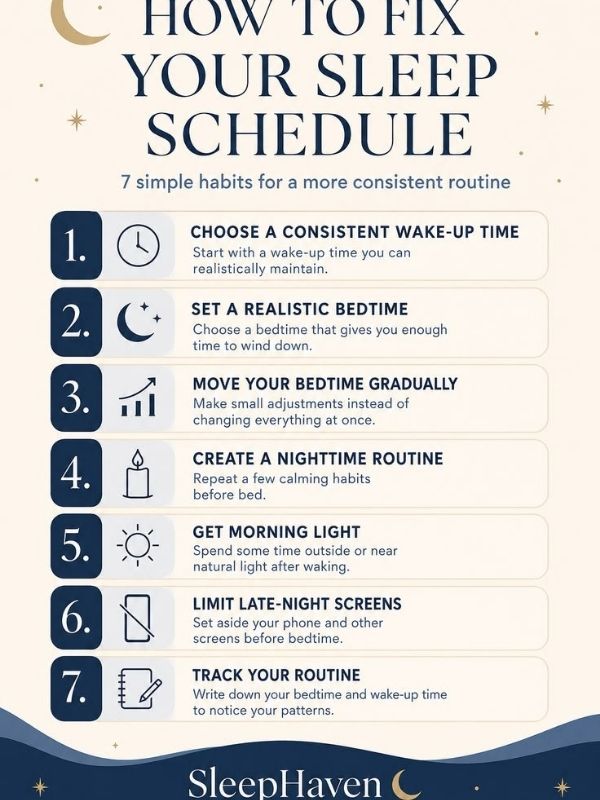
One of the first 15 healthy habits to teach kids before school starts is getting back to a regular sleep schedule.
During school holidays, bedtime can slowly creep later. One late night turns into another, and before long, everyone is sleeping much later than usual. That can make the first school mornings feel especially difficult.
Instead of waiting until the night before school begins, start adjusting bedtime gradually.
You can move bedtime earlier by a small amount every few nights. At the same time, encourage your child to wake up closer to their school-day time. This gives their body time to adjust.
A calm bedtime routine can help too. About an hour before bed, start slowing things down. Turn off stimulating activities, dim the lights, and encourage quiet activities such as reading or talking.
Children also benefit from knowing what comes next. For example, they might take a bath, put on pajamas, brush their teeth, prepare their clothes, and then read for a few minutes.
Keep the routine simple.
The aim is to help your child understand that bedtime is a regular part of the day. Once school starts, a consistent sleep routine can make mornings easier and help children feel more ready to learn.
Most importantly, try not to treat sleep as a punishment or reward. It is simply one of the basic things their growing bodies need.
Check out our
17 Smart and Spooky Halloween Costume Ideas for Teachers at School
20 Valentine;s Day Crafts for Kids to Make at Home or School
30 Back-to-School Supplies Every Student Needs in 2026
20 Back to School Lunch Ideas for Picky Eaters
2. Teach Kids to Drink Enough Water
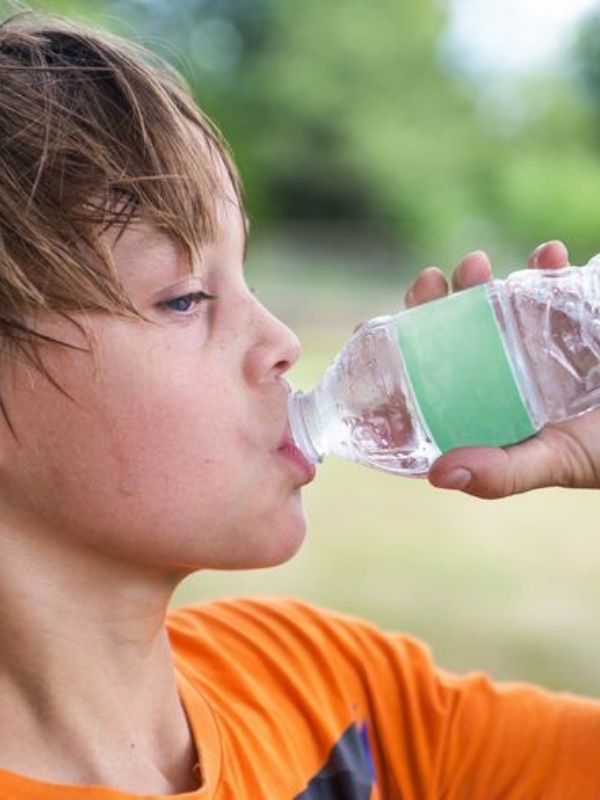
Water is another important part of the 15 healthy habits to teach kids before school starts.
Children can get busy while playing, learning, or talking with friends. Because of that, they may not always remember to drink water. Teaching them to notice when they are thirsty can help them build a useful habit before school begins.
Start by giving your child a water bottle that they can recognize easily. Let them help choose it if possible. When children have some ownership over their routines, they may be more interested in using them.
You can also create simple reminders.
For example, encourage your child to drink water after waking up, with meals, before leaving home, and during school breaks when appropriate. These reminders can become natural parts of the day.
Make water easy to reach at home too. If your child has to search for a cup every time they want a drink, they may simply forget.
Try not to turn hydration into a competition. Every child has different needs, and thirst can vary with weather, activity, and other factors.
Instead, teach your child to listen to their body.
It is also helpful to explain that water is a good everyday drink. You can still enjoy other beverages occasionally, but water can be the simple choice they reach for most often.
By practicing this habit before school starts, your child can feel more comfortable managing their own water bottle during the school day.
Please keep Reading….. Don’t stop here

3. Make Breakfast Part of the Morning Routine

Breakfast is another habit worth practicing before school.
Among the 15 healthy habits to teach kids before school starts, this one can have a major impact on how organized the morning feels. A child who wakes up at the last minute may rush through getting dressed and then skip breakfast completely.
That is why the routine should begin before the first day.
Try preparing a few simple breakfast options that your child enjoys. It could be oatmeal, eggs and toast, yogurt with fruit, whole-grain cereal, or another balanced meal that works for your family.
The important thing is to make breakfast realistic.
You do not need elaborate meals every morning. In fact, simple choices are often easier to maintain when everyone is rushing out the door.
You can also involve your child in breakfast preparation. Younger children might help put fruit on a plate. Older children may be able to prepare simple parts of the meal with appropriate supervision.
Another helpful idea is to prepare what you can the night before. Set out bowls, organize ingredients, or decide what breakfast will be. Small preparations can save precious minutes in the morning.
Most importantly, avoid turning breakfast into a stressful argument.
If your child is not hungry immediately after waking, give them some time and offer a practical option. The goal is to establish a positive routine around eating, not create pressure.
When breakfast becomes a normal part of getting ready, school mornings can feel much more manageable.
4. Teach Good Hand-Washing Habits
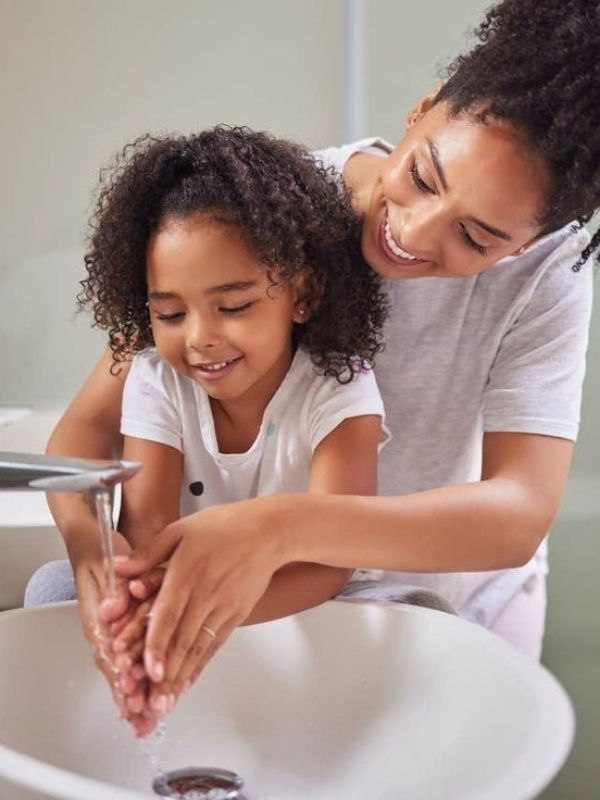
Hand washing deserves a place on every list of 15 healthy habits to teach kids before school starts.
Children touch desks, books, playground equipment, door handles, toys, and many other shared surfaces during the day. Therefore, learning when and how to wash their hands is an important everyday skill.
Rather than simply telling your child to wash their hands, teach them the situations when it matters.
For example, they can wash their hands before eating, after using the bathroom, after playing outside, and after coming home from school. They should also wash them when their hands are visibly dirty.
Show them how to use soap and water properly. Encourage them to clean the fronts and backs of their hands, between their fingers, and around their nails.
Keep the explanation simple.
You might even make hand washing part of a routine rather than something they have to remember randomly. For instance, washing hands can happen immediately after coming home and before eating a snack.
Children learn through repetition.
So, if you practice the routine during the weeks before school starts, it may feel much more natural once classes begin.
You can also make the habit less boring by allowing your child to choose a fun hand towel or soap for home.
Still, the main lesson should remain clear: clean hands are part of taking care of yourself and the people around you.
It is a small habit, but it can become an important part of your child’s school-day routine.
Check out our
10 Graduation Loc Styles That Fit Under a Cap
20 Unique Graduation Gifts for Female Best Friend
18 Trendy Graduation Dresses for Curvy Girls
20 DIY Graduation Card Ideas for Best Friend
20 Elegant Black and Gold Graduation Cake Ideas
15 Stylish Graduation Hairstyles for Long Locs
5. Encourage Daily Movement

Another one of these 15 healthy habits to teach kids before school starts is making movement part of everyday life.
Children do not need complicated workout plans. They simply need regular opportunities to move, play, explore, and use their bodies.
Before school starts, try building movement into the daily routine.
Go for a family walk. Play outside. Ride a bicycle if it is safe to do so. Dance to music. Play a simple ball game. Even helping with age-appropriate household activities can get children moving.
The goal is to make physical activity feel normal rather than something they have to earn.
This is especially useful after a long holiday when children may have spent more time sitting, watching television, reading, or using devices.
You can also encourage movement during study breaks once school begins. A few minutes of stretching or walking around can provide a change of pace.
Try to avoid focusing on appearance, weight, or body size. Children should learn that movement is useful because it helps them feel strong, energetic, coordinated, and comfortable in their bodies.
Keep activities age-appropriate and enjoyable.
If your child dislikes one activity, try something different. Maybe they enjoy dancing more than running. Perhaps they prefer swimming, jumping games, or playing outdoors with friends.
There is no single right way to move.
The best habit is one your child can enjoy and continue.
Check out our
20 Fun Water Play Activities for Kids to Beat the Heat
10 Fun Camp Games for Kids to Play Outdoors
13 Easy Sensory Play Recipes for Kids to Make at Home
15 Camping Activities for Kids to Keep Them Entertained
30 Trendy Kids Bedroom Decor Ideas Everyone Will Be Trying This Year
6. Help Kids Build a Simple Morning Routine
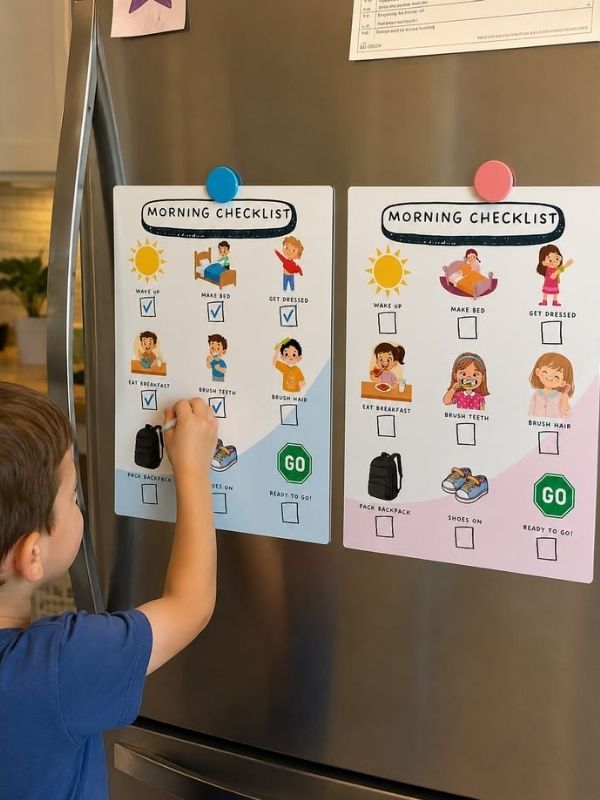
Mornings become easier when children know exactly what they need to do.
That is why a simple morning routine belongs among these 15 healthy habits to teach kids before school starts.
You can create a short checklist that matches your child’s age and abilities.
For example:
- Wake up.
- Use the bathroom.
- Wash your face.
- Brush your teeth.
- Get dressed.
- Eat breakfast.
- Drink water.
- Pack your school bag.
- Put on your shoes.
- Leave on time.
The list does not have to be complicated. In fact, shorter is often better.
You can place it somewhere your child can see it. Younger children may benefit from pictures, while older children may prefer written steps.
Then, practice the routine before school begins.
This is important because children often need time to learn how long each task takes. If getting dressed usually takes fifteen minutes, they need to discover that before a real school morning.
Try giving reminders without taking over every task.
For example, instead of saying, “Go brush your teeth, get dressed, pack your bag, and put on your shoes,” ask, “What is the next thing on your morning list?”
That small change encourages independence.
Of course, younger children will need more support. Older children can gradually take responsibility for more steps.
The goal is not to make your child completely independent overnight.
It is to help them understand that getting ready for school is something they can participate in.
7. Teach Kids to Choose Balanced Snacks
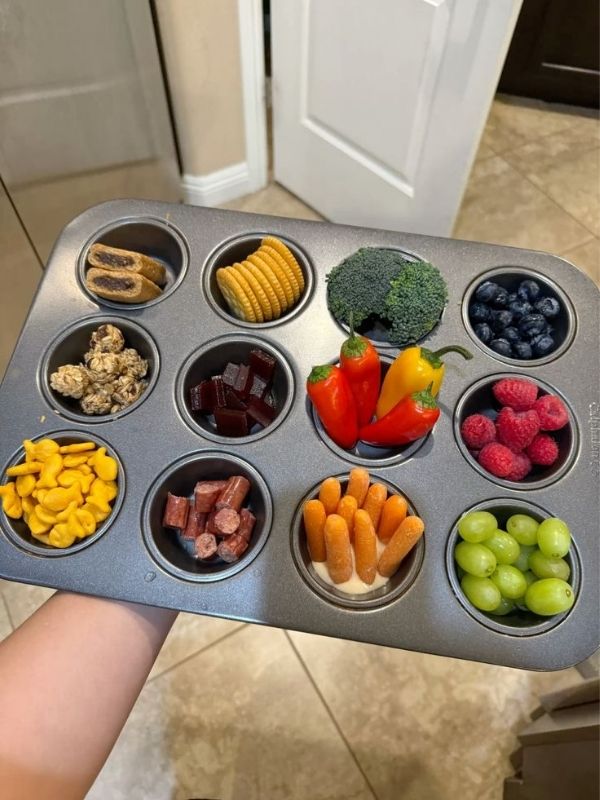
School days can be long, so children may need snacks between meals.
Learning how to choose satisfying snacks is another useful habit among the 15 healthy habits to teach kids before school starts.
Instead of labeling foods as “good” or “bad,” talk about variety.
Different foods provide different nutrients. Some provide carbohydrates for energy. Others provide protein, healthy fats, vitamins, minerals, and fiber.
You can teach children to combine foods in simple ways.
For example, fruit can be paired with yogurt. Crackers can be served with cheese. Vegetables can be paired with hummus. A sandwich can include a protein source and vegetables.
The exact choices will depend on your child’s age, preferences, allergies, and what your school allows.
It is also helpful to let children participate in snack preparation.
Ask them to choose between two or three options. Let them place snacks into a container. Show them how to pack foods safely.
This creates a sense of responsibility.
However, avoid making snack time another area where children feel judged. Food should not become a source of shame.
Instead, focus on learning.
Teach your child to notice hunger and fullness. Explain that different days may come with different appetites.
Some mornings they may eat more. Other days they may eat less.
That is okay.
The bigger lesson is learning how to make practical food choices while still enjoying meals and snacks.
8. Make Tooth Brushing a Non-Negotiable Routine
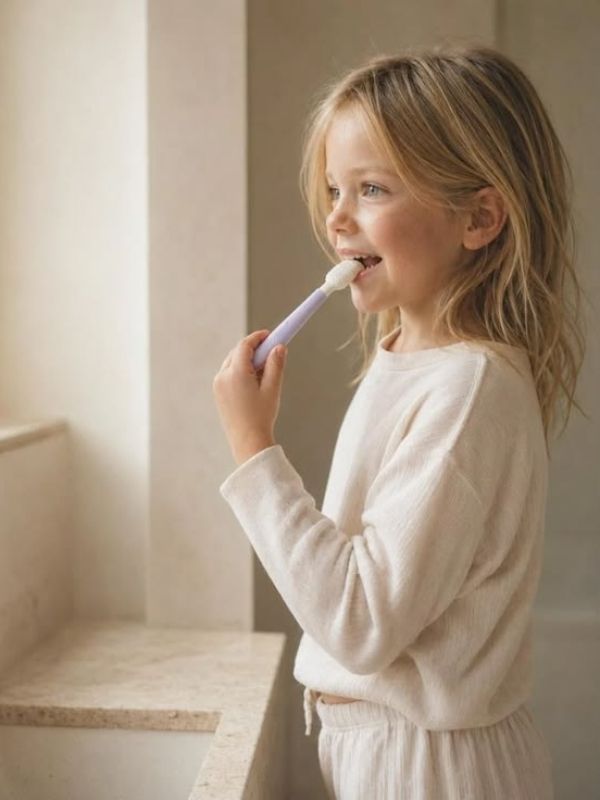
Good oral hygiene is one of those habits children will carry long after they leave primary school.
That makes it an important part of the 15 healthy habits to teach kids before school starts.
If brushing has been inconsistent during the holidays, now is a good time to return to a predictable routine.
Most children need reminders and supervision as they learn. Younger children especially may need help making sure all areas of their teeth are cleaned properly.
Keep the routine connected to existing activities.
For example, brushing can happen after breakfast and before bed. When the habit is connected to something children already do, remembering it can become easier.
You can also make the bathroom routine more inviting. A child-friendly toothbrush, toothpaste they are comfortable using, or a simple timer can make the process more engaging.
Still, avoid turning brushing into a daily battle whenever possible.
Children may resist because they are tired, distracted, or simply want to keep playing. Calm repetition usually works better than long lectures.
Explain why the habit matters in language they understand.
You can tell them that brushing helps keep their teeth and gums clean and supports a healthy mouth.
If your child is old enough, let them take more responsibility while you supervise when needed.
As school starts, remind them that oral care is part of taking care of themselves, just like washing their hands or getting enough sleep.
Small routines become powerful when they are repeated every day.
9. Teach Kids to Keep Their School Things Organized
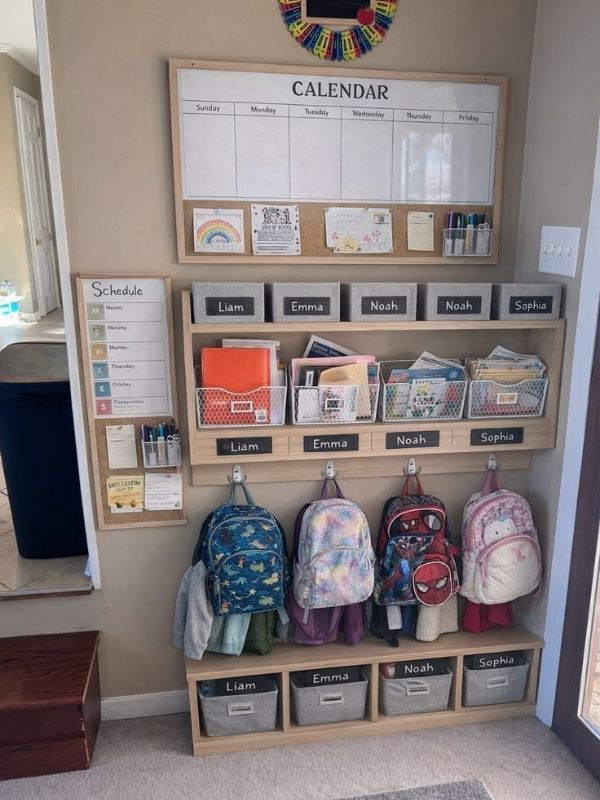
Organization may not sound like a health habit at first, but it can support a child’s daily well-being.
That is why it deserves a place among the 15 healthy habits to teach kids before school starts.
When children cannot find their books, shoes, lunch boxes, or homework, mornings can quickly become stressful. A simple organization system can prevent some of that frustration.
Start with one place for school items.
A backpack can stay in the same spot every day. Shoes can have a designated place. Lunch containers can go into one area of the kitchen after school.
Then, teach your child to reset their space.
After homework, books can go back into the bag. After school, the lunch box can be emptied. Before bed, tomorrow’s clothes can be prepared.
You do not need a perfect home.
The goal is simply to make important things easier to find.
You can also involve your child in organizing their school supplies. Let them decide where appropriate items should go.
For younger children, make the system visual. For older children, encourage them to create their own routine.
Most importantly, resist the temptation to fix everything for them.
If they forget something occasionally, use the experience as a learning opportunity rather than immediately taking over.
Organization is a skill.
Like any other skill, it becomes stronger with practice.
By starting before school begins, your child can learn that preparation is not something parents have to do alone. It is something the whole family can share.
10. Practice Taking Breaks From Screens
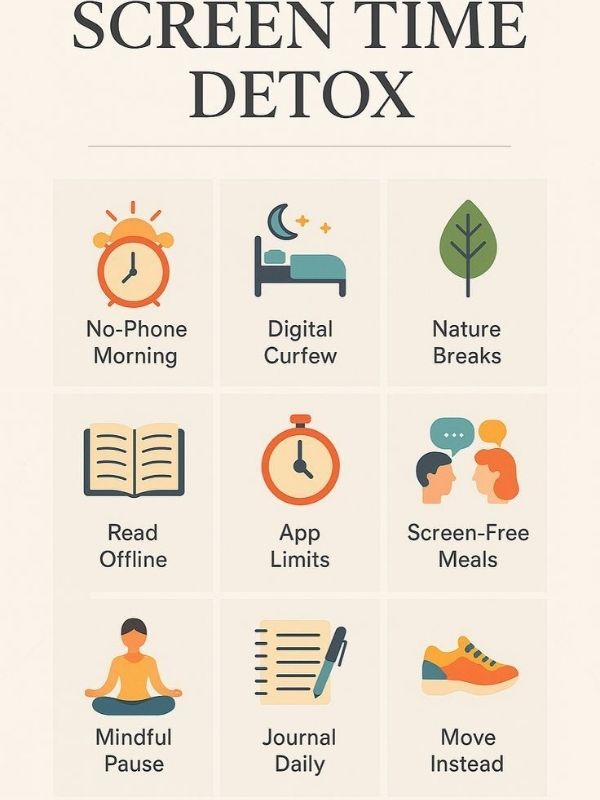
Screens can be useful for learning and entertainment. However, children also need time to sleep, play, talk, move, and simply be away from devices.
That is why managing screen time is another helpful habit among the 15 healthy habits to teach kids before school starts.
The easiest way to prepare is to establish predictable screen routines before school starts.
For example, you might decide when devices are available and when they are put away. The exact routine will depend on your family, your child’s age, and school requirements.
Try to avoid making the conversation sound like screens are automatically bad.
Instead, explain balance.
Children need time for many activities. Reading, outdoor play, family conversations, creative activities, chores, schoolwork, and rest all have a place in a healthy routine.
You can also create device-free parts of the day.
Mealtimes can be one example. Another might be the period before bedtime.
When adults follow the same expectations, children are more likely to accept them. If everyone puts devices away during dinner, the rule feels less like a punishment aimed at one child.
It may take some adjustment.
Children who have enjoyed flexible holiday screen habits may complain when routines change. Stay calm and consistent.
Give them something else to look forward to.
A board game, drawing activity, family walk, book, or conversation can make the transition easier.
The goal is not to eliminate technology.
It is to teach children that technology is one part of life, not the whole day.
11. Teach Kids to Listen to Their Bodies
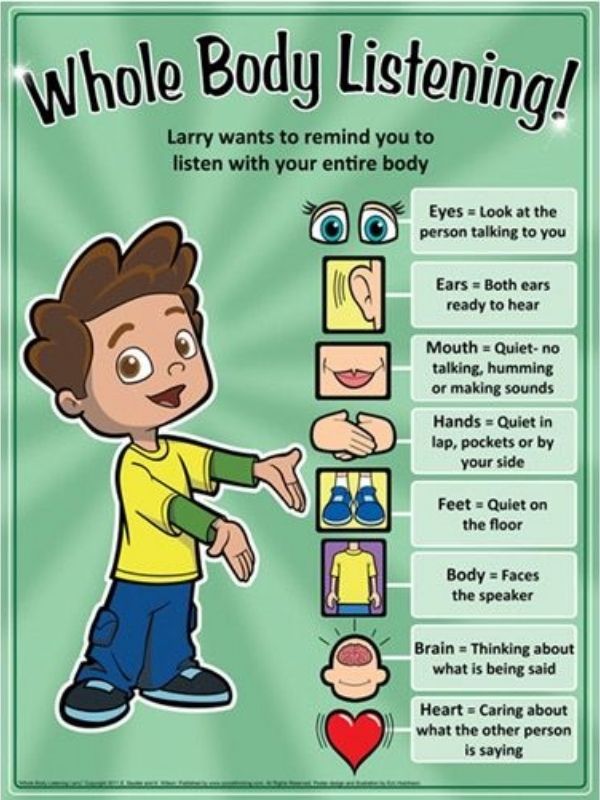
One of the most valuable 15 healthy habits to teach kids before school starts is learning to notice what their bodies are telling them.
Children experience hunger, thirst, tiredness, excitement, stress, and the need for movement throughout the day. However, busy routines can make it easy to ignore those signals.
Start with simple questions.
- “Are you hungry?”
- “Are you thirsty?”
- “Do you need a rest?”
- “Do you need to use the bathroom?”
- “How are you feeling?”
These questions help children pause and notice themselves.
It is also important not to make every physical feeling into a problem. Being tired after a busy day is normal. Feeling hungry before a meal is normal. Feeling nervous about returning to school is normal too.
Teach your child that different feelings can be noticed and communicated.
For example, if they feel uncomfortable at school, encourage them to tell a trusted adult. If they need water, they can ask when appropriate. If they are exhausted after a long day, they may need a quieter evening.
This habit supports self-awareness.
It can also help children communicate more clearly instead of simply becoming frustrated.
As children get older, they can take more responsibility for recognizing what they need.
You are not teaching them to become experts in every physical sensation.
You are simply helping them understand that their bodies deserve attention and care.
That is a lesson worth carrying into every school year.
12. Encourage Healthy Hygiene After School
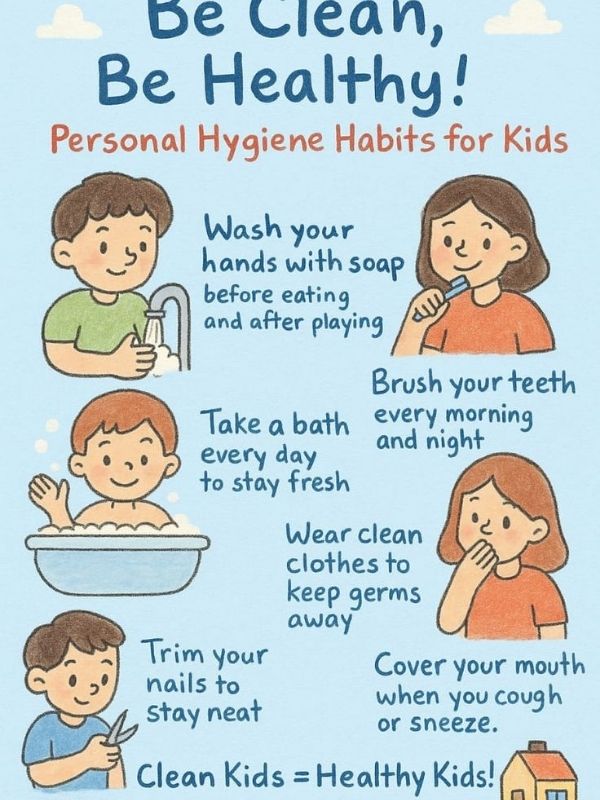
School does not end when your child walks through the front door.
Another useful habit among the 15 healthy habits to teach kids before school starts is having a simple after-school hygiene routine.
When your child gets home, they can put away their school bag, wash their hands, change clothes if needed, and prepare their lunch container for cleaning.
The routine can be adjusted to fit your family’s schedule.
Some children may need a shower after sports or outdoor activities. Others may simply need to wash their hands and face.
The important thing is consistency.
An after-school routine can also help children mentally transition from school time to home time.
For example, they might come home, wash their hands, have a snack, take a short break, and then begin homework.
This creates a predictable rhythm.
You can teach younger children each step gradually. Older children may be able to manage the routine with fewer reminders.
Again, the goal is not perfection.
If your child forgets one day, simply remind them and continue.
It can also help to explain why hygiene matters without creating fear. Washing hands and bathing regularly are normal ways to care for the body.
Children should understand that cleanliness is about comfort, health, and self-care.
When the routine becomes familiar before school starts, it can be much easier to maintain once the school year becomes busy.
13. Teach Kids to Talk About Their Feelings
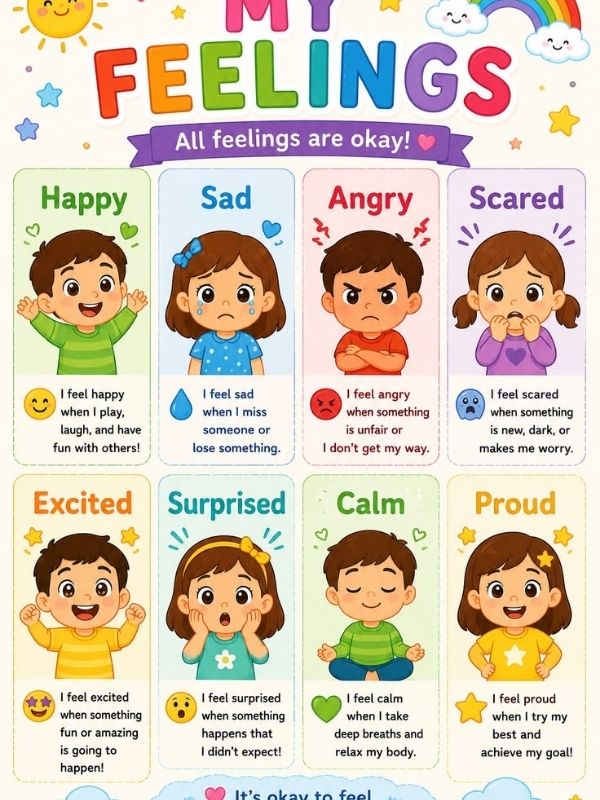
Going back to school can bring many emotions.
A child may feel excited about seeing friends but nervous about a new teacher. Another child may feel worried about homework, friendships, or being in a new classroom.
That is why emotional communication belongs among the 15 healthy habits to teach kids before school starts.
Create opportunities for your child to talk.
You do not need to sit them down for a serious conversation every evening. Sometimes the best conversations happen naturally while eating dinner, walking together, preparing food, or getting ready for bed.
Ask open questions.
- “What are you looking forward to?”
- “Is anything making you nervous?”
- “What would make the first week easier?”
- “Who could you talk to if you needed help at school?”
Then, listen.
You do not always have to solve the problem immediately.
Sometimes children simply want to know that someone understands.
You can also teach simple words for emotions. Instead of saying they feel “bad,” they might learn to describe feeling worried, frustrated, disappointed, excited, lonely, or overwhelmed.
This gives children better tools for communication.
At the same time, avoid telling them that they should not feel nervous. Nervousness can be a normal response to something new.
Instead, reassure them that feelings can change.
You can say, “It makes sense to feel nervous about something new. We can figure it out together.”
That kind of response teaches children that emotions are something they can talk about rather than something they have to hide.
14. Teach Kids to Ask for Help
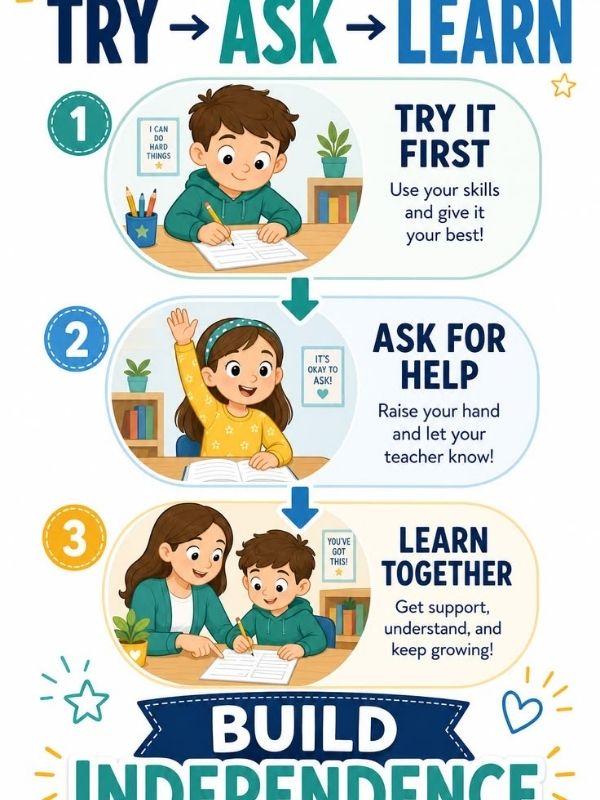
Children are often encouraged to be independent, but independence does not mean doing everything alone.
Knowing when to ask for help is an important part of growing up.
That is why asking for help belongs on this list of 15 healthy habits to teach kids before school starts.
Explain that asking for help is a useful skill.
If they do not understand an assignment, they can ask the teacher. If they cannot find their classroom, they can ask a trusted adult. If another child is bothering them, they can tell a teacher or another trusted person.
You can even practice simple sentences at home.
- “I don’t understand this.”
- “Can you please help me?”
- “Where should I go?”
- “I need help with this.”
- “I don’t feel comfortable.”
Practicing these phrases can make them easier to use when a child feels nervous.
This is especially helpful for children who tend to stay quiet when they are unsure.
Let your child know that adults at school are there to help them learn and stay safe.
At the same time, teach them to identify trusted adults rather than telling them to ask absolutely anyone.
A child should know which teachers, school staff, parents, or caregivers they can approach.
The goal is to build confidence, not dependence.
When children know that asking for help is acceptable, they may be more willing to speak up before a small problem becomes a bigger one.
That is a habit that can serve them well beyond the classroom.
15. Create a Calm Night-Before-School Routine
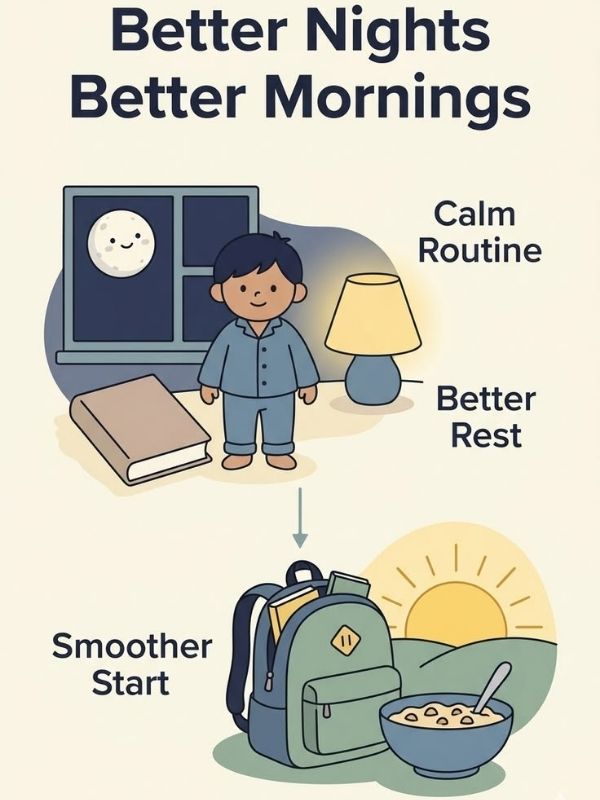
The final habit among these 15 healthy habits to teach kids before school starts is creating a calm routine the night before.
This habit brings many of the others together.
Instead of rushing around in the morning looking for missing shoes or unfinished homework, prepare as much as possible the evening before.
Your child can pack their school bag, choose clothes, prepare permitted snacks, check their schedule, and place their shoes somewhere easy to find.
Then, give the evening room to slow down.
Dinner can happen at a reasonable time. Homework can be finished. Teeth can be brushed. Clothes can be prepared. The child can have some quiet time before bed.
You can even make a small checklist together.
Night-before checklist:
- School bag packed
- Homework checked
- Clothes ready
- Shoes ready
- Water bottle ready
- Lunch or snack prepared
- Alarm set
- Bedtime routine started
The exact list will depend on your child’s age and school.
Do not make it too long.
A routine that takes five minutes to follow is much easier to maintain than one that feels like another project.
You can also use the evening to talk briefly about tomorrow.
Ask your child if there is anything they need help with. Then, once everything is ready, let the day end.
There is no need to spend the entire evening worrying about the next morning.
A calm night can make a calm morning more likely.
And sometimes, that is exactly what a busy family needs.
How to Make These Healthy Habits Stick
Learning these 15 healthy habits to teach kids before school starts is one thing. Helping children keep them is another.
The key is repetition.
Children rarely learn a routine perfectly after hearing it once. They need to see it, practice it, forget it, try again, and eventually make it part of their normal day.
So, start early.
You do not have to introduce all fifteen habits on the same day. That could make the process overwhelming for both you and your child.
Instead, choose two or three habits that would make the biggest difference to your family.
For example, you might start with bedtime, breakfast, and the morning routine.
Once those feel comfortable, add another habit.
You can also make the process more enjoyable.
Create a simple routine chart. Let your child decorate it. Use stickers if they enjoy them. Give them opportunities to check off completed tasks.
However, try not to make every healthy habit dependent on a reward.
Children also need to understand the purpose behind what they are doing.
Explain that sleep helps them rest. Washing hands keeps them clean. Breakfast gives them an opportunity to eat before a busy day. Packing their bag helps them feel prepared.
When children understand the “why,” routines can feel more meaningful.
Also, expect imperfect days.
Your child may forget their water bottle. They may leave their shoes in the wrong place. They may stay up too late one night.
That does not mean the routine has failed.
Simply return to it the next day.
Consistency matters more than perfection.
Simple Ways Parents Can Model Healthy Habits
Children notice what adults do.
Therefore, one of the easiest ways to support these 15 healthy habits to teach kids before school starts is to practice them yourself.
If you want your child to drink more water, keep water nearby.
If you want them to prepare their school things the night before, prepare your own important items ahead of time.
If you want them to put devices away during meals, consider doing the same.
Children do not need parents who follow every routine perfectly. They need adults who show them what healthy habits can look like in real life.
You can even talk about your own routines.
For example, you might say, “I am getting my things ready tonight because tomorrow morning will be easier.”
That simple sentence shows your child that preparation is useful.
You can also make some routines family activities.
A short evening tidy-up can involve everyone. A family walk can become part of the week. Preparing breakfast ingredients together can save time.
This removes the idea that healthy habits are only rules for children.
Instead, they become part of family life.
Keep your expectations realistic too.
A young child will need more reminders than an older child. A child with a busy extracurricular schedule may need a different routine from a child who comes straight home after school.
There is no need to copy another family’s schedule.
Find what works for yours.
Common Mistakes to Avoid When Teaching Healthy Habits
Even with the best intentions, it is easy to make routines feel stressful.
One common mistake is trying to change everything at once. Fifteen new rules can quickly feel overwhelming. Instead, introduce the habits gradually.
Another mistake is using shame.
If your child forgets to brush their teeth or leaves their water bottle at home, avoid making them feel like they are lazy or irresponsible. Correct the behavior without attacking the child.
It is also important not to compare siblings.
One child may learn a routine quickly while another needs more reminders. That difference does not mean one child is better.
Avoid making food habits about body size too.
Children need positive, practical messages about eating, hydration, and caring for their bodies. Food should not become a source of guilt.
Another common problem is expecting independence too soon.
A six-year-old and a twelve-year-old should not have identical responsibilities. Give children tasks that match their age and abilities.
Finally, do not expect perfection.
The purpose of these 15 healthy habits to teach kids before school starts is to make everyday life easier and help children develop useful skills.
That is part of growing up.
Focus on progress instead.
A Simple Back-to-School Habit Plan
If you want to introduce these 15 healthy habits to teach kids before school starts without overwhelming your child, spread them across several days.
During the first few days, focus on sleep and waking up at a consistent time.
Next, add breakfast and water.
Then, practice brushing teeth, washing hands, and getting dressed without too many reminders.
After that, work on packing the school bag and preparing clothes the night before.
Once those routines feel familiar, introduce screen breaks, movement, snack preparation, and emotional check-ins.
Finally, practice asking for help and following the complete morning routine.
This approach gives your child time to adjust.
You can also use weekends to practice without the pressure of actually getting to school.
For example, set a pretend school morning. Let your child wake up, follow the routine, eat breakfast, pack a bag, and get ready.
Keep it light.
The purpose is simply to practice.
Over time, the routine should become easier.
Remember, the goal is not to create a perfectly organized child. It is to give them tools that make school mornings and school days a little smoother.
Frequently Asked Questions
1. When should I start teaching these healthy habits?
You can start a few weeks before school begins. However, you do not need to wait for the summer holidays. Healthy routines can be introduced throughout the year.
Starting early simply gives your child more time to practice without the pressure of the first school morning.
2. Should I teach all 15 habits at once?
Not necessarily. In fact, introducing them gradually may work better.
Choose the habits that your child needs most. Once those routines become familiar, add another one.
This keeps the process manageable and gives your child a better chance of remembering each habit.
3. What if my child refuses to follow the routine?
First, find out why.
The routine may be too long, too difficult, or simply unfamiliar. Ask your child what part they dislike.
Then, look for a solution together.
You might shorten the checklist, offer two choices, or change the order of certain tasks.
Children are more likely to cooperate when they feel involved.
4. How can I make healthy habits fun?
Give children some control where appropriate.
Let them choose between two breakfast options. Allow them to decorate a routine chart. Let them pick where their school bag should stay.
You can also turn routines into family activities.
However, remember that healthy habits do not always need to be entertaining. Children can also learn that some everyday responsibilities are simply part of taking care of themselves.
5. What is the most important habit to start with?
There is no single habit that works for every child.
For many families, sleep and a consistent morning routine are useful starting points because they affect how the entire school day begins.
Still, consider your child’s needs.
If they already sleep well but struggle with remembering school supplies, organization may be a better place to begin.
Conclusion
Preparing for school is about more than buying new notebooks, uniforms, shoes, and backpacks.
It is also about helping children feel ready for the everyday responsibilities that come with school.
These 15 healthy habits to teach kids before school starts can give children practical tools for taking care of themselves, managing their routines, and becoming more independent.
Start small.
Practice often.
Give reminders when needed.
Most importantly, keep the process positive.
Your child does not need to master every habit before the first bell rings. They simply need opportunities to practice and learn.
Some days will go smoothly. Other mornings will be messy. That is normal.
What matters is building routines that can grow with your child.
So, before the school year begins, choose a few habits from this list and start practicing them together. With time, those small actions can become part of your child’s everyday routine.
And when the first school morning finally arrives, you may find that everyone feels a little more prepared, a little more confident, and a lot less rushed.